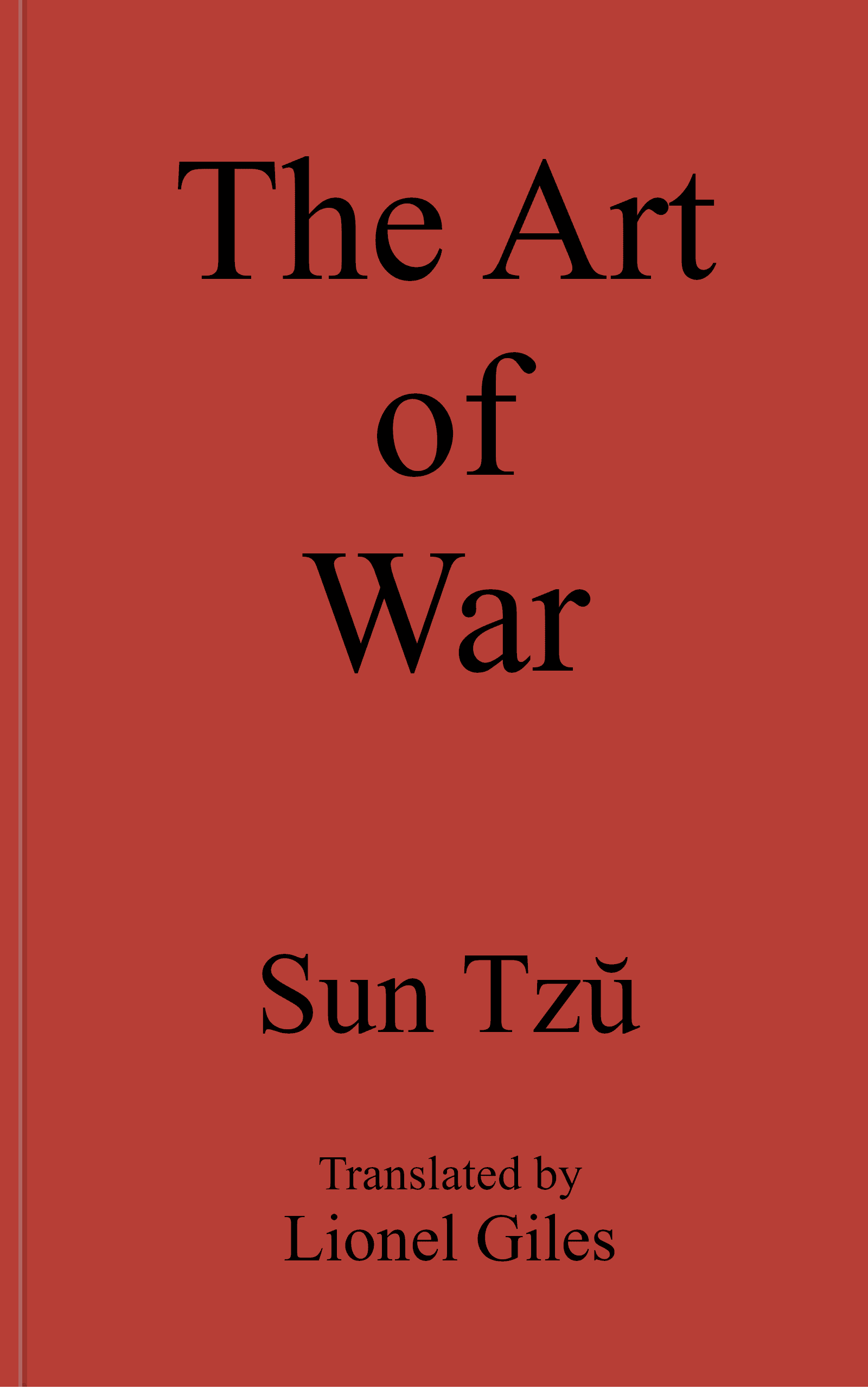
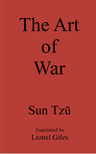
The Art of War
500 BC
Two and a half millennia ago, a Chinese military strategist distilled the essence of conflict into thirteen chapters that would outlive every empire that ever read them. Sunzi's central thesis cuts through the noise of warfare like a blade: the highest form of generalship is to balk the enemy's plans, the next best is to prevent his junction with allies, and the worst of all is to besiege walled cities. Victory without battle. That's the prize. The Art of War reads less like a manual for soldiers and more like a manual for thinking. Sunzi insists that strategy begins long before any battlefield, in the quiet work of understanding terrain, gathering intelligence, and demoralizing opponents before a single soldier meets steel. Deception is not a dirty trick but the foundation of advantage. The general who knows the enemy and knows himself will not be endangered in a hundred battles. These principles have guided Mao Zedong, Douglas MacArthur, and every CEO who has ever studied them. But the book belongs to no one era. It belongs to anyone who faces competition, conflict, or a worthy adversary.
Editions

X-Ray
“Appear weak when you are strong, and strong when you are weak.””
— Sunzi
“The supreme art of war is to subdue the enemy without fighting.””
— Sunzi
“If you know the enemy and know yourself, you need not fear the result of a hundred battles. If you know yourself but not the enemy, for every victory gained you will also suffer a defeat. If you know neither the enemy nor yourself, you will succumb in every battle.””
— Sunzi
“Let your plans be dark and impenetrable as night, and when you move, fall like a thunderbolt.””
— Sunzi
“In the midst of chaos, there is also opportunity””
— Sunzi
“All warfare is based on deception. Hence, when we are able to attack, we must seem unable; when using our forces, we must appear inactive; when we are near, we must make the enemy believe we are far away; when far away, we must make him believe we are near.””
— Sunzi
“Supreme excellence consists of breaking the enemy's resistance without fighting.””
— Sunzi
“Victorious warriors win first and then go to war, while defeated warriors go to war first and then seek to win””
— Sunzi
“The greatest victory is that which requires no battle.””
— Sunzi
About The Art of War
Chapter Summaries
- I
- This chapter introduces the art of war as vital to the State, governed by five constant factors: Moral Law, Heaven, Earth, The Commander, and Method and Discipline. It outlines seven considerations for forecasting victory and establishes deception as the fundamental principle of all warfare.
- II
- This chapter details the immense financial and human costs of warfare, advocating for swift campaigns and foraging on the enemy to minimize the drain on the State's resources. It emphasizes the importance of rewarding soldiers to maintain their ardor and utilizing captured foes to augment one's own strength.
- III
- Sun Tzŭ asserts that supreme excellence lies in breaking the enemy's resistance without fighting, ideally capturing their country intact. He outlines force ratios for various tactical approaches and warns against the ruler's ignorant interference, which can bring misfortune upon the army.
Key Themes
- Deception and Subtlety
- This theme is paramount, asserting that all warfare is based on deception. Sun Tzŭ repeatedly emphasizes misleading the enemy, feigning weakness, and using indirect tactics to gain an overwhelming advantage without direct confrontation.
- Importance of Planning and Foreknowledge
- Victory is depicted as being won before the battle through meticulous planning and comprehensive intelligence gathering. This includes understanding the five constant factors, assessing conditions, and crucially, utilizing spies to gain foreknowledge of the enemy's dispositions.
- Economy of War and Minimizing Cost
- Sun Tzŭ strongly advocates for swift campaigns, avoiding prolonged warfare, and capturing the enemy's resources intact rather than destroying them. This approach minimizes the financial and human cost to one's own state, recognizing the devastating impact of protracted conflict.
Characters
- Sun Tzŭ(protagonist)
- The author and primary voice of the treatise, who imparts timeless wisdom on military strategy and philosophy.
- The General(supporting)
- The military leader responsible for applying Sun Tzŭ's principles in the field, whose virtues and faults are extensively discussed.
- The Sovereign(supporting)
- The ruler of the State, whose decisions impact the army and whose ultimate goal is the preservation and prosperity of the kingdom.
- The Enemy(antagonist)
- The opposing military force or state against whom all strategies and tactics are devised and applied.
- Soldiers(minor)
- The fighting men of the army, whose morale, discipline, and physical condition are critical to victory.
Link to this book
Add a free, dofollow link to Lex on your blog, forum, syllabus, or reading list.

<a href="https://lex-books.com/book/the-art-of-war-6755826c-2ae5-4c82-a99c-4e101f5b1e27"><img src="https://lex-books.com/badges/read-on-lex.svg" alt="Read The Art of War by Sunzi free on Lex" width="160" height="40"></a>[](https://lex-books.com/book/the-art-of-war-6755826c-2ae5-4c82-a99c-4e101f5b1e27)[url=https://lex-books.com/book/the-art-of-war-6755826c-2ae5-4c82-a99c-4e101f5b1e27][img]https://lex-books.com/badges/read-on-lex.svg[/img][/url]Read The Art of War by Sunzi free on Lex: https://lex-books.com/book/the-art-of-war-6755826c-2ae5-4c82-a99c-4e101f5b1e27Cite this book
Reading this edition for a paper or guide? Copy a citation.
Sunzi. The Art of War. Lex, lex-books.com/book/the-art-of-war-6755826c-2ae5-4c82-a99c-4e101f5b1e27.Sunzi (500 BC). The Art of War. Lex. https://lex-books.com/book/the-art-of-war-6755826c-2ae5-4c82-a99c-4e101f5b1e27Sunzi. The Art of War. Lex. https://lex-books.com/book/the-art-of-war-6755826c-2ae5-4c82-a99c-4e101f5b1e27.