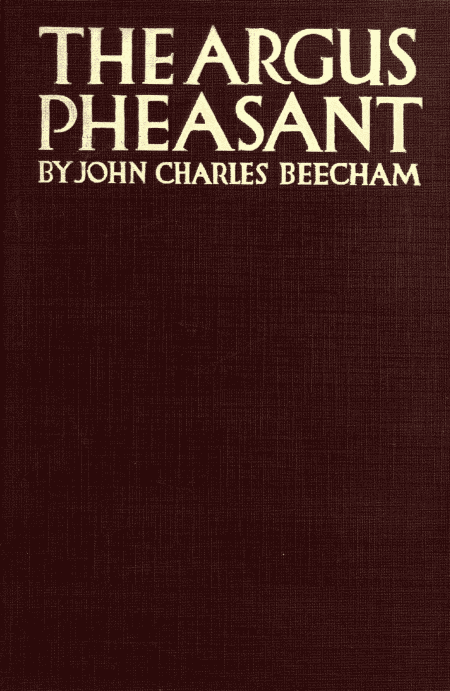
The Argus Pheasant
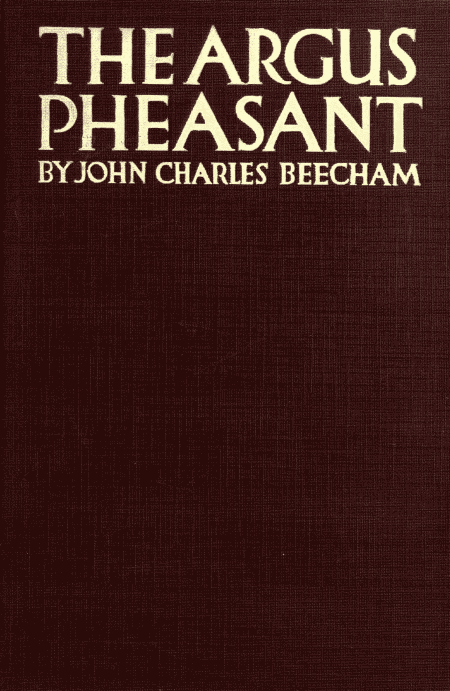
The Borneo interior burns with rebellion, and at its center stands a woman the colonials cannot control. Koyala, half-white, half-native, wholly dangerous to the Dutch regime, has united the Dyak people under a cause that threatens the entire Netherlands East Indies. When the Governor-General dispatches Peter Gross, a rough-edged first mate with his own complicated past, to assume control of Bulungan, the stage is set for a collision between empire and resistance, between the man who would govern and the woman who will not be governed. Beecham constructs Koyala as neither hero nor villain but something far more unsettling: a woman forged in the crucible of colonial violence, whose hunger for autonomy becomes indistinguishable from the political firestorm she has ignited. The novel refuses easy moral categories, the rebels commit atrocities, the colonizers speak of civilization while enacting brutality, and the lone figure of Koyala haunts both sides of the conflict. Written in the early twentieth century but startlingly modern in its refusal to sentimentalize either colonizer or colonized, this is a novel about the violence we commit in the name of belonging, and the identities we destroy when we dare to claim more than the world offers.
Editions
Link to this book
Add a free, dofollow link to Lex on your blog, forum, syllabus, or reading list.

<a href="https://lex-books.com/book/the-argus-pheasant-0d53b919-9624-4ae6-af45-b9dc85e7e99e"><img src="https://lex-books.com/badges/read-on-lex.svg" alt="Read The Argus Pheasant by John Charles Beecham free on Lex" width="160" height="40"></a>[](https://lex-books.com/book/the-argus-pheasant-0d53b919-9624-4ae6-af45-b9dc85e7e99e)[url=https://lex-books.com/book/the-argus-pheasant-0d53b919-9624-4ae6-af45-b9dc85e7e99e][img]https://lex-books.com/badges/read-on-lex.svg[/img][/url]Read The Argus Pheasant by John Charles Beecham free on Lex: https://lex-books.com/book/the-argus-pheasant-0d53b919-9624-4ae6-af45-b9dc85e7e99eCite this book
Reading this edition for a paper or guide? Copy a citation.
Beecham, John Charles. The Argus Pheasant. Lex, lex-books.com/book/the-argus-pheasant-0d53b919-9624-4ae6-af45-b9dc85e7e99e.Beecham, J. C. (n.d.). The Argus Pheasant. Lex. https://lex-books.com/book/the-argus-pheasant-0d53b919-9624-4ae6-af45-b9dc85e7e99eBeecham, John Charles. The Argus Pheasant. Lex. https://lex-books.com/book/the-argus-pheasant-0d53b919-9624-4ae6-af45-b9dc85e7e99e.