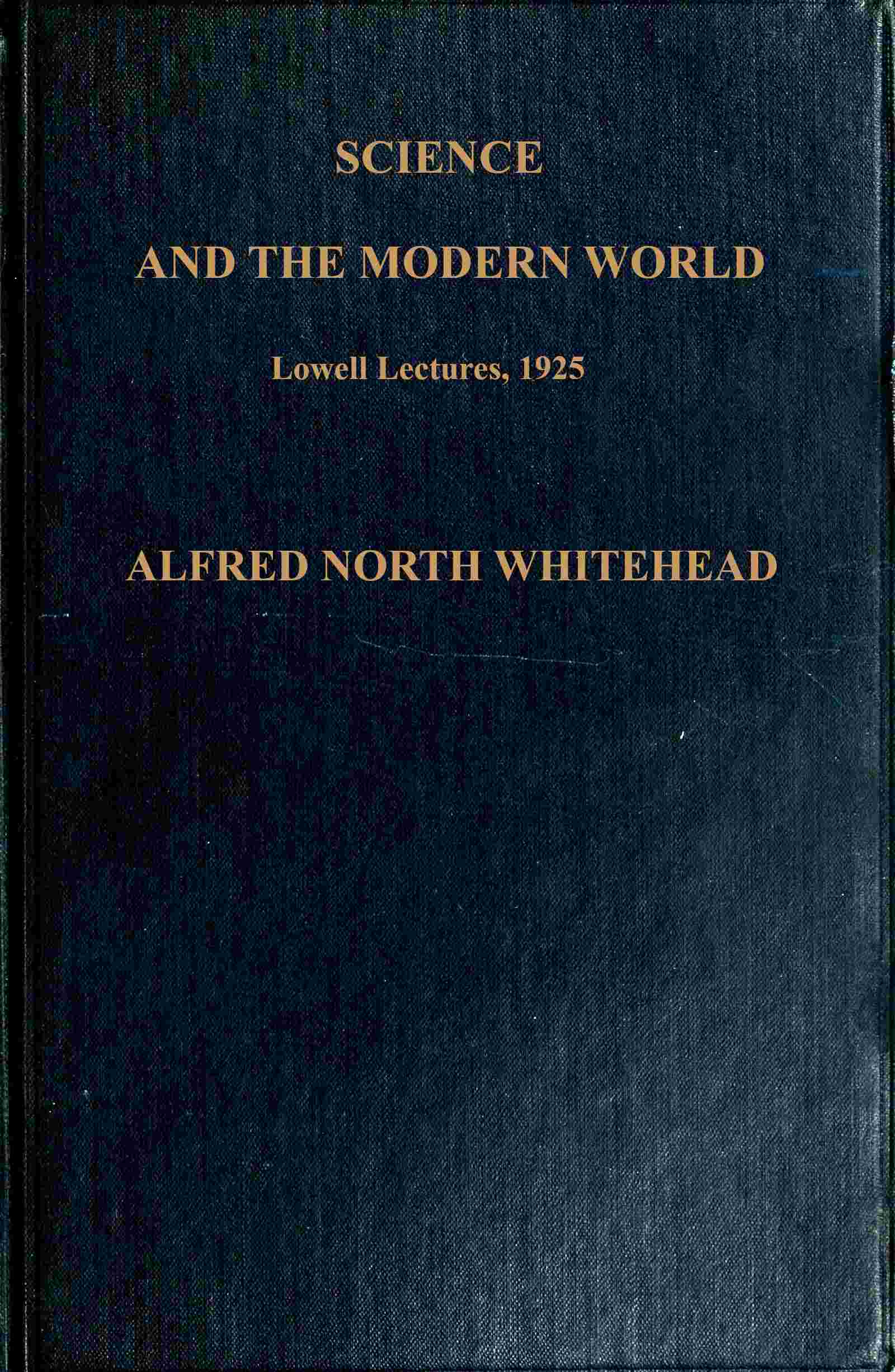
Science and the Modern World
1925
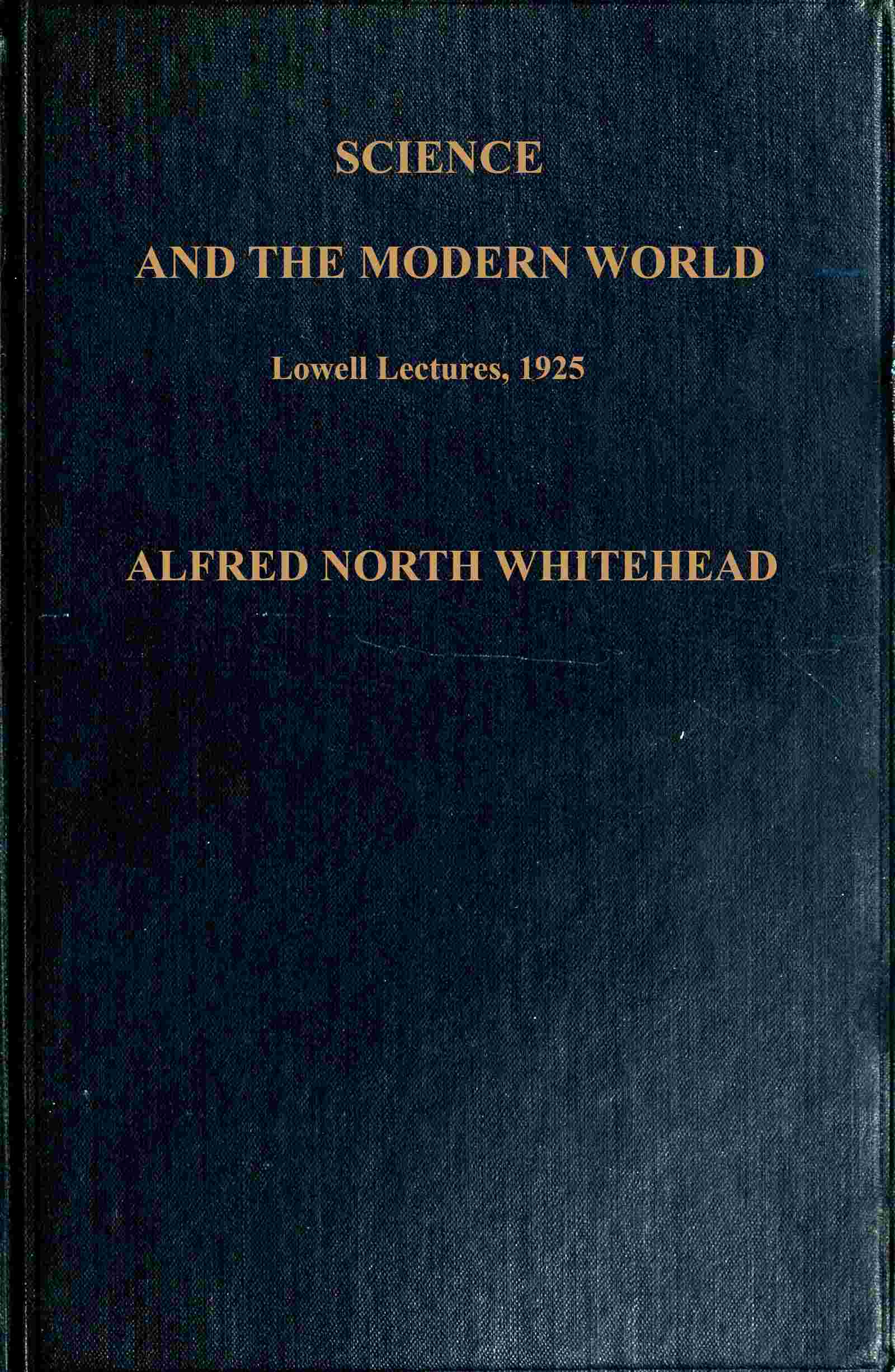
Science and the Modern World
1925
Long before the word 'scientism' entered common discourse, Alfred North Whitehead diagnosed the phenomenon with startling clarity. Science and the Modern World, originally published in 1925, traces the great inversion: the moment when humanity stopped reading nature as a divine text and began treating it as a mechanism to be interrogated. This wasn't merely a change in method, it was a civilizational earthquake that reshaped philosophy, religion, art, and how we understand our own existence. Whitehead begins with Copernicus and Galileo, showing how the Renaissance and Reformation cracked the medieval worldview, then follows the empirical revolution through its Enlightenment triumph. But this is no simple celebration. Whitehead asks what was lost when qualitative richness yielded to quantitative measurement, when mystery made room for mechanism. His chapters on romanticism's backlash, on relativity and quantum theory's challenge to Newtonian certainty, and on religion's uneasy accommodation read like anticipations of debates still raging a century later. For anyone who has ever wondered how we arrived at a world governed by technology, and whether we lost something essential along the way, this remains essential, unsettling reading.
Editions

X-Ray
“Nature is probably quite indifferent to the aesthetic preferences of mathematicians.””
— Alfred North Whitehead
“It is the business of the future to be dangerous; and it is among the merits of science that it equips the future for its duties.””
— Alfred North Whitehead
“The essence of dramatic tragedy is not unhappiness. It resides in the solemnity of the remorseless working of things.””
— Alfred North Whitehead
“The mountain endures. But when after ages it has worn away, it has gone. If a replica arises, it is yet a new mountain.A colour is eternal. It haunts time like a spirit. It comes and it goes. But where it comes, it is the same colour. It neither survives nor does it live.””
— Alfred North Whitehead
“The certainty of mathematics depends on its complete abstract generality.””
— Alfred North Whitehead
“Realization is… in itself the attainment of value””
— Alfred North Whitehead
“The reasonable harmony of being, which is required for the unity of a complex occasion, together with the completeness of the realization (in that occasion) of all that is involved in its logical harmony, is the primary article of metaphysical doctrine. It means that for things to be together involves that they are reasonably together. This means that thought can penetrate into every occasion of fact, so that by comprehending its key conditions, the whole complex patterns of conditions lies open before it.””
— Alfred North Whitehead
“Thus nature gets credit which should in truth be reserved for ourselves: the rose for its scent: the nightingale for his song: the sun for its radiance. The poets are entirely mistaken. They should address their lyrics to themselves, and should turn them into odes of self-congratulation on the excellency of the human mind. Nature is a dull affair, soundless, scentless, colourless...””
— Alfred North Whitehead
“It builds cathedrals before the workmen have moved a stone, and it destroys them before the elements have worn down their arches. It is the architect of the buildings of the spirit, and it is also their solvent: - and the spiritual precedes the material.””
— Alfred North Whitehead
Link to this book
Add a free, dofollow link to Lex on your blog, forum, syllabus, or reading list.

<a href="https://lex-books.com/book/science-and-the-modern-world-0a233b54-33c2-4d55-9126-588b477b9820"><img src="https://lex-books.com/badges/read-on-lex.svg" alt="Read Science and the Modern World by Alfred North Whitehead free on Lex" width="160" height="40"></a>[](https://lex-books.com/book/science-and-the-modern-world-0a233b54-33c2-4d55-9126-588b477b9820)[url=https://lex-books.com/book/science-and-the-modern-world-0a233b54-33c2-4d55-9126-588b477b9820][img]https://lex-books.com/badges/read-on-lex.svg[/img][/url]Read Science and the Modern World by Alfred North Whitehead free on Lex: https://lex-books.com/book/science-and-the-modern-world-0a233b54-33c2-4d55-9126-588b477b9820Cite this book
Reading this edition for a paper or guide? Copy a citation.
Whitehead, Alfred North. Science and the Modern World. Lex, lex-books.com/book/science-and-the-modern-world-0a233b54-33c2-4d55-9126-588b477b9820.Whitehead, A. N. (1925). Science and the Modern World. Lex. https://lex-books.com/book/science-and-the-modern-world-0a233b54-33c2-4d55-9126-588b477b9820Whitehead, Alfred North. Science and the Modern World. Lex. https://lex-books.com/book/science-and-the-modern-world-0a233b54-33c2-4d55-9126-588b477b9820.