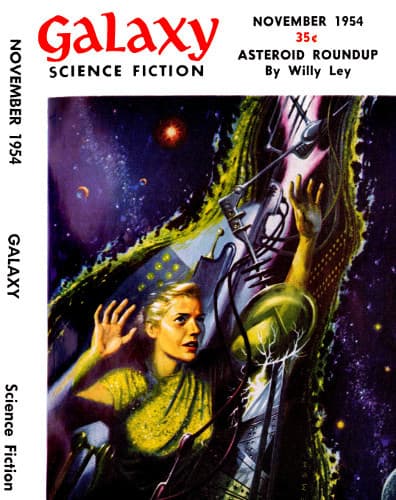
Queen of the Blue World
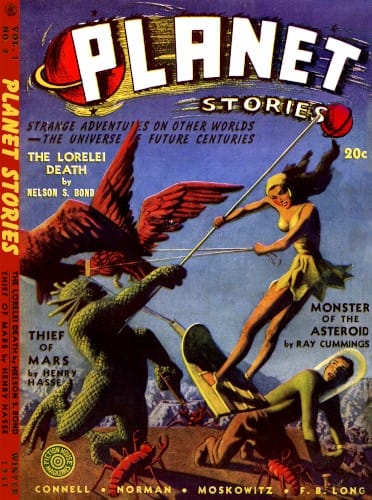
Martians call it Soora. The blue world. A place of strange breathable air and stranger inhabitants who have no idea their planet has been found. When the survey ship Indra vanishes somewhere in Earth's vast oceans, a rescue expedition is launched across the void, and what they discover will challenge everything they thought they knew about the universe. Basil Wells crafts an adventure that flips the telescope backward: here, we are the exotic other, observed and explored by minds as alien to us as our world is incomprehensible to them. The journey takes the Martians through Earth's colorful landscapes and unpredictable life forms, each discovery a mirror held up to human assumptions. This is early science fiction at its most delightful, when the genre still burned with the pure joy of imagining the unimaginable. The plot hums with tension: can the lost ship be found? Can the explorers survive this hostile, beautiful world? But beneath the adventure lies something more, a meditation on perspective and how radically the universe shifts depending on which eyes are doing the looking. Queen of the Blue World endures because it captures something many later, grander space operas forgot: the sheer giddiness of first contact, the pleasure of seeing Earth as if for the first time. For readers who want their science fiction strange, playful, and oddly warm.
Editions

Link to this book
Add a free, dofollow link to Lex on your blog, forum, syllabus, or reading list.

<a href="https://lex-books.com/book/queen-of-the-blue-world-23d7d524-b355-407b-bfc5-5a8378de3283"><img src="https://lex-books.com/badges/read-on-lex.svg" alt="Read Queen of the Blue World by Basil Wells free on Lex" width="160" height="40"></a>[](https://lex-books.com/book/queen-of-the-blue-world-23d7d524-b355-407b-bfc5-5a8378de3283)[url=https://lex-books.com/book/queen-of-the-blue-world-23d7d524-b355-407b-bfc5-5a8378de3283][img]https://lex-books.com/badges/read-on-lex.svg[/img][/url]Read Queen of the Blue World by Basil Wells free on Lex: https://lex-books.com/book/queen-of-the-blue-world-23d7d524-b355-407b-bfc5-5a8378de3283Cite this book
Reading this edition for a paper or guide? Copy a citation.
Wells, Basil. Queen of the Blue World. Lex, lex-books.com/book/queen-of-the-blue-world-23d7d524-b355-407b-bfc5-5a8378de3283.Wells, B. (n.d.). Queen of the Blue World. Lex. https://lex-books.com/book/queen-of-the-blue-world-23d7d524-b355-407b-bfc5-5a8378de3283Wells, Basil. Queen of the Blue World. Lex. https://lex-books.com/book/queen-of-the-blue-world-23d7d524-b355-407b-bfc5-5a8378de3283.