Public Opinion
1922
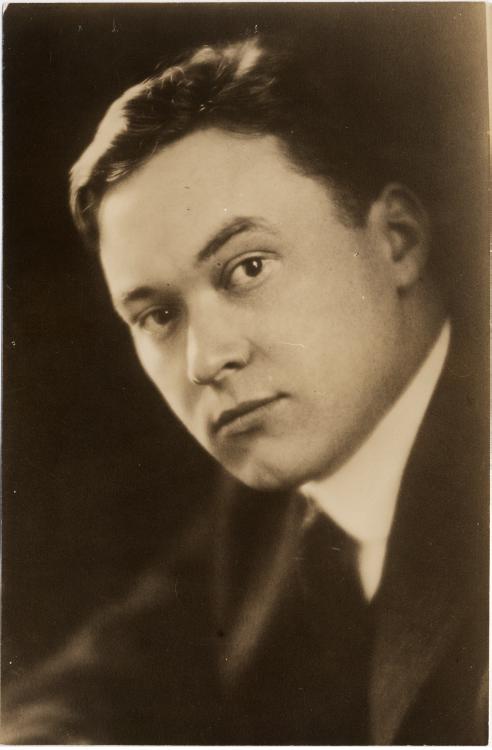
Walter Lippmann wrote this book in 1922, but he was describing the world we live in now. Drawing on Plato's cave allegory, he argued that most people never encounter reality directly, we construct mental pictures from secondhand accounts, headlines, and stereotypes, then mistake those pictures for truth. The Great War had just exposed the catastrophe: millions believed lies about the war's progress, felt passionate about events they'd completely misunderstood. Lippmann called this manufactured landscape the 'pseudo-environment,' and he traced its construction with forensic precision: how news gets made, why stereotypes simplify complexity, how speed and word choice shape what we think we know. The implications for democracy were staggering. If citizens vote based on illusions rather than reality, what does 'the will of the people' actually mean? Lippmann proposed something radical: organized intelligence, experts who could translate complex realities into comprehensible terms. A century later, with algorithms curating our reality and misinformation spreading at viral speed, Public Opinion reads less like a historical document and more like an urgent dispatch from the future. It is essential reading for anyone who wonders why we live in separate factual universes.
Editions
X-Ray
“For the most part we do not first see, and then define, we define first and then see. In the great blooming, buzzing confusion of the outer world we pick out what our culture has already defined for us, and we tend to perceive that which we have picked out in the form stereotyped for us by our culture.””
— Walter Lippmann
“We are told about the world before we see it. We imagine most things before we experience them. And those preconceptions, unless education has made us acutely aware, govern deeply the whole process of perception.””
— Walter Lippmann
“The systems of stereotypes may be the core of our personal tradition, the defenses of our position in society. They are an ordered more or less consistent picture of the world, to which our habits, our tastes, our capacities, our comforts and our hopes have adjusted themselves. They may not be a complete picture of the world, but they are a picture of a possible world to which we are adapted. In that world, people and things have their well-known places, and do certain expected things. We feel at home there. We fit in. We are members.[...]It is not merely a short cut. It is all these things and something more. It is the guarantee of our self-respect; it is the projection upon the world of our own sense or our own value, our own position, and our own rights. [...] They are the fortress of our traditions, and behind its defenses we can continue to feel ourselves safe in the position we occupy.””
— Walter Lippmann
“Great men, even during their lifetime, are usually known to the public only through a fictitious personality.””
— Walter Lippmann
“there are at least two distinct selves, the public and regal self, the private and human.””
— Walter Lippmann
“If we cannot fully understand the acts of other people, until we know what they think they know, then in order to do justice we have to appraise not only the information which has been at their disposal, but the minds though which they have filtered it.””
— Walter Lippmann
“Chief Factors Limiting Access to Facts:1)Artificial censorship2)Limitations of social contact3)Comparatively meager time in a day for paying attention to public affairs.4)Distortion arising because events have to be compressed into very short messages5)Difficulty of making a small vocabulary express a complicated world6)Fear of facing those facts which would seem to threaten the established routine of men's lives””
— Walter Lippmann
“That the manufacture of consent is capable of great refinements no one, I think, denies. The process by which public opinions arise is certainly no less intricate than it has appeared in these pages, and the opportunities for manipulation open to anyone who understands the process are plain enough. . . . as a result of psychological research, coupled with the modern means of communication, the practice of democracy has turned a corner. A revolution is taking place, infinitely more significant than any shifting of economic power. . . . Under the impact of propaganda, not necessarily in the sinister meaning of the word alone, the old constants of our thinking have become variables. It is no longer possible, for example, to believe in the original dogma of democracy; that the knowledge needed for the management of human affairs comes up spontaneously from the human heart. Where we act on that theory we expose ourselves to self-deception, and to forms of persuasion that we cannot verify. It has been demonstrated that we cannot rely upon intuition, conscience, or the accidents of casual opinion if we are to deal with the world beyond our reach.””
— Walter Lippmann
“Every man whose business it is to think knows that he must for part of the day create about himself a pool of silence. But in that helter-skelter which we flatter by the name of civilization, the citizen performs the perilous business of government under the worst possible conditions. A faint recognition of this truth inspires the movement for a shorter work day, for longer vacations, for light, air, order, sunlight and dignity in factories and offices. But if the intellectual quality of our life is to be improved that is only the merest beginning. So long as so many jobs are an endless and, for the worker, an aimless routine, a kind of automatism using one set of muscles in one monotonous pattern, his whole life will tend towards an automatism using one set of muscles in one monotonous pattern, his whole life will tend towards an automatism in which nothing is particularly to be distinguished from anything else unless it is announced with a thunderclap. So long as he is physically imprisoned in crowds by day and even by night his attention will flicker and relax. It will not hold fast and define clearly where he is the victim of all sorts of pother, in a home which needs to be ventilated of its welter of drudgery, shrieking children, raucous assertions, indigestible food, bad air, and suffocating ornament. Occasionally perhaps we enter a building which is composed and spacious; we go to a theatre where modern stagecraft has cut away distraction, or go to sea, or into a quiet place, and we remember how cluttered, how capricious, how superfluous and clamorous is the ordinary urban life of our time. We learn to understand why our addled minds seize so little with precision, why they are caught up and tossed about in a kind of tarantella by headlines and catch-words, why so often they cannot tell things apart or discern identity in apparent differences.””
— Walter Lippmann
Link to this book
Add a free, dofollow link to Lex on your blog, forum, syllabus, or reading list.

<a href="https://lex-books.com/book/public-opinion-4ee8d1ba-875e-48fd-85cf-e89b55c83ad1"><img src="https://lex-books.com/badges/read-on-lex.svg" alt="Read Public Opinion by Walter Lippmann free on Lex" width="160" height="40"></a>[](https://lex-books.com/book/public-opinion-4ee8d1ba-875e-48fd-85cf-e89b55c83ad1)[url=https://lex-books.com/book/public-opinion-4ee8d1ba-875e-48fd-85cf-e89b55c83ad1][img]https://lex-books.com/badges/read-on-lex.svg[/img][/url]Read Public Opinion by Walter Lippmann free on Lex: https://lex-books.com/book/public-opinion-4ee8d1ba-875e-48fd-85cf-e89b55c83ad1Cite this book
Reading this edition for a paper or guide? Copy a citation.
Lippmann, Walter. Public Opinion. Lex, lex-books.com/book/public-opinion-4ee8d1ba-875e-48fd-85cf-e89b55c83ad1.Lippmann, W. (1922). Public Opinion. Lex. https://lex-books.com/book/public-opinion-4ee8d1ba-875e-48fd-85cf-e89b55c83ad1Lippmann, Walter. Public Opinion. Lex. https://lex-books.com/book/public-opinion-4ee8d1ba-875e-48fd-85cf-e89b55c83ad1.