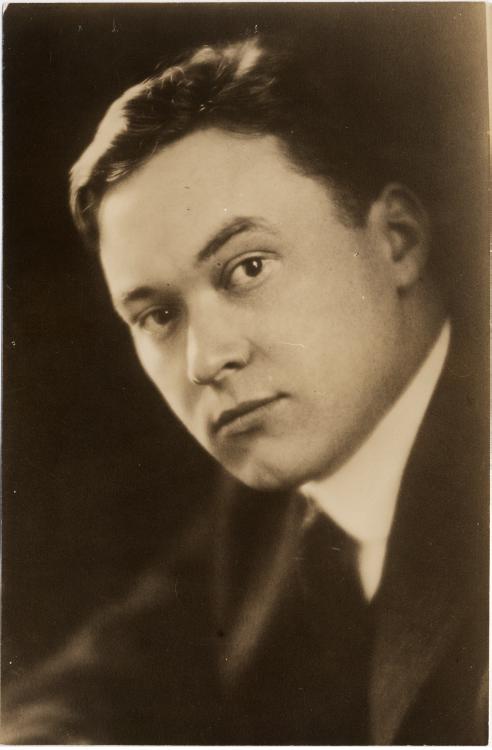
The phantom public
In 1913, Walter Lippmann delivered a quiet bomb to the foundations of democratic faith. The Phantom Public argues that the citizenry imagined by democratic theory, informed and competent and sovereign, simply does not exist. What we call "the public" is intermittent, easily manipulated, and incapable of the sustained judgment that self-governance requires. Elections, in Lippmann's bracing analysis, are not the expression of popular will but a civilized substitute for civil war a way to direct social conflict into manageable channels. He challenges the Progressive era's faith in direct democracy and proposes instead a system where insiders, not experts, make the difficult decisions that the masses cannot and should not be expected to understand. This is not a defense of aristocracy but a ruthless reckoning with what democracy actually looks like when you strip away the mythology. A century later, with democratic institutions under strain worldwide, Lippmann's uncomfortable diagnosis remains essential reading for anyone willing to question what they believe about popular rule.
Editions
X-Ray
“All men desire their own perfect adjustment, but they desire it, being finite men, on their own terms.””
— Walter Lippmann
“These various remedies, eugenic, educational, ethical, populist and socialist, all assume that either the voters are inherently competent to direct the course of affairs or that they are making progress towards such an ideal. I think [democracy] is a false ideal.””
— Walter Lippmann
“The public must be put in its place [...] so that each of us may live free of the trampling and the roar of a bewildered herd.””
— Walter Lippmann
“The private citizen today has come to feel rather like a deaf spectator in the back row, who ought to keep his mind on the mystery off there, but cannot quite manage to keep awake. He knows he is somehow affected by what is going on. Rules and regulations continually, taxes annually and wars occasionally remind him that he is being swept along by great drifts of circumstance. Yet these public affairs are in no convincing way his affairs. They are for the most part invisible. They are managed, if they are managed at all, at distant centers, from behind the scenes, by unnamed powers. As a private person he does not know for certain what is going on, or who is doing it, or where he is being carried. In the cold light of the experience he know that his sovereignty is a fiction. He reigns in theory, but in fact does not govern.””
— Walter Lippmann
“The outsider is necessarily ignorant, usually irrelevant and often meddlesome, because he is trying to navigate the ship from dry land.””
— Walter Lippmann
Link to this book
Add a free, dofollow link to Lex on your blog, forum, syllabus, or reading list.

<a href="https://lex-books.com/book/the-phantom-public-2cc4c897-d84b-4502-834f-26692bee1315"><img src="https://lex-books.com/badges/read-on-lex.svg" alt="Read The phantom public by Walter Lippmann free on Lex" width="160" height="40"></a>[](https://lex-books.com/book/the-phantom-public-2cc4c897-d84b-4502-834f-26692bee1315)[url=https://lex-books.com/book/the-phantom-public-2cc4c897-d84b-4502-834f-26692bee1315][img]https://lex-books.com/badges/read-on-lex.svg[/img][/url]Read The phantom public by Walter Lippmann free on Lex: https://lex-books.com/book/the-phantom-public-2cc4c897-d84b-4502-834f-26692bee1315Cite this book
Reading this edition for a paper or guide? Copy a citation.
Lippmann, Walter. The phantom public. Lex, lex-books.com/book/the-phantom-public-2cc4c897-d84b-4502-834f-26692bee1315.Lippmann, W. (n.d.). The phantom public. Lex. https://lex-books.com/book/the-phantom-public-2cc4c897-d84b-4502-834f-26692bee1315Lippmann, Walter. The phantom public. Lex. https://lex-books.com/book/the-phantom-public-2cc4c897-d84b-4502-834f-26692bee1315.