Poor Folk
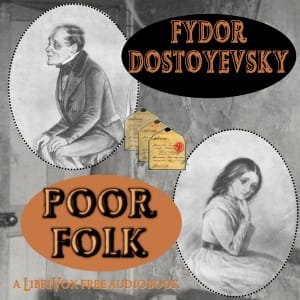
The novel that announced a revolutionary voice in world literature. Written when Dostoevsky was just twenty-four, "Poor Folk" unfolds entirely through letters between Makar Devushkin, a humble clerk, and Varvara Dobroselova, his distant relative and ward of a wealthy benefactor. Their correspondence traces the slow, excruciating unfolding of love between two people too poor to marry, a love constricted by the invisible walls of social hierarchy and material desperation. What distinguishes this early work is its radical empathy: Dostoevsky renders poverty not as melodrama but as a daily negotiation with dignity, where a torn dress or a borrowed coat becomes a matter of profound shame. The novel shocked St. Petersburg when it appeared in 1846, with the critic Belinsky declaring a new Gogol had arrived. It remains essential reading for anyone seeking to understand the origins of Dostoevsky's later obsessions, the suffering of the poor, the weight of shame, the impossible mathematics of love and survival.
Editions

Read by
Group Narration
2 readers
Tony Addison, Sonia
Link to this book
Add a free, dofollow link to Lex on your blog, forum, syllabus, or reading list.

<a href="https://lex-books.com/book/poor-folk-0f492cf6-495f-43ea-9b78-9636ef8c5e72"><img src="https://lex-books.com/badges/read-on-lex.svg" alt="Read Poor Folk by Fyodor Dostoyevsky free on Lex" width="160" height="40"></a>[](https://lex-books.com/book/poor-folk-0f492cf6-495f-43ea-9b78-9636ef8c5e72)[url=https://lex-books.com/book/poor-folk-0f492cf6-495f-43ea-9b78-9636ef8c5e72][img]https://lex-books.com/badges/read-on-lex.svg[/img][/url]Read Poor Folk by Fyodor Dostoyevsky free on Lex: https://lex-books.com/book/poor-folk-0f492cf6-495f-43ea-9b78-9636ef8c5e72Cite this book
Reading this edition for a paper or guide? Copy a citation.
Dostoyevsky, Fyodor. Poor Folk. Lex, lex-books.com/book/poor-folk-0f492cf6-495f-43ea-9b78-9636ef8c5e72.Dostoyevsky, F. (n.d.). Poor Folk. Lex. https://lex-books.com/book/poor-folk-0f492cf6-495f-43ea-9b78-9636ef8c5e72Dostoyevsky, Fyodor. Poor Folk. Lex. https://lex-books.com/book/poor-folk-0f492cf6-495f-43ea-9b78-9636ef8c5e72.