Poitiers
1913
Hilaire Belloc brings his distinctive voice to this meticulous account of the Battle of Poitiers, the 1356 engagement that cemented Edward, the Black Prince's reputation as one of medieval Europe's greatest commanders. Writing from his unique position as an Anglo-Frenchman, Belloc weaves together the political tensions of the Hundred Years' War with a vivid narrative of medieval warfare. The book examines how a smaller English force, skilfully combining men-at-arms with deadly longbowmen, routed the French army and captured King Jean II in a battle that reshaped the balance of power in medieval Europe. Belloc doesn't merely recount tactics; he explores the characters, ambitions, and circumstances that brought two armies to the fields outside Poitiers. The result is both a scholar's account of a pivotal military engagement and a meditation on how fortunes of war turn on a single day's slaughter. For readers drawn to military history, medieval politics, or the long entanglement between England and France, Belloc's early twentieth-century perspective offers both historical insight and period-appropriate literary flair.
Editions
X-Ray
Son of Edward III, commander of the Anglo-Gascon forces at Poitiers. A skilled military leader in his twenty-sixth year, known for his courage, generosity, and tactical brilliance in battle.
The Valois king of France who led the French forces against the Black Prince. Captured at Poitiers, his defeat had enormous political consequences for medieval France.
Heir to the French throne and commander of the first 'battle' in the French army. Led a valiant but unsuccessful assault against the English defensive position.
Brother of King John who commanded the second 'battle' of the French army. His failure to engage and subsequent flight from the battlefield was crucial to French defeat.
About Poitiers
Chapter Summaries
- Introduction
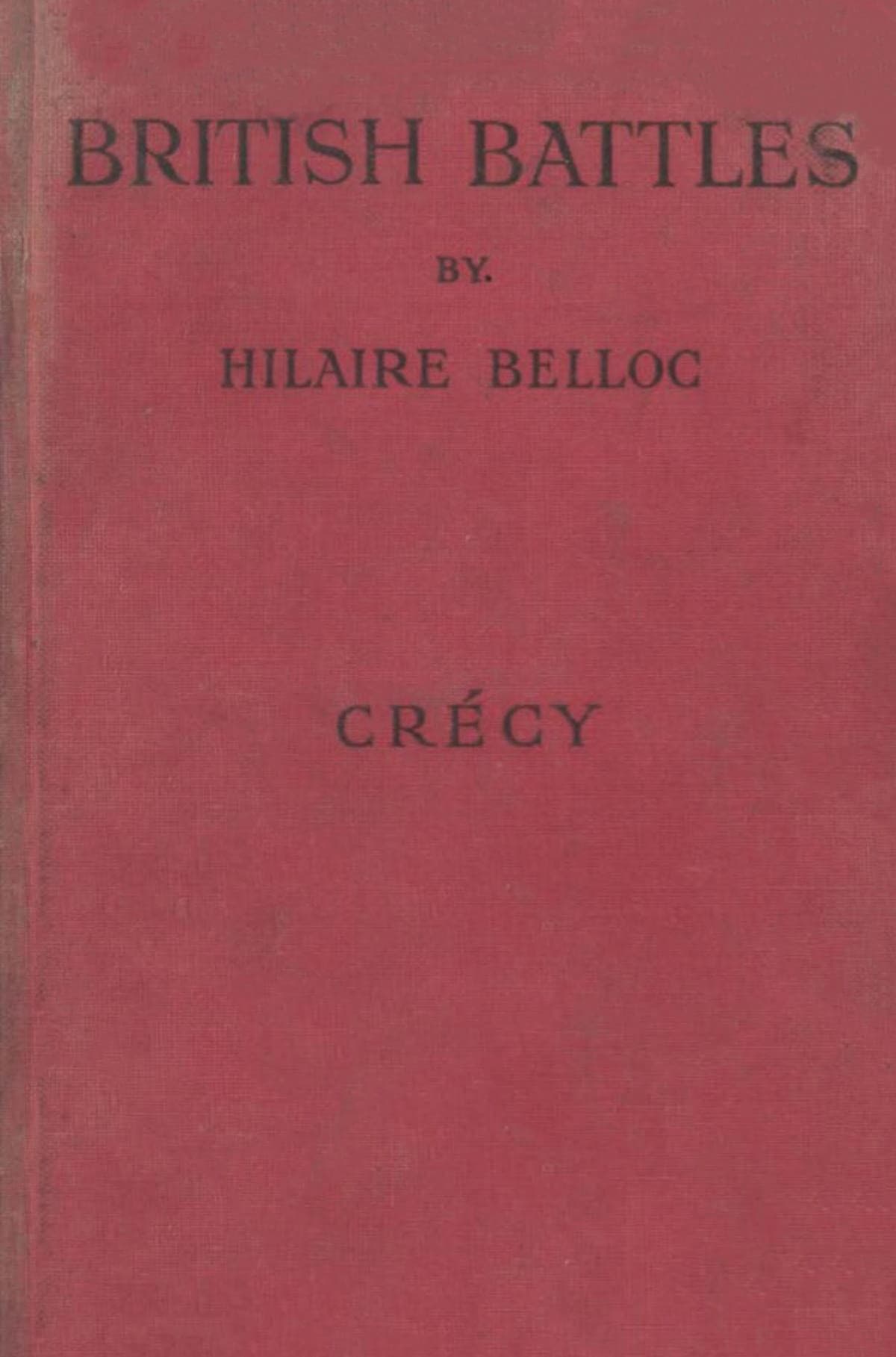
- Establishes Poitiers as parallel to Crécy, fought ten years later with similar tactical elements. Introduces the political context of Edward III's claims to French territory and the character of the Black Prince as military commander.
- I
- Details the Black Prince's raid northward from Bergerac to the Loire, covering 200 miles in a methodical advance designed to draw French forces south. Describes the composition and objectives of his 7,000-man force.
- II
- Chronicles the complex maneuvering as John's forces pursue the Black Prince southward, leading to the accidental encounter near Poitiers. Details the strategic positioning and tactical preparations of both armies.
Key Themes
- Military Innovation vs. Tradition
- The battle demonstrates the superiority of new English tactics (dismounted men-at-arms, longbow supremacy) over traditional French feudal cavalry charges. Belloc emphasizes how tactical innovation can overcome numerical superiority.
- Leadership and Command
- The contrast between effective leadership (Black Prince's tactical flexibility) and poor command decisions (Orleans' flight, John's chivalrous but strategically unsound final charge) determines the battle's outcome.
- Feudal Honor vs. Military Pragmatism
- The tension between chivalric ideals and practical warfare is evident in King John's decision to fight rather than retreat, and in the French preference for frontal assault over tactical maneuvering.
Characters
- Edward, the Black Prince(protagonist)
- Son of Edward III, commander of the Anglo-Gascon forces at Poitiers. A skilled military leader in his twenty-sixth year, known for his courage, generosity, and tactical brilliance in battle.
- King John of France (John II)(antagonist)
- The Valois king of France who led the French forces against the Black Prince. Captured at Poitiers, his defeat had enormous political consequences for medieval France.
- Charles, Duke of Normandy (The Dauphin)(major)
- Heir to the French throne and commander of the first 'battle' in the French army. Led a valiant but unsuccessful assault against the English defensive position.
- Duke of Orleans(major)
- Brother of King John who commanded the second 'battle' of the French army. His failure to engage and subsequent flight from the battlefield was crucial to French defeat.
- Earl of Salisbury(major)
- English commander who led the first line of defense at Poitiers alongside Suffolk. Held the crucial hedge position against French attacks.
- Earl of Suffolk(major)
- English commander who shared command of the first defensive line with Salisbury. Played a key role in repelling the initial French assaults.
Link to this book
Add a free, dofollow link to Lex on your blog, forum, syllabus, or reading list.

<a href="https://lex-books.com/book/poitiers-50a39a3d-92a7-48cb-bb4d-c4ba60b58d84"><img src="https://lex-books.com/badges/read-on-lex.svg" alt="Read Poitiers by Hilaire Belloc free on Lex" width="160" height="40"></a>[](https://lex-books.com/book/poitiers-50a39a3d-92a7-48cb-bb4d-c4ba60b58d84)[url=https://lex-books.com/book/poitiers-50a39a3d-92a7-48cb-bb4d-c4ba60b58d84][img]https://lex-books.com/badges/read-on-lex.svg[/img][/url]Read Poitiers by Hilaire Belloc free on Lex: https://lex-books.com/book/poitiers-50a39a3d-92a7-48cb-bb4d-c4ba60b58d84Cite this book
Reading this edition for a paper or guide? Copy a citation.
Belloc, Hilaire. Poitiers. Lex, lex-books.com/book/poitiers-50a39a3d-92a7-48cb-bb4d-c4ba60b58d84.Belloc, H. (1913). Poitiers. Lex. https://lex-books.com/book/poitiers-50a39a3d-92a7-48cb-bb4d-c4ba60b58d84Belloc, Hilaire. Poitiers. Lex. https://lex-books.com/book/poitiers-50a39a3d-92a7-48cb-bb4d-c4ba60b58d84.