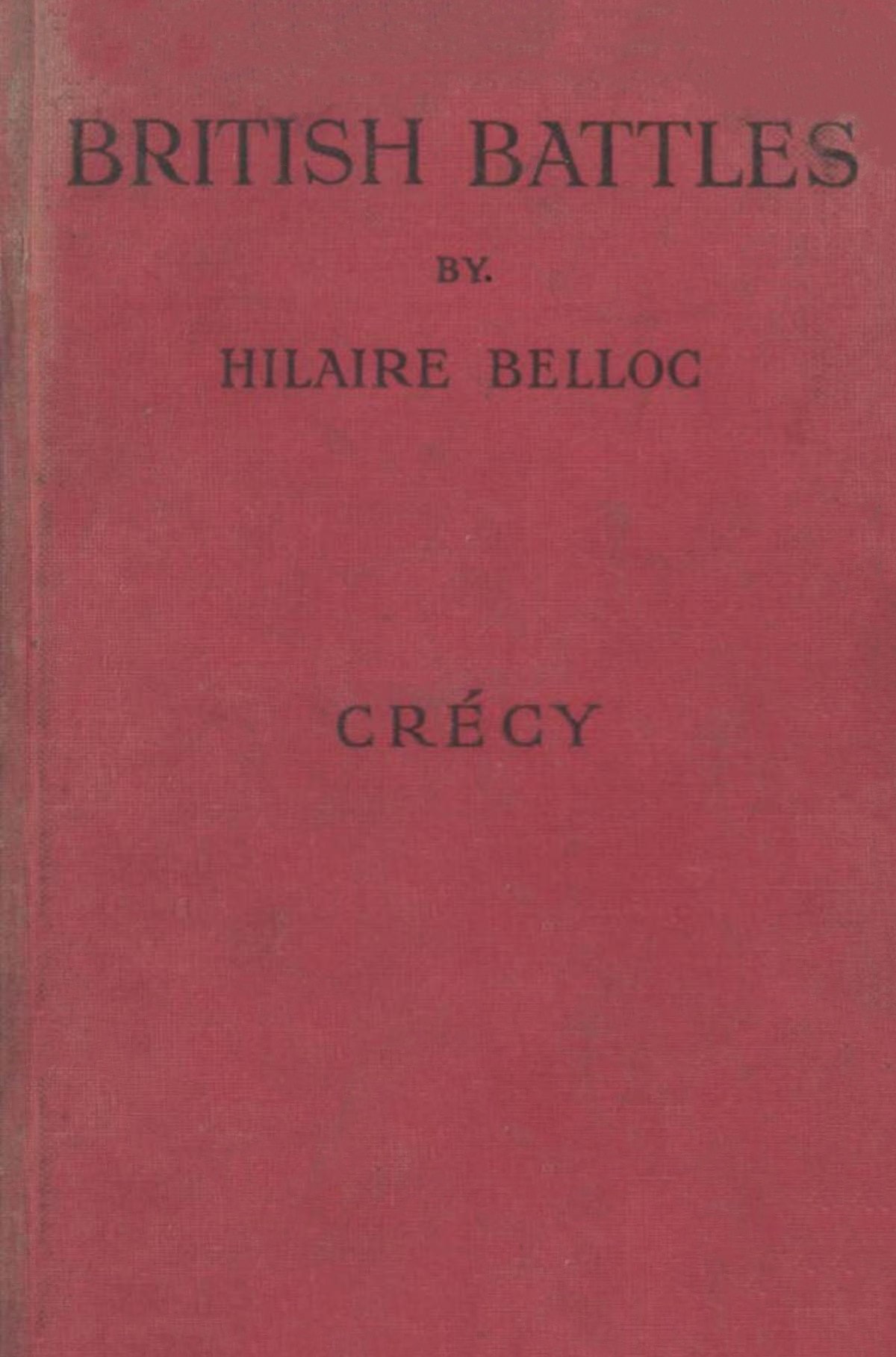
Crécy
1912
Crécy
1912
The Battle of Crécy remains one of the most shocking upsets in military history: a force of English yeomen and knights, outnumbered perhaps three to one, annihilated the flower of French chivalry on an August afternoon in 1346. Hilaire Belloc, writing with his characteristic fire and precision, reconstructs this seminal confrontation with the urgency of someone who understands that history is not dead records but living arguments about who we are and how we got here. Belloc begins with a provocation: medieval battles are nearly impossible to reconstruct with certainty, yet we must try, because what we choose to remember about the past shapes how we understand ourselves. He paints the political tensions leading to war, the quixotic personality of Edward III, and the fatal French contempt for archers. But Crécy transcends military analysis. Belloc uses this battle to examine the collapse of feudal chivalry, the emergence of England as a military power, and the brutal mathematics of war where honor often becomes the first casualty. For readers who enjoy military history with strong opinions, for those who want to understand the roots of Anglo-French rivalry, and for anyone who believes the past should be argued with rather than merely cataloged, Belloc's Crécy remains essential reading over a century after its publication.
Editions
X-Ray
King of England who led the English forces in the Crécy campaign. A skilled military commander who demonstrated strategic brilliance despite the campaign's initially haphazard nature.
Young Prince of Wales, son of Edward III, who commanded the right wing at Crécy. Though nominally in command, he was guided by experienced commanders like Warwick.
King of France and Edward III's rival for the French throne. Led the much larger but poorly coordinated French forces against the English at Crécy.
Brother of Philip VI who commanded the first French cavalry charge at Crécy. His premature attack contributed to the French defeat.
About Crécy
Chapter Summaries
- Introduction
- Belloc explains the challenges of reconstructing medieval battles due to limited contemporary sources. He outlines his methodology using tradition, monuments, and documents, with particular emphasis on the value of unconscious witnesses like kitchen accounts.
- I
- Describes the origins of the Hundred Years' War as Edward III's claim to the French throne through his mother Isabella. Belloc emphasizes this was more a feudal adventure than a national war, with both sides sharing language, culture, and often blood relationships.
- II
- Details Edward's 46-day campaign from landing at St. Vaast through his retreat to Crécy. The chapter reconstructs the army's movements using kitchen accounts and chronicles, showing Edward's initial aimless raiding followed by desperate retreat when pursued by Philip's larger force.
Key Themes
- Medieval Warfare Evolution
- The battle represents a turning point from feudal cavalry-dominated warfare to infantry-based tactics, with English longbowmen proving superior to traditional mounted knights and crossbowmen.
- Historical Methodology
- Belloc extensively discusses the challenges of reconstructing medieval battles from limited sources, emphasizing the importance of archaeological evidence, terrain analysis, and critical evaluation of chronicles.
- Feudal vs. National Identity
- The conflict illustrates the transition from feudal loyalties to emerging national consciousness, with the war initially being a dispute among related nobility rather than between distinct nations.
Characters
- Edward III of England(protagonist)
- King of England who led the English forces in the Crécy campaign. A skilled military commander who demonstrated strategic brilliance despite the campaign's initially haphazard nature.
- Edward the Black Prince(major)
- Young Prince of Wales, son of Edward III, who commanded the right wing at Crécy. Though nominally in command, he was guided by experienced commanders like Warwick.
- Philip VI of France(antagonist)
- King of France and Edward III's rival for the French throne. Led the much larger but poorly coordinated French forces against the English at Crécy.
- Count of Alençon(major)
- Brother of Philip VI who commanded the first French cavalry charge at Crécy. His premature attack contributed to the French defeat.
- King of Bohemia (John the Blind)(major)
- Blind king who fought as an ally of France at Crécy and was killed in the battle. His death became one of the most memorable incidents of the engagement.
- Earl of Warwick(major)
- Experienced English commander who served as advisor to the Black Prince and played a crucial role in the English victory.
Link to this book
Add a free, dofollow link to Lex on your blog, forum, syllabus, or reading list.

<a href="https://lex-books.com/book/cr-cy-31ce673a-3839-48bf-9f9b-dbe1785c63cb"><img src="https://lex-books.com/badges/read-on-lex.svg" alt="Read Crécy by Hilaire Belloc free on Lex" width="160" height="40"></a>[](https://lex-books.com/book/cr-cy-31ce673a-3839-48bf-9f9b-dbe1785c63cb)[url=https://lex-books.com/book/cr-cy-31ce673a-3839-48bf-9f9b-dbe1785c63cb][img]https://lex-books.com/badges/read-on-lex.svg[/img][/url]Read Crécy by Hilaire Belloc free on Lex: https://lex-books.com/book/cr-cy-31ce673a-3839-48bf-9f9b-dbe1785c63cbCite this book
Reading this edition for a paper or guide? Copy a citation.
Belloc, Hilaire. Crécy. Lex, lex-books.com/book/cr-cy-31ce673a-3839-48bf-9f9b-dbe1785c63cb.Belloc, H. (1912). Crécy. Lex. https://lex-books.com/book/cr-cy-31ce673a-3839-48bf-9f9b-dbe1785c63cbBelloc, Hilaire. Crécy. Lex. https://lex-books.com/book/cr-cy-31ce673a-3839-48bf-9f9b-dbe1785c63cb.