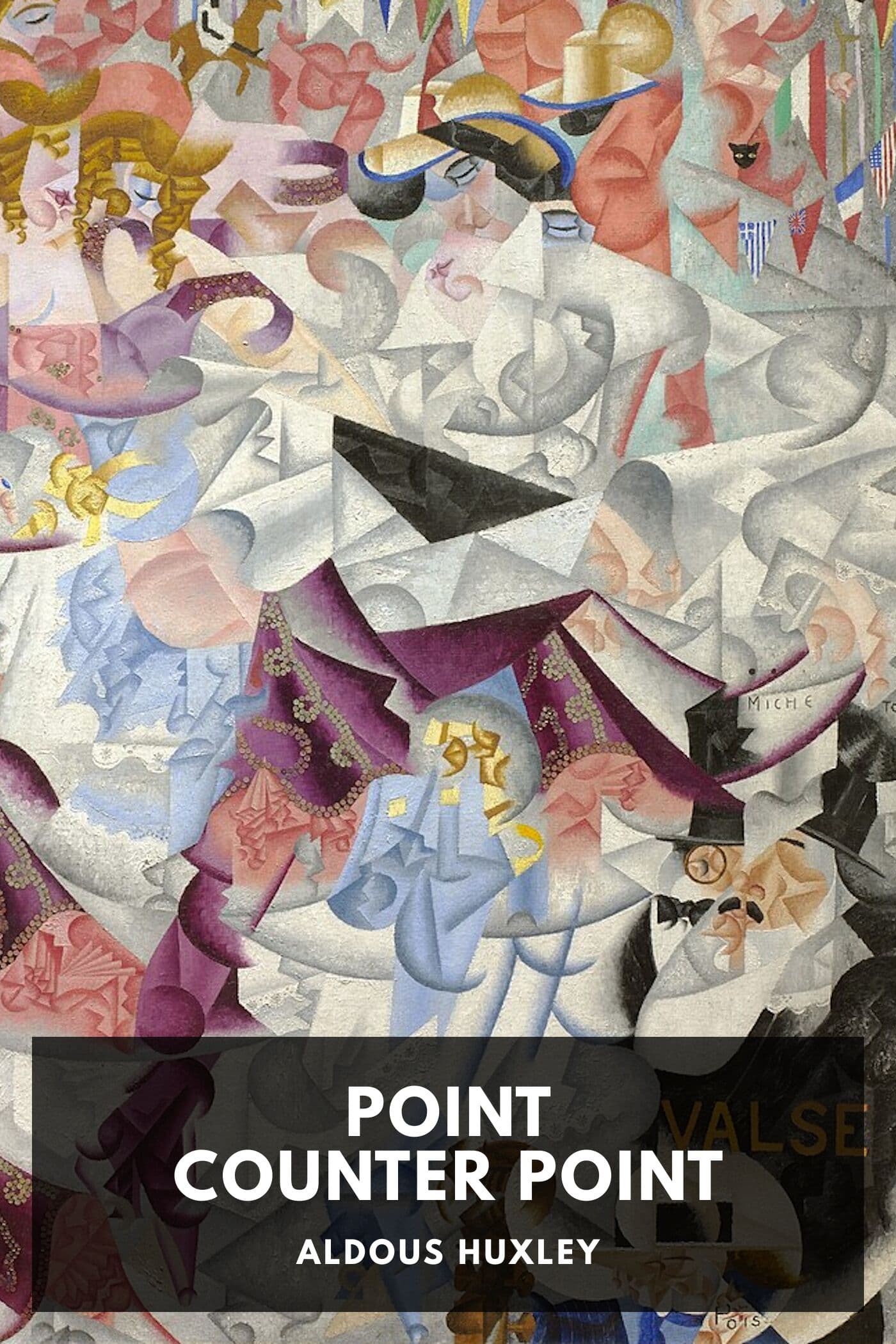
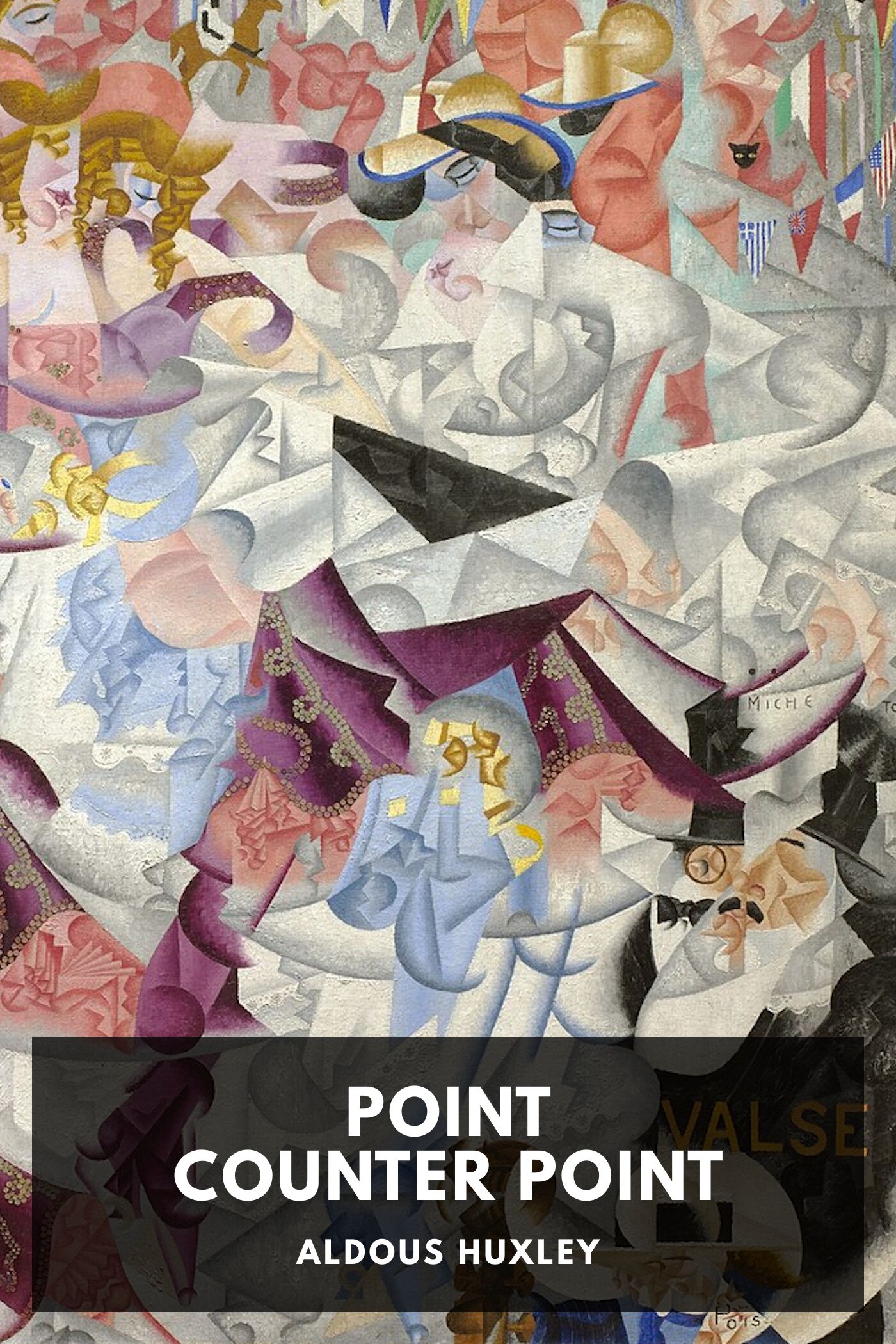
Point Counter Point
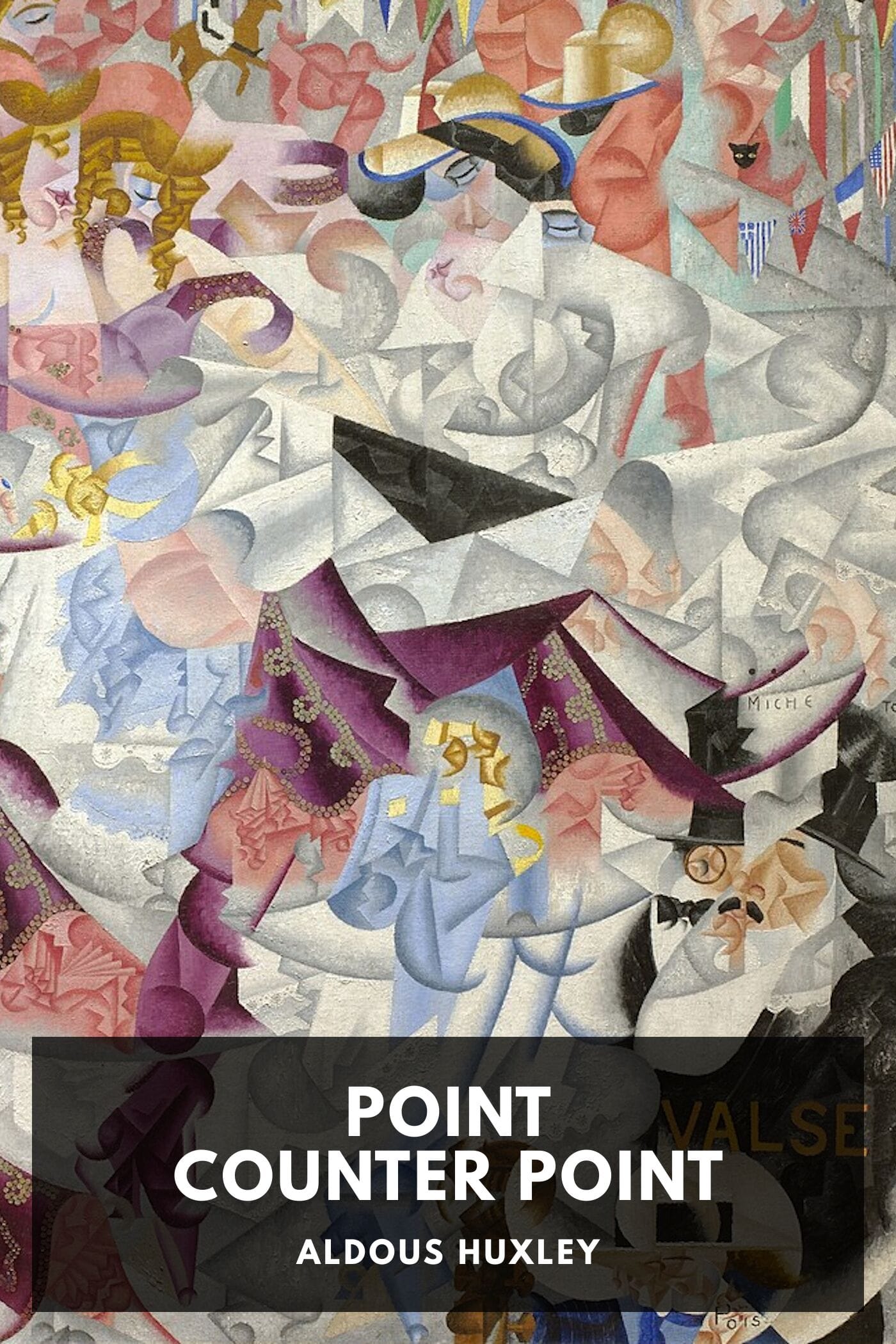
Aldous Huxley's ambitious fourth novel plunges into the tumultuous, often absurd, lives of a sprawling cast of English intellectuals, artists, and socialites in the late 1920s. Through a dizzying array of interconnected narratives, we witness their tangled love affairs, philosophical debates, political machinations, and existential crises. Huxley masterfully employs a 'musicalization of fiction' technique, presenting contrasting viewpoints and experiences—love against lust, science against spirituality, individualism against societal pressure—to satirize the era's intellectual pretensions while grappling with profound human dilemmas. It's a dazzling, kaleidoscopic portrait of a society in flux, where every conviction finds its unsettling counterpoint. More than a mere social satire, *Point Counter Point* is a literary laboratory where Huxley dissects the very fabric of human experience and the search for meaning in a rapidly modernizing world. Its experimental structure, where ideas clash and characters serve as living arguments, foreshadows the dystopian brilliance of *Brave New World*. This *roman à clef* offers a fascinating, often biting, glimpse into the real-life personalities and intellectual currents that shaped Huxley's own circle, making it an essential read for anyone interested in the Jazz Age, the evolution of modernism, or the enduring struggle to reconcile conflicting truths.
Editions

X-Ray
A young writer and editor for the Literary World, torn between his pregnant mistress Marjorie and the alluring, cynical Lucy Tantamount, representing the conflict between duty and desire.
Walter's pregnant mistress, who left her husband for him and now faces his waning affection and betrayal, embodying traditional virtues and suffering.
A beautiful, cynical, and manipulative socialite who embodies modern amorality and the pursuit of sensation, becoming Walter's new lover.
A detached, intellectual novelist who observes life and people as material for his work, struggling to reconcile his intellectualism with emotional and physical existence.
About Point Counter Point
Chapter Summaries
- I
- Walter Bidlake prepares for a party, feeling guilty about leaving his pregnant mistress Marjorie for Lucy Tantamount. He reflects on his waning love for Marjorie, her principles, and his own self-hatred and resentment, while Marjorie implores him to stay.
- II
- The narrative shifts to Tantamount House, describing its history of wealth built on exploitation. Lady Edward Tantamount hosts a musical party, where John Bidlake, her former lover, observes the guests, including Fanny Logan, Polly Logan, and Hugo Brockle, while critiquing the music and social hypocrisy.
- III
- Lord Edward Tantamount, a reclusive biologist, works in his laboratory, detached from the party downstairs. He reflects on his past, how a scientific revelation saved him from despair, and conducts experiments on newts with his assistant Illidge, who resents the rich.
Key Themes
- Mind vs. Body / Intellect vs. Instinct
- This is the overarching theme, explored through characters like Philip Quarles, who lives in a world of ideas, and Rampion, who advocates for integral living. The novel critiques the modern tendency to prioritize intellectual or spiritual life at the expense of physical and emotional instincts, leading to fragmentation and unhappiness.
- The Nature of Love and Desire
- The book presents diverse forms of love, from Walter's tormented infatuation with Lucy and his guilt towards Marjorie, to Burlap's 'spiritualized' and hypocritical affections, and Rampion's healthy, earthy sensuality. It questions whether love can be truly 'pure' or if it's always intertwined with baser instincts, and how societal expectations distort natural affection.
- Modernity and Fragmentation
- Huxley portrays modern society as fragmented and unwholesome, characterized by specialization, artificiality, and a loss of genuine human connection. Characters are often isolated, unable to reconcile different aspects of themselves or connect meaningfully with others, leading to boredom, cynicism, and destructive behavior.
Characters
- Walter Bidlake(protagonist)
- A young writer and editor for the Literary World, torn between his pregnant mistress Marjorie and the alluring, cynical Lucy Tantamount, representing the conflict between duty and desire.
- Marjorie Carling(supporting)
- Walter's pregnant mistress, who left her husband for him and now faces his waning affection and betrayal, embodying traditional virtues and suffering.
- Lucy Tantamount(antagonist)
- A beautiful, cynical, and manipulative socialite who embodies modern amorality and the pursuit of sensation, becoming Walter's new lover.
- Philip Quarles(protagonist)
- A detached, intellectual novelist who observes life and people as material for his work, struggling to reconcile his intellectualism with emotional and physical existence.
- Elinor Quarles(supporting)
- Philip's wife, who is intuitive and emotional, yearning for genuine human connection and struggling with her husband's intellectual detachment.
- Mark Rampion(supporting)
- A painter and philosopher who advocates for 'integral living' – a harmonious balance of mind, body, and instinct – and serves as a foil to the intellectual characters.
Link to this book
Add a free, dofollow link to Lex on your blog, forum, syllabus, or reading list.

<a href="https://lex-books.com/book/point-counter-point-190e2cbb-9376-4d1a-974f-b6cd9937d848"><img src="https://lex-books.com/badges/read-on-lex.svg" alt="Read Point Counter Point by Aldous Huxley free on Lex" width="160" height="40"></a>[](https://lex-books.com/book/point-counter-point-190e2cbb-9376-4d1a-974f-b6cd9937d848)[url=https://lex-books.com/book/point-counter-point-190e2cbb-9376-4d1a-974f-b6cd9937d848][img]https://lex-books.com/badges/read-on-lex.svg[/img][/url]Read Point Counter Point by Aldous Huxley free on Lex: https://lex-books.com/book/point-counter-point-190e2cbb-9376-4d1a-974f-b6cd9937d848Cite this book
Reading this edition for a paper or guide? Copy a citation.
Huxley, Aldous. Point Counter Point. Lex, lex-books.com/book/point-counter-point-190e2cbb-9376-4d1a-974f-b6cd9937d848.Huxley, A. (n.d.). Point Counter Point. Lex. https://lex-books.com/book/point-counter-point-190e2cbb-9376-4d1a-974f-b6cd9937d848Huxley, Aldous. Point Counter Point. Lex. https://lex-books.com/book/point-counter-point-190e2cbb-9376-4d1a-974f-b6cd9937d848.