Pioneers of Science
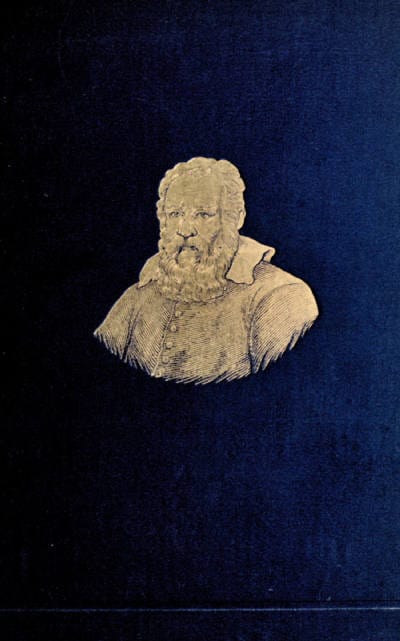
A distinguished Victorian scientist looks back at the revolutionaries who reshaped our place in the cosmos. Sir Oliver Lodge, himself a pioneer of wireless telegraphy, traces the great arc of astronomical discovery from Thales and Archimedes through Copernicus, Tycho Brahe, and Galileo. What emerges is not merely a catalog of achievements but a meditation on intellectual courage: the willingness of certain minds to challenge centuries of accepted wisdom and peer into the machinery of the heavens. Lodge writes with the particular admiration of one scientist for another, conveying the drama of moments when human understanding fundamentally shifted. The Copernican revolution, placing the sun rather than Earth at the center of everything, receives particularly vivid treatment as the hinge upon which modern astronomy turned. Originally delivered as lectures in 1887, this book captures a moment when the discoveries of previous centuries were still freshly astonishing, before they became textbook certainties. For readers who want to feel the wonder of scientific revelation as it happened, this is an indispensable time capsule.
Editions
X-Ray
“All that Copernicus could suggest on this head was that perhaps the atmosphere might help to carry things forward, and enable them to keep pace with the earth.””
— Oliver, Sir Lodge
“4. That if the earth moved, or even revolved on its own axis, a stone or other dropped body ought to be left far behind.””
— Oliver, Sir Lodge
“The only answer that Copernicus could give to this was that they might be difficult to see without extra powers of sight, but he ventured to predict that the phases would be seen if ever our powers of vision should be enhanced.””
— Oliver, Sir Lodge
“Mercury and Venus ought to show phases like the moon.””
— Oliver, Sir Lodge
“unless they are at a practically infinite distance. That is the only answer that can be given. It was the tentative answer given by Copernicus. It is the correct answer. Not only from every position of the earth, but from every planet of the solar system, the same constellations are visible, and the stars have the same aspect. The””
— Oliver, Sir Lodge
“In June the earth is 184 million miles away from where it was in December: how””
— Oliver, Sir Lodge
“Ptolemaic system continued””
— Oliver, Sir Lodge
“e.g. the sky looks the same at midnight on the 1st of October as it does at 10 p.m. on the 1st of November.””
— Oliver, Sir Lodge
“We have seen how Copernicus placed the earth in its true position in the solar system, making””
— Oliver, Sir Lodge
Link to this book
Add a free, dofollow link to Lex on your blog, forum, syllabus, or reading list.

<a href="https://lex-books.com/book/pioneers-of-science-bc756372-6a16-4b0e-b379-d94666ac258f"><img src="https://lex-books.com/badges/read-on-lex.svg" alt="Read Pioneers of Science by Oliver, Sir Lodge free on Lex" width="160" height="40"></a>[](https://lex-books.com/book/pioneers-of-science-bc756372-6a16-4b0e-b379-d94666ac258f)[url=https://lex-books.com/book/pioneers-of-science-bc756372-6a16-4b0e-b379-d94666ac258f][img]https://lex-books.com/badges/read-on-lex.svg[/img][/url]Read Pioneers of Science by Oliver, Sir Lodge free on Lex: https://lex-books.com/book/pioneers-of-science-bc756372-6a16-4b0e-b379-d94666ac258fCite this book
Reading this edition for a paper or guide? Copy a citation.
Oliver, Sir Lodge. Pioneers of Science. Lex, lex-books.com/book/pioneers-of-science-bc756372-6a16-4b0e-b379-d94666ac258f.Oliver, S. L. (n.d.). Pioneers of Science. Lex. https://lex-books.com/book/pioneers-of-science-bc756372-6a16-4b0e-b379-d94666ac258fOliver, Sir Lodge. Pioneers of Science. Lex. https://lex-books.com/book/pioneers-of-science-bc756372-6a16-4b0e-b379-d94666ac258f.