Raymond; Or, Life and Death: With Examples of the Evidence for Survival of Memory and Affection After Death.
1916
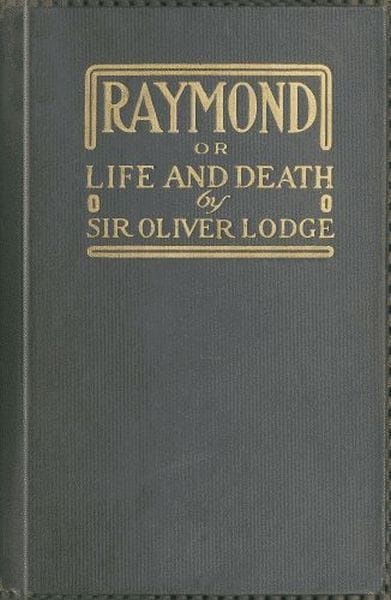
Raymond; Or, Life and Death: With Examples of the Evidence for Survival of Memory and Affection After Death.
1916
In the winter of 1915, Captain Raymond Lodge, twenty-three years old, was killed by a shell fragment in France. His father, the eminent physicist Sir Oliver Lodge, refused to accept this as an ending. Raymond is both a father's mournful tribute to a brilliant young man taken by war and a desperate intellectual's attempt to pierce the veil of death. The book interweaves Raymond's own letters from the trenches, vivid, humorous, tinged with the premonitions of a man who knew he was living on borrowed time, with the elder Lodge's spiritualist investigations. Here is a scientist using the tools of reason to pursue the irrational: seances, mediums, the trembling table, the fading voice from beyond. What emerges is neither proof nor fraud but something more human: a father's inability to let go. Raymond endures as a document of grief stripped of pretense, a wartime memoir that refuses the consolations of silence. It is for readers who want to understand what happens when a rational mind meets irreducible loss, and finds not answers but only the terrible, beautiful persistence of love.
Editions
Link to this book
Add a free, dofollow link to Lex on your blog, forum, syllabus, or reading list.

<a href="https://lex-books.com/book/raymond-or-life-and-death-with-examples-of-the-evidence-for-survival-of-memory-a-631212b0-ad1d-45c2-8376-7f88532fec1f"><img src="https://lex-books.com/badges/read-on-lex.svg" alt="Read Raymond; Or, Life and Death: With Examples of the Evidence for Survival of Memory and Affection After Death. by Oliver, Sir Lodge free on Lex" width="160" height="40"></a>[](https://lex-books.com/book/raymond-or-life-and-death-with-examples-of-the-evidence-for-survival-of-memory-a-631212b0-ad1d-45c2-8376-7f88532fec1f)[url=https://lex-books.com/book/raymond-or-life-and-death-with-examples-of-the-evidence-for-survival-of-memory-a-631212b0-ad1d-45c2-8376-7f88532fec1f][img]https://lex-books.com/badges/read-on-lex.svg[/img][/url]Read Raymond; Or, Life and Death: With Examples of the Evidence for Survival of Memory and Affection After Death. by Oliver, Sir Lodge free on Lex: https://lex-books.com/book/raymond-or-life-and-death-with-examples-of-the-evidence-for-survival-of-memory-a-631212b0-ad1d-45c2-8376-7f88532fec1fCite this book
Reading this edition for a paper or guide? Copy a citation.
Oliver, Sir Lodge. Raymond; Or, Life and Death: With Examples of the Evidence for Survival of Memory and Affection After Death.. Lex, lex-books.com/book/raymond-or-life-and-death-with-examples-of-the-evidence-for-survival-of-memory-a-631212b0-ad1d-45c2-8376-7f88532fec1f.Oliver, S. L. (1916). Raymond; Or, Life and Death: With Examples of the Evidence for Survival of Memory and Affection After Death.. Lex. https://lex-books.com/book/raymond-or-life-and-death-with-examples-of-the-evidence-for-survival-of-memory-a-631212b0-ad1d-45c2-8376-7f88532fec1fOliver, Sir Lodge. Raymond; Or, Life and Death: With Examples of the Evidence for Survival of Memory and Affection After Death.. Lex. https://lex-books.com/book/raymond-or-life-and-death-with-examples-of-the-evidence-for-survival-of-memory-a-631212b0-ad1d-45c2-8376-7f88532fec1f.