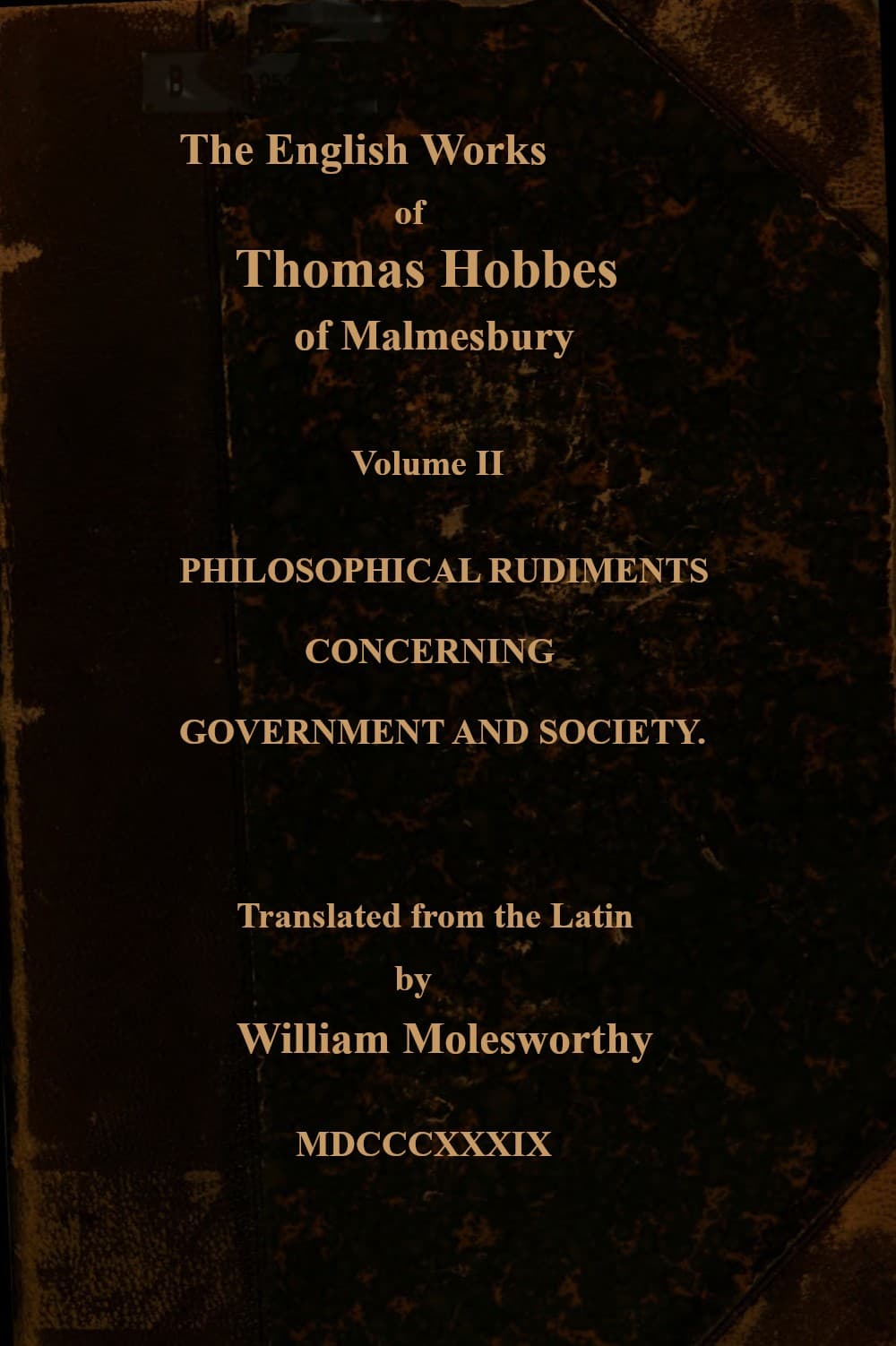
Philosophical Rudiments Concerning Government and Society
Philosophical Rudiments Concerning Government and Society
In 1642, a exiled English philosopher in Paris wrote a short book that would reshape how humanity thinks about power, freedom, and the violence lurking beneath civilization. That book is De Cive, and it contains the phrase that haunts political philosophy: "bellum omnium contra omnes" , the war of all against all. Hobbes argued that without an absolute sovereign to fear, humans in a state of nature would destroy each other. Every person, every nation, would be in a constant struggle for survival. This is not gloom, but cold-eyed realism about what humans are capable of when constraints fall away. The social contract emerges not as idealism but as grim necessity. We surrender certain freedoms to a common authority because the alternative is annihilation. De Cive is the raw, concentrated argument that Leviathan would later expand into a doorstop. Here, Hobbes's logic cuts cleaner, his prose more锋利, his conclusions more radical. This is where modern political philosophy begins, with a French title meaning "On the Citizen" and an English translation that called it "Philosophical Rudiments Concerning Government and Society." For anyone who wants to understand the foundations of liberal thought, the origins of the nation-state, or simply why humans keep arguing about freedom and power, this is where it started.
X-Ray