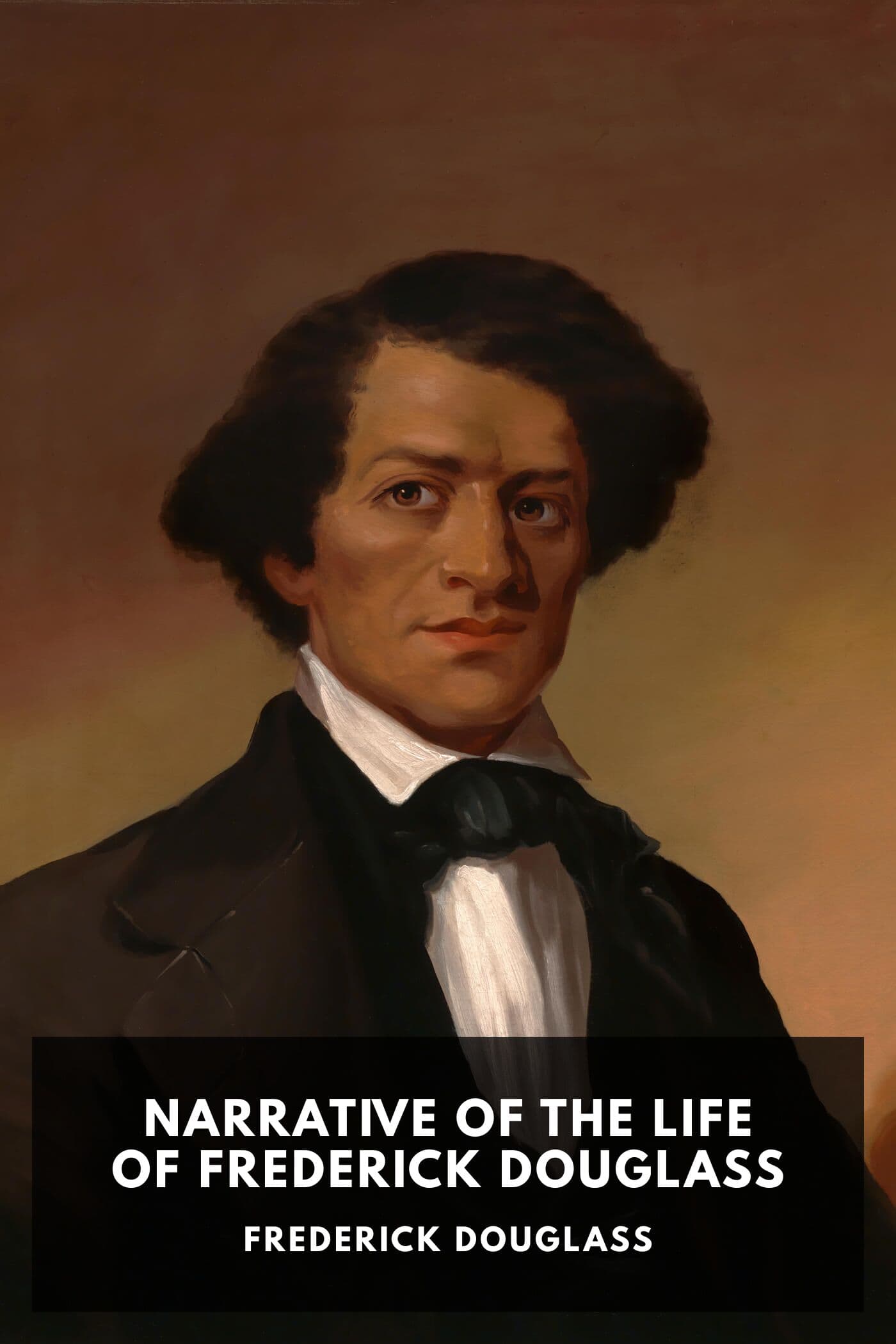
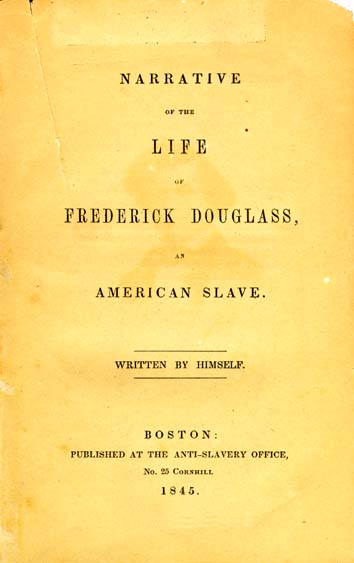
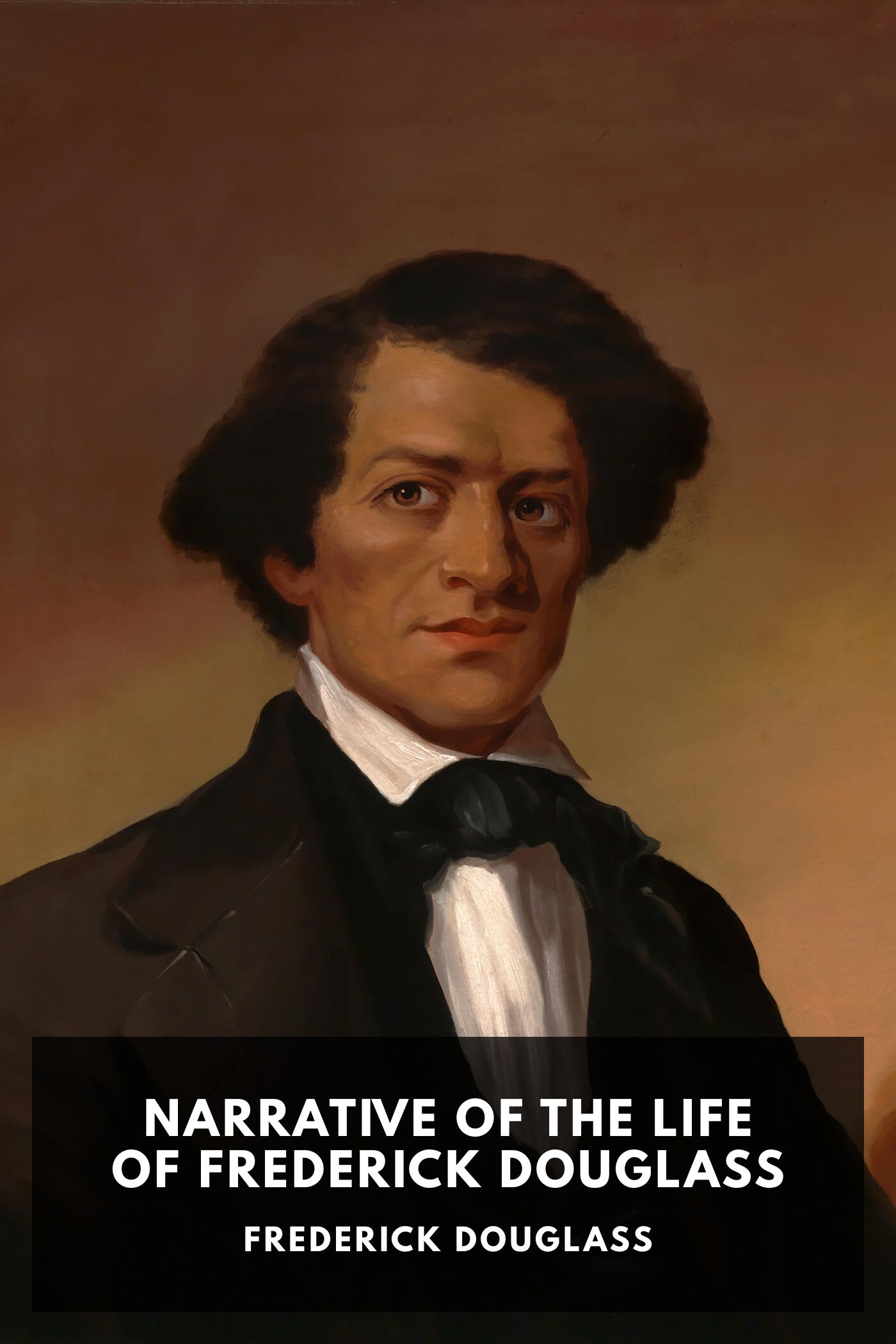
Narrative of the Life of Frederick Douglass, an American Slave
1845
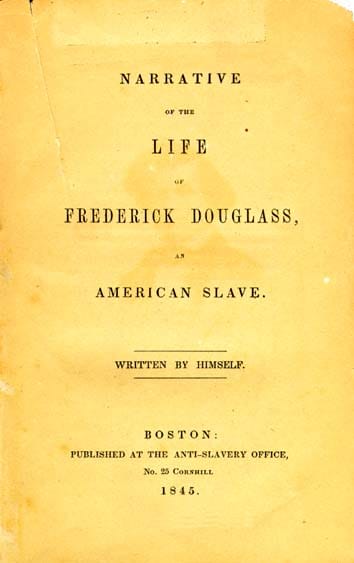
Narrative of the Life of Frederick Douglass, an American Slave
1845
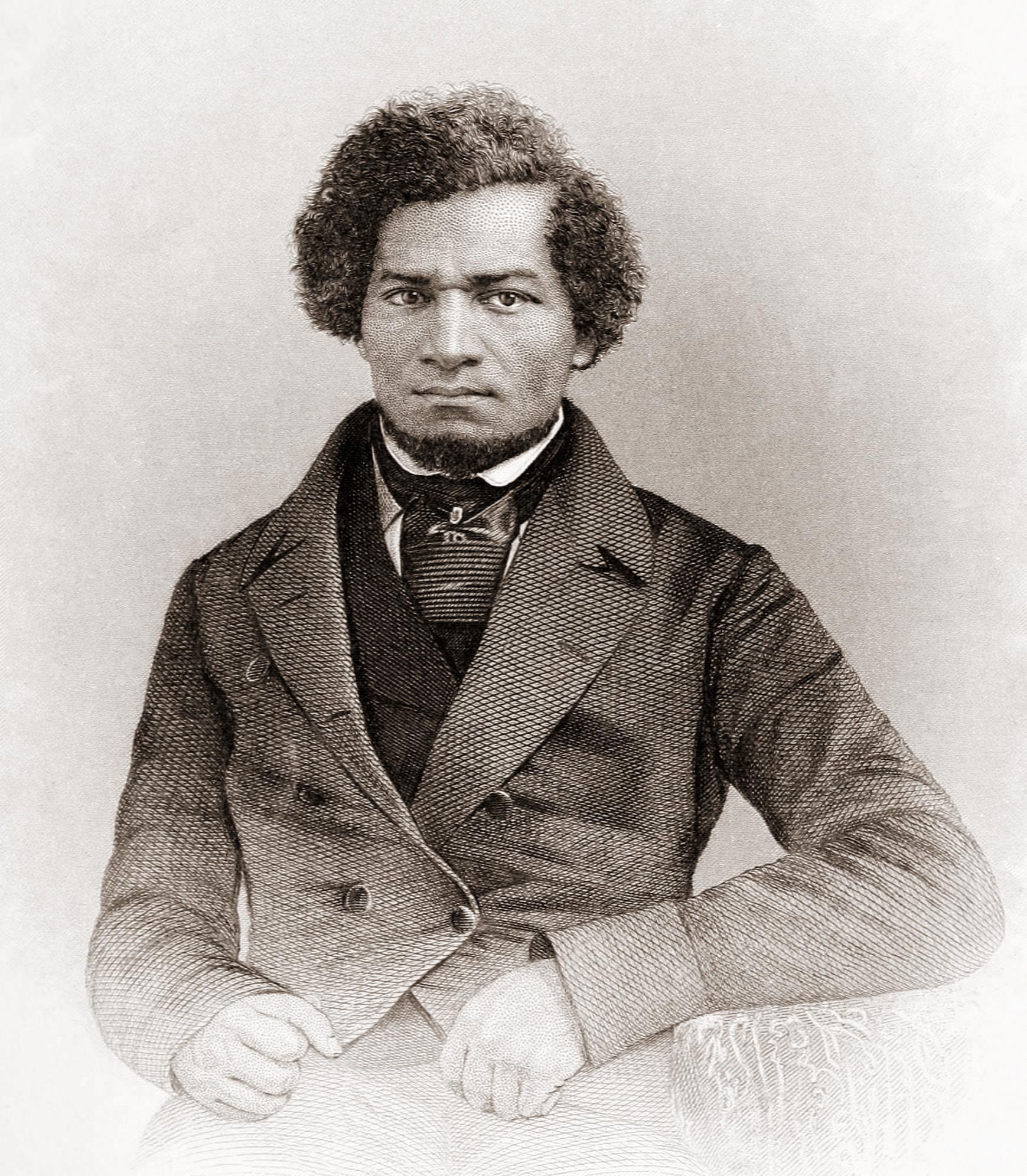
One of the most electrifying autobiographies in American letters. Frederick Douglass published this account in 1845, seven years after escaping slavery, knowing it could mean recapture and death. Born circa 1818 on a Maryland plantation, he was separated from his mother as an infant and told no birth date, because, as he writes, 'slaves are not allowed to keep records of time.' What makes this narrative so devastating is Douglass's voice: precise, controlled, and devastatingly intelligent. He describes the casual sadism of plantation life, the horror of watching his aunt beaten, the psychological warfare of keeping humans in ignorance. And he tells how he fought back: teaching himself to read in secret, risking everything to escape to freedom, then choosing to publish his story while still in danger. This is not history from a distance. It is a weapon, crafted by a man who understood that if America wanted to believe Black people were less than human, they needed to hear from one who was not. Douglass went on to become the most famous Black American of his century. This is where he begins.
Editions

X-Ray
“I therefore hate the corrupt, slaveholding, women-whipping, cradle-plundering, partial and hypocritical Christianity of the land... I look upon it as the climax of all misnomers, the boldest of all frauds, and the grossest of all libels. Never was there a clearer case of 'stealing the livery of the court of heaven to serve the devil in.' I am filled with unutterable loathing when I contemplate the religious pomp and show, together with the horrible inconsistencies, which every where surround me. We have men-stealers for ministers, women-whippers for missionaries, and cradle-plunderers for church members. The man who wields the blood-clotted cowskin during the week fills the pulpit on Sunday, and claims to be a minister of the meek and lowly Jesus. . . . The slave auctioneer’s bell and the church-going bell chime in with each other, and the bitter cries of the heart-broken slave are drowned in the religious shouts of his pious master. Revivals of religion and revivals in the slave-trade go hand in hand together. The slave prison and the church stand near each other. The clanking of fetters and the rattling of chains in the prison, and the pious psalm and solemn prayer in the church, may be heard at the same time. The dealers in the bodies of men erect their stand in the presence of the pulpit, and they mutually help each other. The dealer gives his blood-stained gold to support the pulpit, and the pulpit, in return, covers his infernal business with the garb of Christianity. Here we have religion and robbery the allies of each other”
— Frederick Douglass
“I have observed this in my experience of slavery,--that whenever my condition was improved, instead of its increasing my contentment, it only increased my desire to be free, and set me to thinking of plans to gain my freedom. I have found that, to make a contented slave, it is necessary to make a thoughtless one. It is necessary to darken his moral and mental vision, and, as far as possible, to annihilate the power of reason. He must be able to detect no inconsistencies in slavery; he must be made to feel that slavery is right; and he can be brought to that only when he ceased to be a man.””
— Frederick Douglass
“Slaves sing most when they are most unhappy. The songs of the slave represent the sorrows of his heart; and he is relieved by them, only as an aching heart is relieved by its tears.””
— Frederick Douglass
“The more I read, the more I was led to abhor and detest my enslavers. I could regard them in no other light than a band of successful robbers, who had left their homes, and gone to Africa, and stolen us from our homes, and in a strange land reduced us to slavery. I loathed them as being the meanest as well as the most wicked of men. As I read and contemplated the subject, behold! that very discontentment which Master Hugh had predicted would follow my learning to read had already come, to torment and sting my soul to unutterable anguish. As I writhed under it, I would at times feel that learning to read had been a curse rather than a blessing. It had given me a view of my wretched condition, without the remedy. it opened my eyes to the horrible pit, but to no ladder upon which to get out. in moments of agony, I envied my fellow-slaves for their stupidity. I have often wished myself a beast. I preferred the condition of the meanest reptile to my own. Any thing, no matter what, to get rid of thinking! It was this everlasting thinking of my condition that tormented me. There was no getting rid of it. It was pressed upon me by every object within sight or hearing, animate or inanimate. The silver trump of freedom had roused my soul to eternal wakefulness. Freedom now appeared, to disappear no more forever. It was heard in every sound and seen in every thing. It was ever present to torment me with a sense of my wretched condition. I saw nothing without seeing it, I heard nothing without hearing it, and felt nothing without feeling it. It looked from every star, it smiled in every calm, breathed in every wind, and moved in every storm.””
— Frederick Douglass
“I assert most unhesitatingly, that the religion of the south is a mere covering for the most horrid crimes, - a justifier of the most appalling barbarity, - a sanctifier of the most hateful frauds, - and a dark shelter under, which the darkest, foulest, grossest, and most infernal deeds of the slaveholders find the strongest protection. Were I to be again reduced to the chains of slavery, next to enslavement, I should regard being the slave of a religious master the greatest calamity that could befall me. For of all slaveholders with whom I have ever met, religious slaveholders are the worst. I have ever found them the meanest and basest, the most cruel and cowardly, of all others.””
— Frederick Douglass
“Be faithful, be vigilant, be untiring in your efforts to break every yoke, and let the oppressed go free. Come what may - cost what it may - inscribe on the banner which you unfurl to the breeze, as your religious and political motto - "NO COMPROMISE WITH SLAVERY! NO UNION WITH SLAVEHOLDERS””
— Frederick Douglass
“You have seen how a man was made a slave; you shall see how a slave was made a man.””
— Frederick Douglass
“I may be deemed superstitious, and even egotistical, in regarding this event as a special interposition of divine Providence in my favor. But I should be false to the earlierst sentiments of my soul, if I suppressed the opinion. I prefer to be true to myself, even at the hazard of incurring the ridicule of others, rather than to be false, and incur my own abhorrence. From my earliest recollection, I date the entertainment of a deep conviction that slavery would not always be able to hold me within its foul embrace; and in the darkest hours of my career in slavery, this living word of faith and spirit of hope departed not from me, but remained like ministering angels to cheer me through the gloom. This good spirit was from God, and to him I offer thanksgiving and praise.””
— Frederick Douglass
“For of all slaveholders with whom I have ever met, religious slaveholders are the worst. I have ever found them the meanest and basest, the most cruel and cowardly, of all others.””
— Frederick Douglass
Link to this book
Add a free, dofollow link to Lex on your blog, forum, syllabus, or reading list.

<a href="https://lex-books.com/book/narrative-of-the-life-of-frederick-douglass-an-american-slave-e89bdf35-f5f4-43ab-9702-5b88fb054b67"><img src="https://lex-books.com/badges/read-on-lex.svg" alt="Read Narrative of the Life of Frederick Douglass, an American Slave by Frederick Douglass free on Lex" width="160" height="40"></a>[](https://lex-books.com/book/narrative-of-the-life-of-frederick-douglass-an-american-slave-e89bdf35-f5f4-43ab-9702-5b88fb054b67)[url=https://lex-books.com/book/narrative-of-the-life-of-frederick-douglass-an-american-slave-e89bdf35-f5f4-43ab-9702-5b88fb054b67][img]https://lex-books.com/badges/read-on-lex.svg[/img][/url]Read Narrative of the Life of Frederick Douglass, an American Slave by Frederick Douglass free on Lex: https://lex-books.com/book/narrative-of-the-life-of-frederick-douglass-an-american-slave-e89bdf35-f5f4-43ab-9702-5b88fb054b67Cite this book
Reading this edition for a paper or guide? Copy a citation.
Douglass, Frederick. Narrative of the Life of Frederick Douglass, an American Slave. Lex, lex-books.com/book/narrative-of-the-life-of-frederick-douglass-an-american-slave-e89bdf35-f5f4-43ab-9702-5b88fb054b67.Douglass, F. (1845). Narrative of the Life of Frederick Douglass, an American Slave. Lex. https://lex-books.com/book/narrative-of-the-life-of-frederick-douglass-an-american-slave-e89bdf35-f5f4-43ab-9702-5b88fb054b67Douglass, Frederick. Narrative of the Life of Frederick Douglass, an American Slave. Lex. https://lex-books.com/book/narrative-of-the-life-of-frederick-douglass-an-american-slave-e89bdf35-f5f4-43ab-9702-5b88fb054b67.