Three Addresses on the Relations Subsisting Between the White and Colored People of the United States
1886
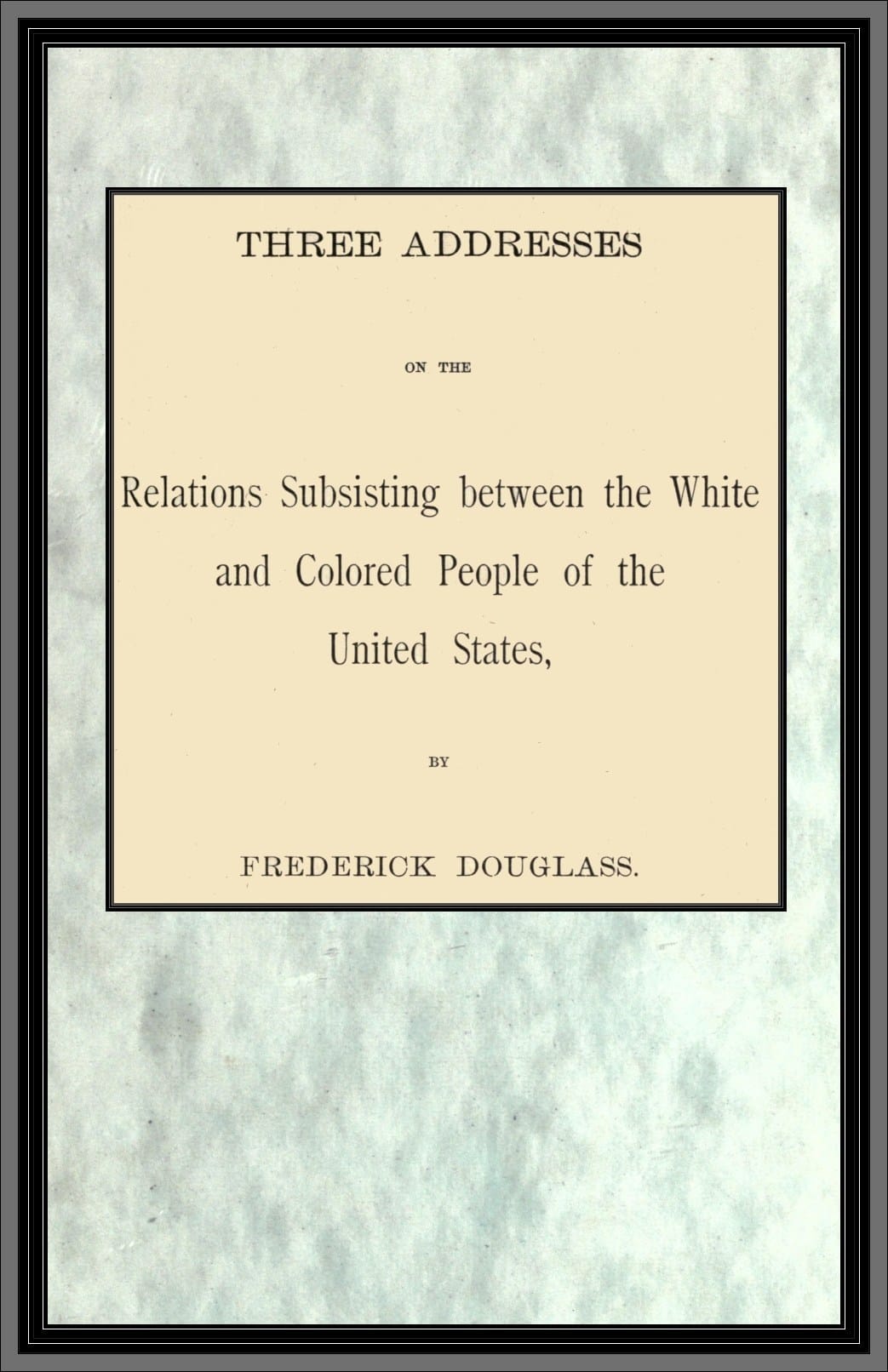
Three Addresses on the Relations Subsisting Between the White and Colored People of the United States
1886
In the autumn of American race relations, when Reconstruction had crumbled and the shadows of Jim Crow lengthened across the South, Frederick Douglass stood before a convention of Black men in Louisville, Kentucky, and delivered a rallying cry that would echo through the decades. This collection gathers three of Douglass's晚年 addresses from the 1880s, each one a masterwork of political pragmatism and unflinching hope. He confronts the bitter truth that emancipation had delivered Black Americans from chattel slavery only to leave them in a new purgatory of disenfranchisement, lynch law, and systemic humiliation. Yet Douglass refuses despair. He argues with devastating clarity that the fight for full citizenship demands not just protest but organization, not just anger but strategic unity. These speeches reveal Douglass not as the distant monument of abolitionist lore, but as a living, breathing race leader grappling with the same questions that would confront Malcolm X and Martin Luther King Jr.: how does a people resist a nation determined to grind them down? The power here is not merely historical. It is the sound of a great moral voice refusing to be silenced, speaking directly to the heart of what it means to demand justice in an unjust age.
Editions
Link to this book
Add a free, dofollow link to Lex on your blog, forum, syllabus, or reading list.

<a href="https://lex-books.com/book/three-addresses-on-the-relations-subsisting-between-the-white-and-colored-people-433ca9fd-1f5e-4b2c-8a0b-3b434aec6e4b"><img src="https://lex-books.com/badges/read-on-lex.svg" alt="Read Three Addresses on the Relations Subsisting Between the White and Colored People of the United States by Frederick Douglass free on Lex" width="160" height="40"></a>[](https://lex-books.com/book/three-addresses-on-the-relations-subsisting-between-the-white-and-colored-people-433ca9fd-1f5e-4b2c-8a0b-3b434aec6e4b)[url=https://lex-books.com/book/three-addresses-on-the-relations-subsisting-between-the-white-and-colored-people-433ca9fd-1f5e-4b2c-8a0b-3b434aec6e4b][img]https://lex-books.com/badges/read-on-lex.svg[/img][/url]Read Three Addresses on the Relations Subsisting Between the White and Colored People of the United States by Frederick Douglass free on Lex: https://lex-books.com/book/three-addresses-on-the-relations-subsisting-between-the-white-and-colored-people-433ca9fd-1f5e-4b2c-8a0b-3b434aec6e4bCite this book
Reading this edition for a paper or guide? Copy a citation.
Douglass, Frederick. Three Addresses on the Relations Subsisting Between the White and Colored People of the United States. Lex, lex-books.com/book/three-addresses-on-the-relations-subsisting-between-the-white-and-colored-people-433ca9fd-1f5e-4b2c-8a0b-3b434aec6e4b.Douglass, F. (1886). Three Addresses on the Relations Subsisting Between the White and Colored People of the United States. Lex. https://lex-books.com/book/three-addresses-on-the-relations-subsisting-between-the-white-and-colored-people-433ca9fd-1f5e-4b2c-8a0b-3b434aec6e4bDouglass, Frederick. Three Addresses on the Relations Subsisting Between the White and Colored People of the United States. Lex. https://lex-books.com/book/three-addresses-on-the-relations-subsisting-between-the-white-and-colored-people-433ca9fd-1f5e-4b2c-8a0b-3b434aec6e4b.