Myths and Legends of Ancient Egypt
1915
Myths and Legends of Ancient Egypt
1915
First published in 1915, this landmark study fundamentally reimagined how we understand Egyptian mythology. Rather than treating Egypt's religious traditions as isolated and uniquely sacred, Lewis Spence placed them within the broader currents of world mythology, arguing that Egyptian beliefs shared deep roots with primitive religious conceptions common to humanity. This revolutionary framework elevated Egyptian mythology from a curiosity of the exotic to a subject worthy of rigorous comparative analysis. Spence surveys the vast landscape of Egyptian religious life: the priesthood and temple mysteries, the cult of Osiris, the sun-god Ra, Anubis, Horus, Thoth, and dozens of other deities. He examines the Book of the Dead, creation myths, sacred rituals, alchemy, and the festival of Bast. More than a catalog of gods, this book traces how an entire civilization sought meaning through myth, giving order to existence through stories of death, rebirth, and cosmic significance. For over a century, this text has remained essential reading for anyone who wants to understand not just what ancient Egyptians believed, but why human beings everywhere have always needed to believe.
Editions
X-Ray
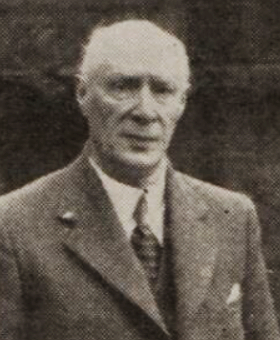
The author of this comprehensive study of Egyptian mythology. He was a scholar of comparative mythology who wrote extensively on ancient religions and mythological systems.
The great god of the dead and underworld, originally a moon-god who became identified with resurrection and the afterlife. He was murdered by his brother Set and restored to life by Isis.
The great mother goddess and wife of Osiris, representing the feminine principle of creation and magic. She searched tirelessly for Osiris's body and restored him to life through her magical powers.
The great sun-god and creator deity, depicted with a hawk head. He traveled across the sky in solar barques and battled the serpent Apep nightly in the underworld.
About Myths and Legends of Ancient Egypt
Chapter Summaries
- I
- Spence introduces the complexity of Egyptian religion, discussing animism, fetishism, and totemism as foundational elements. He argues against scholars who deny totemic origins and establishes the methodological approach for studying Egyptian mythology through comparative religion.
- II
- This chapter covers the racial origins of ancient Egyptians, the history of Egyptian exploration and archaeology, and the social structure of ancient Egyptian society. It provides essential background for understanding the cultural context of Egyptian religion.
- III
- Spence examines the powerful Egyptian priesthood, their rituals and daily practices, and the mystery religions. He describes the architecture and function of Egyptian temples as centers of religious and political power.
Key Themes
- Death and Resurrection
- Central to Egyptian religion was the belief in life after death, exemplified by Osiris's murder and resurrection. This theme permeated all aspects of Egyptian culture, from mummification practices to elaborate tomb preparations.
- Divine Kingship
- The pharaoh was considered a living god, the earthly embodiment of Horus and son of Ra. This divine connection legitimized royal authority and connected earthly rule with cosmic order.
- Cosmic Order vs. Chaos
- The constant battle between Maāt (order, truth, justice) and forces of chaos like Set and Apep represented the Egyptian understanding of the universe as a place where order must be continuously maintained against destructive forces.
Characters
- Lewis Spence(major)
- The author of this comprehensive study of Egyptian mythology. He was a scholar of comparative mythology who wrote extensively on ancient religions and mythological systems.
- Osiris(protagonist)
- The great god of the dead and underworld, originally a moon-god who became identified with resurrection and the afterlife. He was murdered by his brother Set and restored to life by Isis.
- Isis(protagonist)
- The great mother goddess and wife of Osiris, representing the feminine principle of creation and magic. She searched tirelessly for Osiris's body and restored him to life through her magical powers.
- Ra(protagonist)
- The great sun-god and creator deity, depicted with a hawk head. He traveled across the sky in solar barques and battled the serpent Apep nightly in the underworld.
- Set(antagonist)
- The god of chaos, storms, and the desert, brother and murderer of Osiris. Originally a protective deity, he became associated with evil and darkness in later periods.
- Horus(protagonist)
- The hawk-headed god of the sky and kingship, son of Osiris and Isis. He avenged his father's murder by battling Set and represented the living pharaoh.
Link to this book
Add a free, dofollow link to Lex on your blog, forum, syllabus, or reading list.

<a href="https://lex-books.com/book/myths-and-legends-of-ancient-egypt-602a13a8-356f-4fc4-99e6-18a3b8a66888"><img src="https://lex-books.com/badges/read-on-lex.svg" alt="Read Myths and Legends of Ancient Egypt by Lewis Spence free on Lex" width="160" height="40"></a>[](https://lex-books.com/book/myths-and-legends-of-ancient-egypt-602a13a8-356f-4fc4-99e6-18a3b8a66888)[url=https://lex-books.com/book/myths-and-legends-of-ancient-egypt-602a13a8-356f-4fc4-99e6-18a3b8a66888][img]https://lex-books.com/badges/read-on-lex.svg[/img][/url]Read Myths and Legends of Ancient Egypt by Lewis Spence free on Lex: https://lex-books.com/book/myths-and-legends-of-ancient-egypt-602a13a8-356f-4fc4-99e6-18a3b8a66888Cite this book
Reading this edition for a paper or guide? Copy a citation.
Spence, Lewis. Myths and Legends of Ancient Egypt. Lex, lex-books.com/book/myths-and-legends-of-ancient-egypt-602a13a8-356f-4fc4-99e6-18a3b8a66888.Spence, L. (1915). Myths and Legends of Ancient Egypt. Lex. https://lex-books.com/book/myths-and-legends-of-ancient-egypt-602a13a8-356f-4fc4-99e6-18a3b8a66888Spence, Lewis. Myths and Legends of Ancient Egypt. Lex. https://lex-books.com/book/myths-and-legends-of-ancient-egypt-602a13a8-356f-4fc4-99e6-18a3b8a66888.