Metamorphoses (Miller Version)
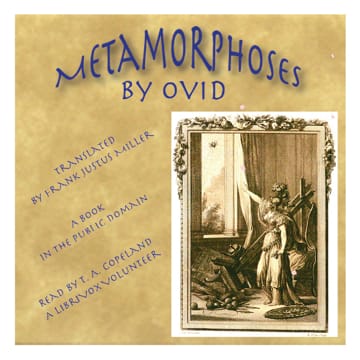
Ovid's monumental epic traces the history of the world from its creation through the age of Julius Caesar, unified by one astonishing premise: everything changes. Gods become constellations, nymphs become trees, men become beasts, and grief itself can transform a body into stone or a voice into an echo. This is not a simple bestiary of myths but a cunning meditation on mutability, written by a poet who understood that permanence is the only impossibility. The psychological portraits are startlingly modern. Women paralyzed by impossible choices, lovers destroyed by their own desires, mortals confronting divine caprice with desperate ingenuity. Ovid's tone shifts like mercury - tender, satirical, brutal, wry - sometimes within a single scene. He invented interiority, giving voice to characters (especially female ones) that earlier tradition had left as mere plot points. For centuries, Western artists and writers have returned to this well. Every painter who ever depicted Daphne's transformation, every poet who invoked Orpheus, every novelist who explored desire and metamorphosis owes a debt to this audacious, dangerous, endlessly surprising poem.
Editions


Link to this book
Add a free, dofollow link to Lex on your blog, forum, syllabus, or reading list.

<a href="https://lex-books.com/book/metamorphoses-miller-version-38e21388-03e3-4569-af2a-e70d5e4fc216"><img src="https://lex-books.com/badges/read-on-lex.svg" alt="Read Metamorphoses (Miller Version) by Publius (Ovid) Ovidius Naso free on Lex" width="160" height="40"></a>[](https://lex-books.com/book/metamorphoses-miller-version-38e21388-03e3-4569-af2a-e70d5e4fc216)[url=https://lex-books.com/book/metamorphoses-miller-version-38e21388-03e3-4569-af2a-e70d5e4fc216][img]https://lex-books.com/badges/read-on-lex.svg[/img][/url]Read Metamorphoses (Miller Version) by Publius (Ovid) Ovidius Naso free on Lex: https://lex-books.com/book/metamorphoses-miller-version-38e21388-03e3-4569-af2a-e70d5e4fc216Cite this book
Reading this edition for a paper or guide? Copy a citation.
Naso, Publius (Ovid) Ovidius. Metamorphoses (Miller Version). Lex, lex-books.com/book/metamorphoses-miller-version-38e21388-03e3-4569-af2a-e70d5e4fc216.Naso, P. (. O. (n.d.). Metamorphoses (Miller Version). Lex. https://lex-books.com/book/metamorphoses-miller-version-38e21388-03e3-4569-af2a-e70d5e4fc216Naso, Publius (Ovid) Ovidius. Metamorphoses (Miller Version). Lex. https://lex-books.com/book/metamorphoses-miller-version-38e21388-03e3-4569-af2a-e70d5e4fc216.