Metamorphoses (Howard Version)
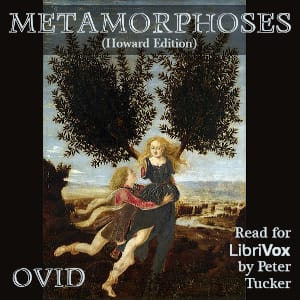
In the beginning there was only chaos. Then came creation, and with it an endless parade of transformations. A god pursues a nymph through the woods until she dissolves into an echo. A youth falls in love with his own reflection and becomes a flower. A father rips apart his son, only to be tricked into consuming him. A woman gazes upon Medusa's head and turns to stone. Across fifteen books, Ovid chronicles the history of the world from its origins to his own Roman present, threading together myths of love, punishment, flight, and fate into one continuous, astonishing poem. This is mythology unchained from moral instruction: violent, sensual, darkly funny, and utterly unafraid of its own excess. The transformations work as both literal change and psychological truth, revealing a world where nothing stays fixed, where desire curdles into destruction, where even the gods are prisoners of their own passions. It influenced Shakespeare, Dante, Milton, and virtually every writer who followed, but it remains utterly itself: a work of savage beauty about the only certainty we have, that everything changes.
Editions


Link to this book
Add a free, dofollow link to Lex on your blog, forum, syllabus, or reading list.

<a href="https://lex-books.com/book/metamorphoses-howard-version-3e01c8f6-3d86-4348-9984-621b94747faa"><img src="https://lex-books.com/badges/read-on-lex.svg" alt="Read Metamorphoses (Howard Version) by Publius (Ovid) Ovidius Naso free on Lex" width="160" height="40"></a>[](https://lex-books.com/book/metamorphoses-howard-version-3e01c8f6-3d86-4348-9984-621b94747faa)[url=https://lex-books.com/book/metamorphoses-howard-version-3e01c8f6-3d86-4348-9984-621b94747faa][img]https://lex-books.com/badges/read-on-lex.svg[/img][/url]Read Metamorphoses (Howard Version) by Publius (Ovid) Ovidius Naso free on Lex: https://lex-books.com/book/metamorphoses-howard-version-3e01c8f6-3d86-4348-9984-621b94747faaCite this book
Reading this edition for a paper or guide? Copy a citation.
Naso, Publius (Ovid) Ovidius. Metamorphoses (Howard Version). Lex, lex-books.com/book/metamorphoses-howard-version-3e01c8f6-3d86-4348-9984-621b94747faa.Naso, P. (. O. (n.d.). Metamorphoses (Howard Version). Lex. https://lex-books.com/book/metamorphoses-howard-version-3e01c8f6-3d86-4348-9984-621b94747faaNaso, Publius (Ovid) Ovidius. Metamorphoses (Howard Version). Lex. https://lex-books.com/book/metamorphoses-howard-version-3e01c8f6-3d86-4348-9984-621b94747faa.