Memoirs of a Revolutionist
1899
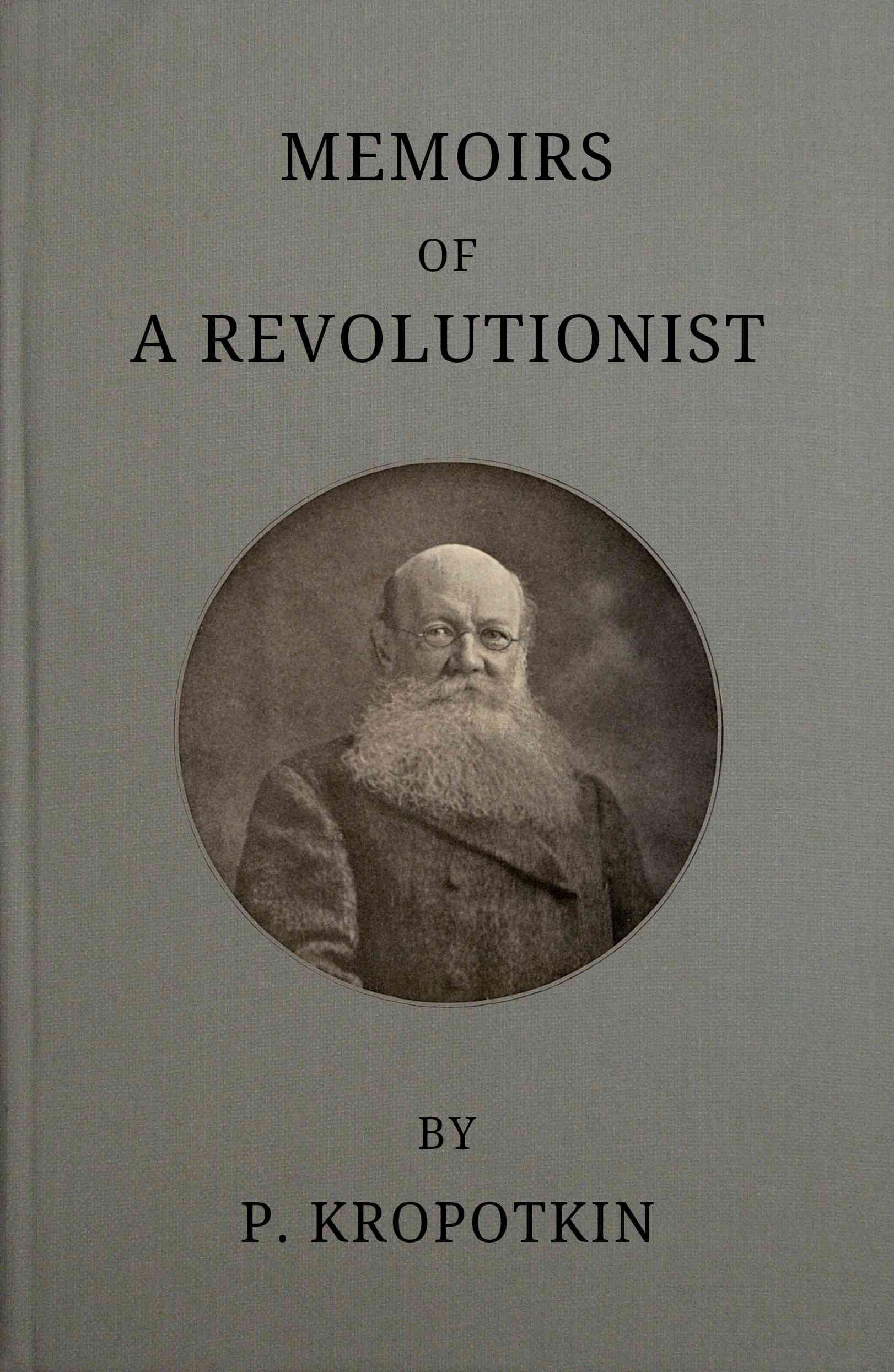
Memoirs of a Revolutionist
Petr Alekseevich, kniaz Kropotkin
1899
Memoirs of a Revolutionist, published in 1899, is the autobiography of Russian anarchist and revolutionary Peter Kropotkin. The work chronicles his transformation from a noble prince to a committed anarchist, providing insights into the political landscape of Russia during the late 19th century. Kropotkin reflects on his early life, societal injustices, and the labor movements in Europe, making it a significant historical document that captures the spirit of revolutionary thought and the quest for freedom in a time of great social change.
Editions
X-Ray
“Men passionately desire to live after death, but they often pass away without noticing the fact that the memory of a really good person always lives. It is impressed upon the next generation, and is transmitted again to the children. Is that not an immortality worth striving for? ””
— Petr Alekseevich, kniaz Kropotkin
“Sometimes he would advise me to read poetry, and would send me in his letters quantities of verses and whole poems, which he wrote from memory. 'Read poetry,' he wrote: 'poetry makes men better.' How often, in my later life, I realized the truth of this remark of his! Read poetry: it makes men better.””
— Petr Alekseevich, kniaz Kropotkin
“When one has talent, everything contributes to its development.””
— Petr Alekseevich, kniaz Kropotkin
“It often happens that men pull in a certain political, social, or familiar harness simply because they never have time to ask themselves whether the position they stand in and the work they accomplish are right; whether their occupations really suit their inner desires and capacities, and give them the satisfaction which everyone has the right to expect from his work. Active men are especially liable to find themselves in such a position. Every day brings with it a fresh batch of work, and a man throws himself into his bed late at night without having completed what he had expected to do; then in the morning he hurries to the unfinished task of the previous day. Life goes, and there is no time left to think, no time to consider the direction that one's life is taking. So it was with me.””
— Petr Alekseevich, kniaz Kropotkin
“...do not the bewitching power of all studies lie in that they continually open up to us new, unsuspected horizons, not yet understood, which entice us to proceed further and further in the penetration of what appears at first sight only in vague outline?””
— Petr Alekseevich, kniaz Kropotkin
“I understand regicide as a means of obtaining vengeance for the ruin of our lives, but regicide as a means of obtaining political freedom I could never understand.””
— Petr Alekseevich, kniaz Kropotkin
“My brother could not write about trifles. Even in society he became animated only when some serious discussion was engaged in, and he complained of feeling 'a dull pain in the brain'--a physical pain, as he used to say--when he was with people who cared only for small talk. ””
— Petr Alekseevich, kniaz Kropotkin
“The prison population consists of heterogeneous elements; but, taking only those who are usually described as 'the criminals' proper, and of whom we have heard so much lately from Lombroso and his followers, what struck me most as regards them was that the prisons, which are considered as preventive of anti-social deeds, are exactly the institutions for breeding them. Every one knows that absence of education, dislike of regular work, physical incapability of sustained effort, misdirected love of adventure, gambling propensities, absence of energy, an untrained will, and carelessness about the happiness of others are the causes which bring this class of people before the courts. Now I was deeply impressed during my imprisonment by the fact that it is exactly these defects of human nature--each one of them--which the prison breeds in its inmates; and it is bound to breed them because it is a prison, and will breed them so long as it exists. ””
— Petr Alekseevich, kniaz Kropotkin
“He objected, though, to indiscriminate reading. 'One must have some question,' he wrote, 'addressed to the book one is going to read.””
— Petr Alekseevich, kniaz Kropotkin
Link to this book
Add a free, dofollow link to Lex on your blog, forum, syllabus, or reading list.

<a href="https://lex-books.com/book/memoirs-of-a-revolutionist-939beea0-f735-47e3-9f2f-67a040c364f7"><img src="https://lex-books.com/badges/read-on-lex.svg" alt="Read Memoirs of a Revolutionist by Petr Alekseevich, kniaz Kropotkin free on Lex" width="160" height="40"></a>[](https://lex-books.com/book/memoirs-of-a-revolutionist-939beea0-f735-47e3-9f2f-67a040c364f7)[url=https://lex-books.com/book/memoirs-of-a-revolutionist-939beea0-f735-47e3-9f2f-67a040c364f7][img]https://lex-books.com/badges/read-on-lex.svg[/img][/url]Read Memoirs of a Revolutionist by Petr Alekseevich, kniaz Kropotkin free on Lex: https://lex-books.com/book/memoirs-of-a-revolutionist-939beea0-f735-47e3-9f2f-67a040c364f7Cite this book
Reading this edition for a paper or guide? Copy a citation.
Petr Alekseevich, kniaz Kropotkin. Memoirs of a Revolutionist. Lex, lex-books.com/book/memoirs-of-a-revolutionist-939beea0-f735-47e3-9f2f-67a040c364f7.Petr Alekseevich, K. K. (1899). Memoirs of a Revolutionist. Lex. https://lex-books.com/book/memoirs-of-a-revolutionist-939beea0-f735-47e3-9f2f-67a040c364f7Petr Alekseevich, kniaz Kropotkin. Memoirs of a Revolutionist. Lex. https://lex-books.com/book/memoirs-of-a-revolutionist-939beea0-f735-47e3-9f2f-67a040c364f7.