Mutual Aid: A Factor of Evolution
1902
Mutual Aid: A Factor of Evolution
Petr Alekseevich, kniaz Kropotkin
1902
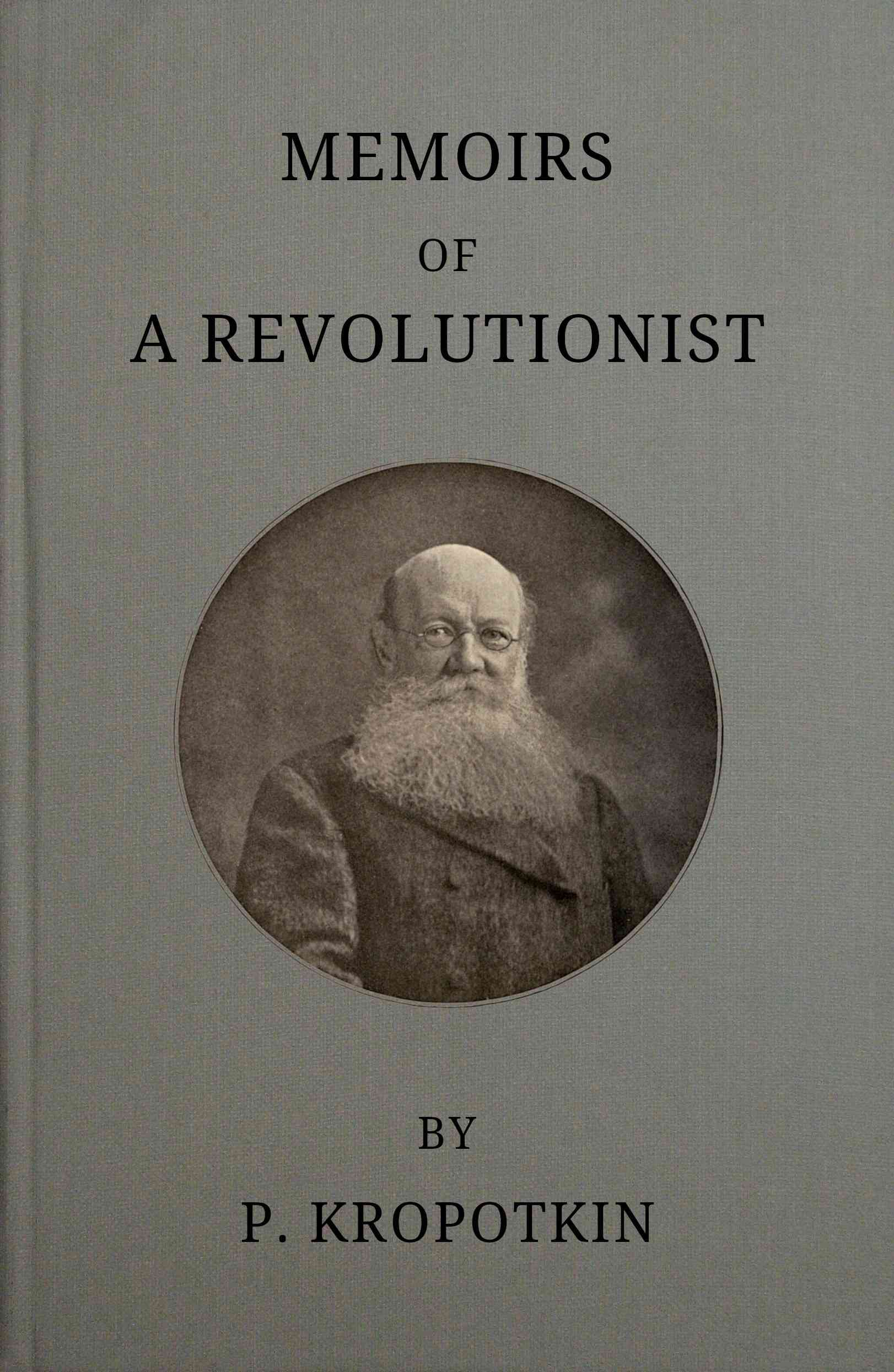
In 1890s Siberia, a Russian prince turned naturalist watched wolves hunt in packs, birds migrate in formation, and peasants share harvests across frozen villages. What he saw overturned Darwin, or at least the brutal interpretation of Darwin that industrialists loved. Peter Kropotkin gathered evidence from animal kingdoms and human civilizations to argue that cooperation, not competition, is evolution's secret engine. Mutual Aid was his devastating reply to Social Darwinists who excused inequality as nature's law. Drawing on fieldwork from Manchuria to medieval guilds, Kropotkin demonstrates that species which practice mutual aid thrive while isolated competitors perish. He traces cooperation through indigenous tribes, ancient Greek cities, the medieval commune, and the 19th-century labor movement. The state, he argues, systematically destroys these mutual aid structures to impose private property and wage labor. This isn't idealism. It's cold, observed fact. More than a century later, biologists from Stephen Jay Gould to E.O. Wilson have validated Kropotkin's core insight. Struggle exists, but it takes many forms, and cooperation often wins. For anyone exhausted by the mythology of competitive human nature, this is the book that proved otherwise.
Editions

X-Ray
“The mutual-aid tendency in man has so remote an origin, and is so deeply interwoven with all the past evolution of the human race, that is has been maintained by mankind up to the present time, notwithstanding all vicissitudes of history.””
— Petr Alekseevich, kniaz Kropotkin
“Don’t compete!”
— Petr Alekseevich, kniaz Kropotkin
“in the long run the practice of solidarity proves much more advantageous to the species than the development of individuals endowed with predatory inclinations.””
— Petr Alekseevich, kniaz Kropotkin
“The species in which peace and mutual support are the rule, prosper, while the unsociable species decay.””
— Petr Alekseevich, kniaz Kropotkin
“Practicing mutual aid is the surest means for giving each other and to all the greatest safety, the best guarantee of existence and progress, bodily, intellectual and moral.””
— Petr Alekseevich, kniaz Kropotkin
“In The Descent of Man he gave some powerful pages to illustrate its proper, wide sense. He pointed out how, in numberless animal societies, the struggle between separate individuals for the means of existence disappears, how struggle is replaced by co-operation, and how that substitution results in the development of intellectual and moral faculties which secure to the species the best conditions for survival.””
— Petr Alekseevich, kniaz Kropotkin
“under any circumstances sociability is the greatest advantage in the struggle for life.””
— Petr Alekseevich, kniaz Kropotkin
“Man is a result of both his inherited instincts and his education. Among the miners and the seamen, their common occupations and their every-day contact with one another create a feeling of solidarity, while the surrounding dangers maintain courage and pluck. In the cities, on the contrary, the absence of common interest nurtures indifference, while courage and pluck, which seldom find their opportunities, disappear, or take another direction. Moreover,””
— Petr Alekseevich, kniaz Kropotkin
“The truth, however, is that – to speak only of what I know personally – if I had kept a diary for the last twenty-four years and inscribed in it all the devotion and self-sacrifice which I came across in the Socialist movement, the reader of such a diary would have had the word “heroism” constantly on his lips. But the men I would have spoken of were not heroes; they were average men, inspired by a grand idea. Every Socialist newspaper – and there are hundreds of them in Europe alone – has the same history of years of sacrifice without any hope of reward, and, in the overwhelming majority of cases, even without any personal ambition.””
— Petr Alekseevich, kniaz Kropotkin
Link to this book
Add a free, dofollow link to Lex on your blog, forum, syllabus, or reading list.

<a href="https://lex-books.com/book/mutual-aid-a-factor-of-evolution-b3053883-5d6c-4a71-bac5-990e76ccd51b"><img src="https://lex-books.com/badges/read-on-lex.svg" alt="Read Mutual Aid: A Factor of Evolution by Petr Alekseevich, kniaz Kropotkin free on Lex" width="160" height="40"></a>[](https://lex-books.com/book/mutual-aid-a-factor-of-evolution-b3053883-5d6c-4a71-bac5-990e76ccd51b)[url=https://lex-books.com/book/mutual-aid-a-factor-of-evolution-b3053883-5d6c-4a71-bac5-990e76ccd51b][img]https://lex-books.com/badges/read-on-lex.svg[/img][/url]Read Mutual Aid: A Factor of Evolution by Petr Alekseevich, kniaz Kropotkin free on Lex: https://lex-books.com/book/mutual-aid-a-factor-of-evolution-b3053883-5d6c-4a71-bac5-990e76ccd51bCite this book
Reading this edition for a paper or guide? Copy a citation.
Petr Alekseevich, kniaz Kropotkin. Mutual Aid: A Factor of Evolution. Lex, lex-books.com/book/mutual-aid-a-factor-of-evolution-b3053883-5d6c-4a71-bac5-990e76ccd51b.Petr Alekseevich, K. K. (1902). Mutual Aid: A Factor of Evolution. Lex. https://lex-books.com/book/mutual-aid-a-factor-of-evolution-b3053883-5d6c-4a71-bac5-990e76ccd51bPetr Alekseevich, kniaz Kropotkin. Mutual Aid: A Factor of Evolution. Lex. https://lex-books.com/book/mutual-aid-a-factor-of-evolution-b3053883-5d6c-4a71-bac5-990e76ccd51b.