Medieval Medicine
1920
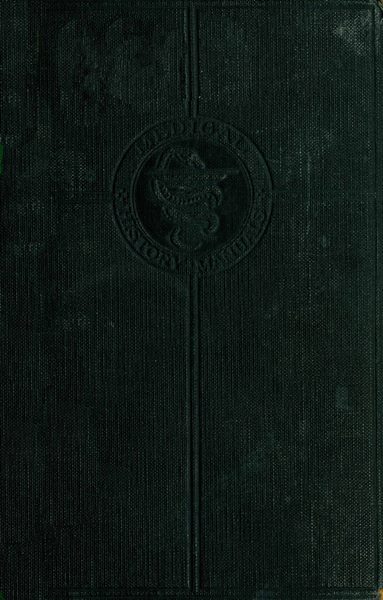
The "Dark Ages" get a bad rap, and this 1920 work is here to prove it. James J. Walsh dismantles the popular misconception that medieval medicine was nothing but leeches and prayer, revealing a surprising continuity of sophisticated medical knowledge preserved and advanced by physicians working centuries before the Renaissance. Drawing on Greek traditions that survived the fall of Rome, figures like Aëtios of Amida, Alexander of Tralles, and Paul of Ægina carried forward a medical heritage that might otherwise have been lost. Walsh shows that rather than an era of stagnation, the Middle Ages were a crucial bridge between ancient healing arts and modern medical science. This is a book for anyone curious about the strange, often counterintuitive ways our ancestors understood the body, disease, and treatment, and how those old ideas quietly shaped the medicine we rely on today.
Editions
X-Ray
The author and narrator, a medical historian and professor who systematically examines medieval medicine. He challenges prevailing misconceptions about the Middle Ages through careful historical analysis.
A 6th-century physician from Mesopotamia who wrote influential medical textbooks. He represents the early medieval period's connection to Greek medical knowledge.
A 6th-7th century physician and one of five accomplished brothers, including the architect of Santa Sophia. He exemplifies the intellectual achievements of early medieval medicine.
An 11th-century physician born near Carthage who brought Arabian medical knowledge to Salerno. He represents the transmission of medical knowledge between cultures.
About Medieval Medicine
Chapter Summaries
- 1
- Walsh establishes his thesis that medieval medicine was far more advanced than commonly believed, tracing the influence of Greek medical knowledge through Roman decline and barbarian invasions. He explains how Greek influence persisted in Asia Minor and later influenced Arabian medicine.
- 2
- Covers the period from the 6th to 9th centuries, examining the work of physicians like Aëtius, Alexander of Tralles, and Paul of Ægina who maintained Greek medical traditions. Also discusses the role of monasteries in preserving medical knowledge.
- 3
- Details the rise of the first modern medical school at Salerno, its curriculum, standards, and the famous Regimen Sanitatis. Describes the rigorous educational requirements and the school's influence on medical practice.
Key Themes
- Historical Revisionism
- Walsh systematically challenges popular misconceptions about medieval medicine, arguing that the 'Dark Ages' label is historically inaccurate and that medieval physicians made remarkable advances.
- Greek Influence and Knowledge Transmission
- The continuity and transmission of Greek medical knowledge through Byzantine, Arabian, and European channels forms a central thread, showing how classical learning was preserved and developed.
- Scientific Method in Medieval Medicine
- Medieval physicians emphasized observation, experience, and empirical evidence over mere authority, contradicting assumptions about medieval reliance on superstition and dogma.
Characters
- James J. Walsh(protagonist)
- The author and narrator, a medical historian and professor who systematically examines medieval medicine. He challenges prevailing misconceptions about the Middle Ages through careful historical analysis.
- Aëtius of Amida(major)
- A 6th-century physician from Mesopotamia who wrote influential medical textbooks. He represents the early medieval period's connection to Greek medical knowledge.
- Alexander of Tralles(major)
- A 6th-7th century physician and one of five accomplished brothers, including the architect of Santa Sophia. He exemplifies the intellectual achievements of early medieval medicine.
- Constantine Africanus(major)
- An 11th-century physician born near Carthage who brought Arabian medical knowledge to Salerno. He represents the transmission of medical knowledge between cultures.
- Roger of Salerno(major)
- A 12th-century surgeon who wrote the foundational textbook of modern surgery around 1180. He established surgical principles that influenced centuries of practice.
- Guy de Chauliac(major)
- A 14th-century French surgeon known as the father of modern surgery. He served as papal physician at Avignon and wrote the definitive surgical textbook of his era.
Link to this book
Add a free, dofollow link to Lex on your blog, forum, syllabus, or reading list.

<a href="https://lex-books.com/book/medieval-medicine-14d6cfec-1e2e-4bf9-9b56-8be273e66893"><img src="https://lex-books.com/badges/read-on-lex.svg" alt="Read Medieval Medicine by James J. Walsh free on Lex" width="160" height="40"></a>[](https://lex-books.com/book/medieval-medicine-14d6cfec-1e2e-4bf9-9b56-8be273e66893)[url=https://lex-books.com/book/medieval-medicine-14d6cfec-1e2e-4bf9-9b56-8be273e66893][img]https://lex-books.com/badges/read-on-lex.svg[/img][/url]Read Medieval Medicine by James J. Walsh free on Lex: https://lex-books.com/book/medieval-medicine-14d6cfec-1e2e-4bf9-9b56-8be273e66893Cite this book
Reading this edition for a paper or guide? Copy a citation.
Walsh, James J.. Medieval Medicine. Lex, lex-books.com/book/medieval-medicine-14d6cfec-1e2e-4bf9-9b56-8be273e66893.Walsh, J. J. (1920). Medieval Medicine. Lex. https://lex-books.com/book/medieval-medicine-14d6cfec-1e2e-4bf9-9b56-8be273e66893Walsh, James J.. Medieval Medicine. Lex. https://lex-books.com/book/medieval-medicine-14d6cfec-1e2e-4bf9-9b56-8be273e66893.