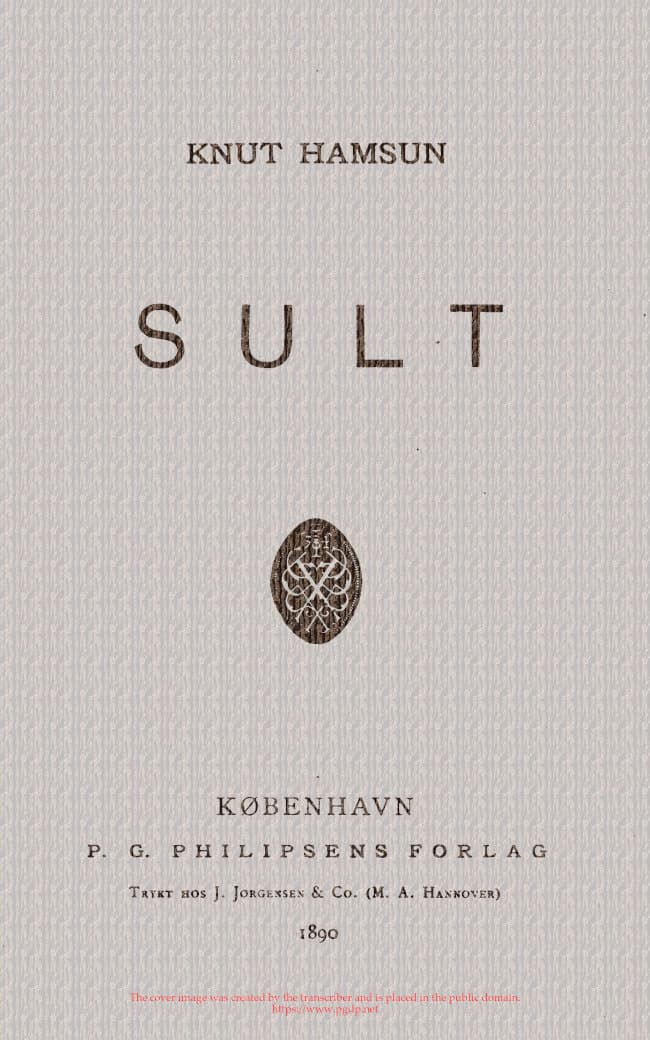
Markens Grøde, Første Del
A man walks north into the endless wilderness, carrying a sack of tools and provisions. He has no name yet, no history the reader can claim to know - only the red iron in his beard, the scars on his hands, and an uncanny patience as he surveys the land. This is Isak, and he has come to make a life where there is no life, to draw a path through the unowned earth where no path exists. Knut Hamsun's masterpiece opens with this primordial journey - a man alone against the forest, the marshes, the silence - and in that solitude constructs something that feels less like a novel than a psalm. The land itself becomes the novel's true character: indifferent, generous, demanding. What follows is the slow, backbreaking labor of clearing, planting, building - and eventually, the arrival of a woman named Inger, whose presence marks the first fragile thread of civilization in this wild place. Written in Hamsun's revolutionary psychological prose, where interior silence weighs as heavily as action, this is a novel about what it costs to make a home, and what we surrender when we succeed. It won the Nobel Prize in 1920, and it remains the most unsettling, elemental meditation on humanity's relationship with the earth ever written in Norwegian.
Editions
Link to this book
Add a free, dofollow link to Lex on your blog, forum, syllabus, or reading list.

<a href="https://lex-books.com/book/markens-gr-de-f-rste-del-3d28b142-6681-4d81-8ca7-e65f33960350"><img src="https://lex-books.com/badges/read-on-lex.svg" alt="Read Markens Grøde, Første Del by Knut Hamsun free on Lex" width="160" height="40"></a>[](https://lex-books.com/book/markens-gr-de-f-rste-del-3d28b142-6681-4d81-8ca7-e65f33960350)[url=https://lex-books.com/book/markens-gr-de-f-rste-del-3d28b142-6681-4d81-8ca7-e65f33960350][img]https://lex-books.com/badges/read-on-lex.svg[/img][/url]Read Markens Grøde, Første Del by Knut Hamsun free on Lex: https://lex-books.com/book/markens-gr-de-f-rste-del-3d28b142-6681-4d81-8ca7-e65f33960350Cite this book
Reading this edition for a paper or guide? Copy a citation.
Hamsun, Knut. Markens Grøde, Første Del. Lex, lex-books.com/book/markens-gr-de-f-rste-del-3d28b142-6681-4d81-8ca7-e65f33960350.Hamsun, K. (n.d.). Markens Grøde, Første Del. Lex. https://lex-books.com/book/markens-gr-de-f-rste-del-3d28b142-6681-4d81-8ca7-e65f33960350Hamsun, Knut. Markens Grøde, Første Del. Lex. https://lex-books.com/book/markens-gr-de-f-rste-del-3d28b142-6681-4d81-8ca7-e65f33960350.