Madame Chrysanthème
1887
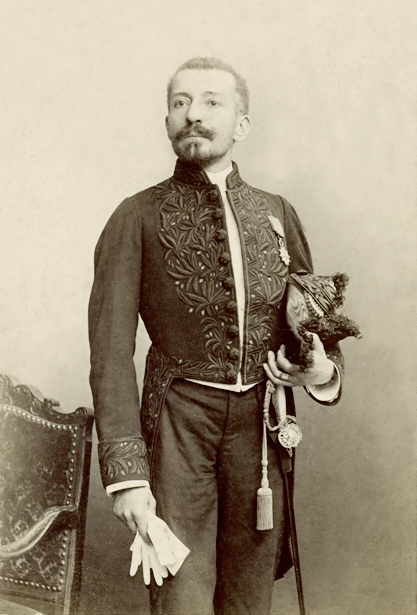
In 1885, a young French naval officer arrives in Nagasaki with his companion Yves, carrying with him a head full of romantic fantasies about Orient and a whimsical dream of marrying a Japanese woman. What he finds instead is Chrysanthème, a pragmatic young woman from the Jūzenji district whom he 'purchases' as a temporary wife for his shore leave. Pierre Loti, writing as both observer and participant, transforms his actual month-long journal into a wickedly funny meditation on the gap between imagination and reality, between the exotic dream and the domestic actual. The novel crackles with cultural collision: miscommunications over tea ceremonies, the absurdity of Western romantic idealism meeting Japanese practicality, and the narrator's dawning realization that his exotic fantasy has become wonderfully, frustratingly ordinary. Yet beneath the comedy lies something sadder and stranger, a man confronting the limits of his own romanticism in a foreign land. Madame Chrysanthème became a phenomenon, shaping Western perceptions of Japan for decades and directly inspiring Puccini's Madama Butterfly. It remains a fascinating, problematic, utterly compelling document of cultural encounter.
Editions
Link to this book
Add a free, dofollow link to Lex on your blog, forum, syllabus, or reading list.

<a href="https://lex-books.com/book/madame-chrysanth-me-2029466c-6edd-43df-a5d4-3d29bc95d3ea"><img src="https://lex-books.com/badges/read-on-lex.svg" alt="Read Madame Chrysanthème by Pierre Loti free on Lex" width="160" height="40"></a>[](https://lex-books.com/book/madame-chrysanth-me-2029466c-6edd-43df-a5d4-3d29bc95d3ea)[url=https://lex-books.com/book/madame-chrysanth-me-2029466c-6edd-43df-a5d4-3d29bc95d3ea][img]https://lex-books.com/badges/read-on-lex.svg[/img][/url]Read Madame Chrysanthème by Pierre Loti free on Lex: https://lex-books.com/book/madame-chrysanth-me-2029466c-6edd-43df-a5d4-3d29bc95d3eaCite this book
Reading this edition for a paper or guide? Copy a citation.
Loti, Pierre. Madame Chrysanthème. Lex, lex-books.com/book/madame-chrysanth-me-2029466c-6edd-43df-a5d4-3d29bc95d3ea.Loti, P. (1887). Madame Chrysanthème. Lex. https://lex-books.com/book/madame-chrysanth-me-2029466c-6edd-43df-a5d4-3d29bc95d3eaLoti, Pierre. Madame Chrysanthème. Lex. https://lex-books.com/book/madame-chrysanth-me-2029466c-6edd-43df-a5d4-3d29bc95d3ea.