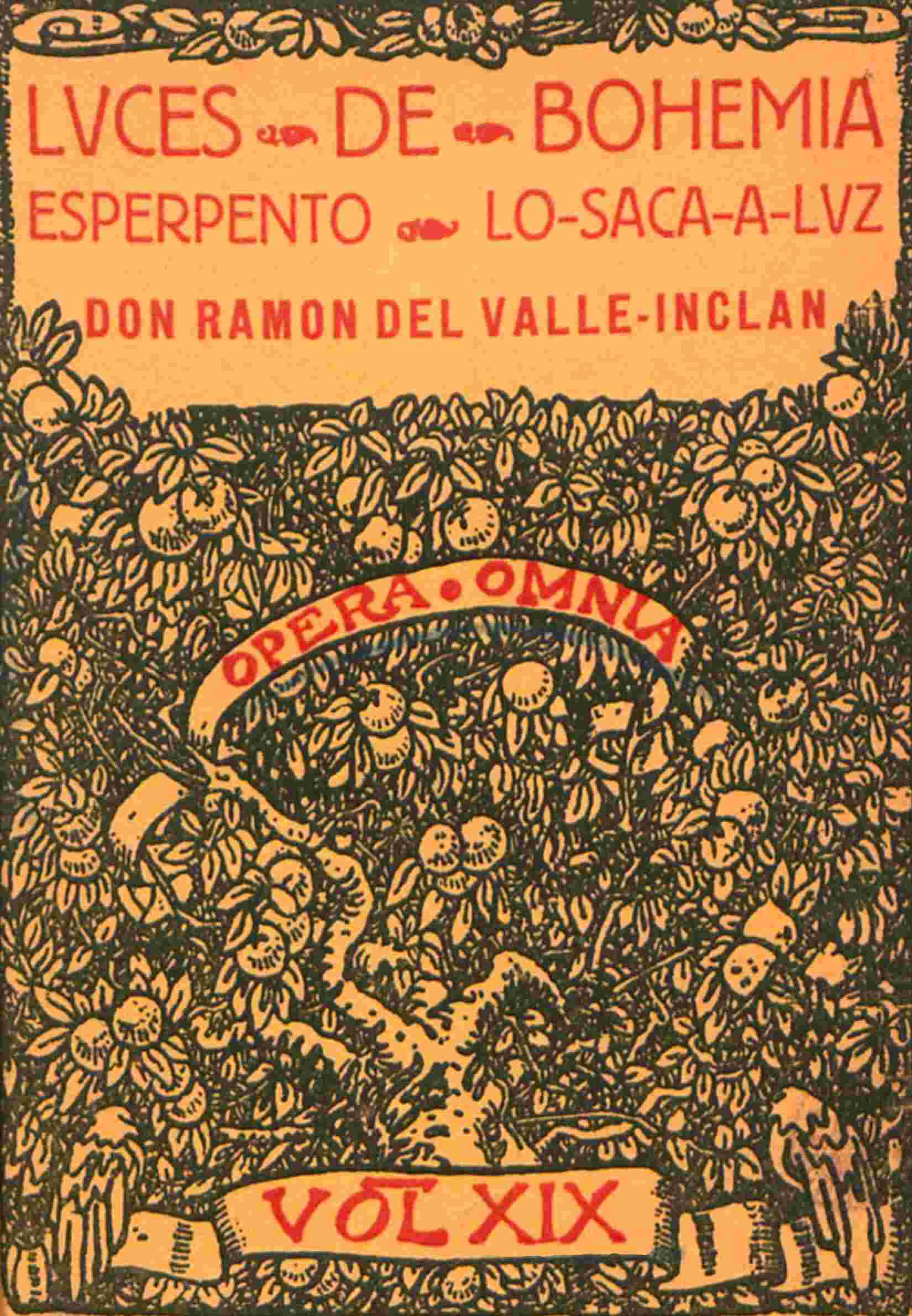
Luces de bohemia
Luces de Bohemia, written by Ramón del Valle-Inclán in 1920, is a seminal work of Spanish literature that portrays the darker side of early 20th-century Madrid through the life of Max Estrella, a blind and impoverished poet. The play introduces a cast of characters who exploit Max while engaging in discussions about literature, politics, and the social issues of Spain. Valle-Inclán's concept of 'esperpento' is central to the work, presenting a distorted reflection of reality that critiques human nature and society. This innovative approach has made it a significant influence in modern Spanish theater.
Editions

Audiobook
Human narrated
Link to this book
Add a free, dofollow link to Lex on your blog, forum, syllabus, or reading list.

HTML
<a href="https://lex-books.com/book/luces-de-bohemia-a036f436-fe12-4d4b-ab2c-3b1661b0f584"><img src="https://lex-books.com/badges/read-on-lex.svg" alt="Read Luces de bohemia by Ramón del Valle-Inclán free on Lex" width="160" height="40"></a>Markdown
[](https://lex-books.com/book/luces-de-bohemia-a036f436-fe12-4d4b-ab2c-3b1661b0f584)BBCode
[url=https://lex-books.com/book/luces-de-bohemia-a036f436-fe12-4d4b-ab2c-3b1661b0f584][img]https://lex-books.com/badges/read-on-lex.svg[/img][/url]Plain link
Read Luces de bohemia by Ramón del Valle-Inclán free on Lex: https://lex-books.com/book/luces-de-bohemia-a036f436-fe12-4d4b-ab2c-3b1661b0f584Cite this book
Reading this edition for a paper or guide? Copy a citation.
MLA
Valle-Inclán, Ramón del. Luces de bohemia. Lex, lex-books.com/book/luces-de-bohemia-a036f436-fe12-4d4b-ab2c-3b1661b0f584.APA
Valle-Inclán, R. D. (n.d.). Luces de bohemia. Lex. https://lex-books.com/book/luces-de-bohemia-a036f436-fe12-4d4b-ab2c-3b1661b0f584Chicago
Valle-Inclán, Ramón del. Luces de bohemia. Lex. https://lex-books.com/book/luces-de-bohemia-a036f436-fe12-4d4b-ab2c-3b1661b0f584.