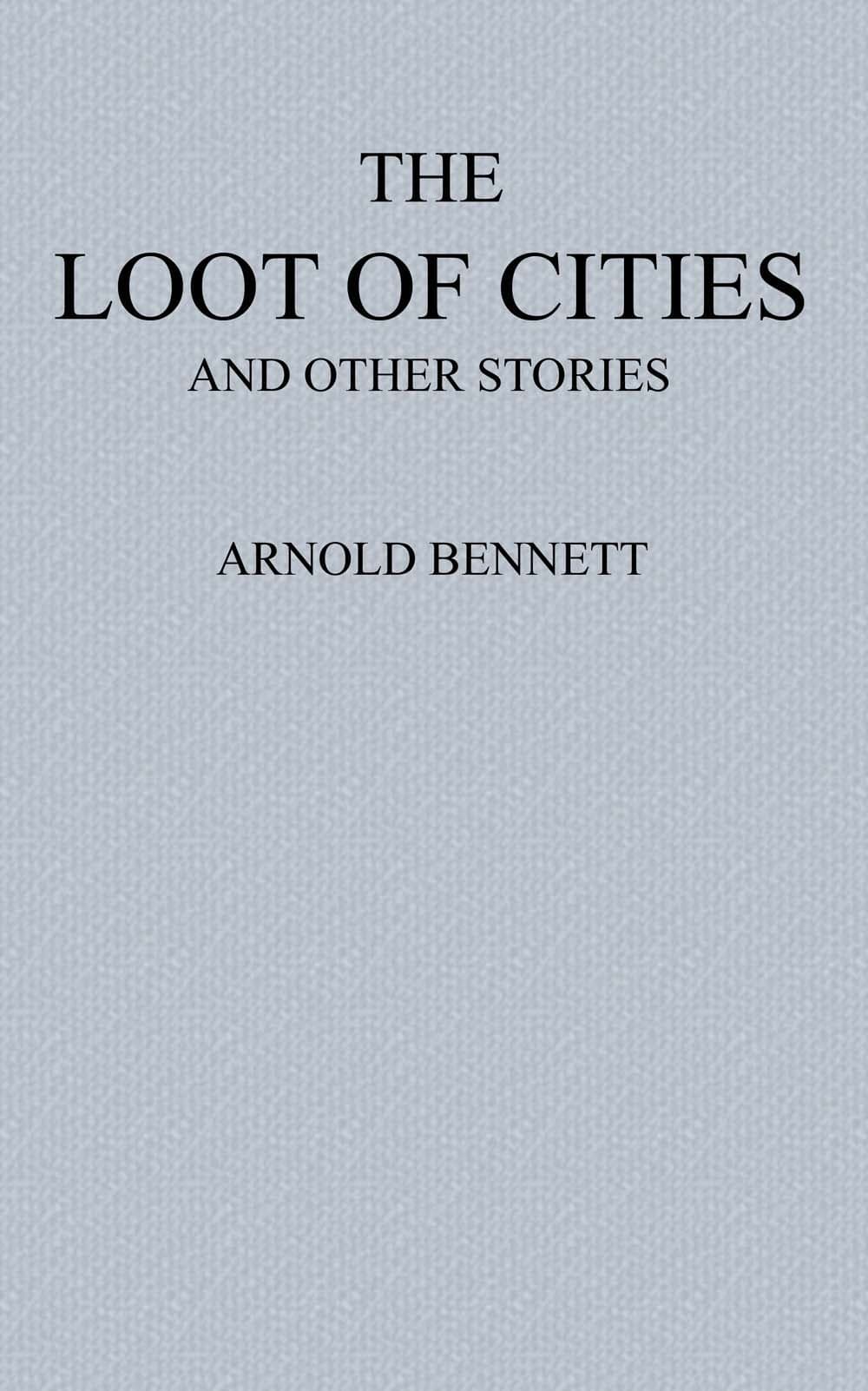
Loot Of Cities

A millionaire who believes so fiercely in his vision of justice that he becomes a criminal to achieve it. This is the audacious premise at the heart of Arnold Bennett's 1917 collection, one of the earliest and most unusual entries in the crime fiction canon. The central novella follows this extraordinary figure as he engineers elaborate heists, not for profit or revenge, but to right what he perceives as systemic wrongs. The seven accompanying stories expand on his paradoxical enterprise, blending detection, philosophy, and a certain dark elegance that feels remarkably contemporary despite its Edwardian wrapper. What makes Loot of Cities remarkable is its refusal to moralize. Bennett presents his protagonist's crimes with neither celebration nor condemnation, instead exploring the dangerous logic of a man who decides the law is insufficient and takes matters into his own hands. It's a fascinating artifact of early twentieth-century idealism, capturing a moment when faith in progress warred with doubt about the systems meant to deliver it. The prose has the smooth confidence of Bennett at his peak, and the plotting reveals a writer who understood suspense not as spectacle but as psychology. For readers who appreciate crime fiction's intellectual ancestors, or anyone drawn to stories about the boundary between justice and lawlessness, this collection remains a provocation.
Editions

Link to this book
Add a free, dofollow link to Lex on your blog, forum, syllabus, or reading list.

<a href="https://lex-books.com/book/loot-of-cities-45fbb5b3-cbdf-4fe7-aea6-08e1c12c0091"><img src="https://lex-books.com/badges/read-on-lex.svg" alt="Read Loot Of Cities by Arnold Bennett free on Lex" width="160" height="40"></a>[](https://lex-books.com/book/loot-of-cities-45fbb5b3-cbdf-4fe7-aea6-08e1c12c0091)[url=https://lex-books.com/book/loot-of-cities-45fbb5b3-cbdf-4fe7-aea6-08e1c12c0091][img]https://lex-books.com/badges/read-on-lex.svg[/img][/url]Read Loot Of Cities by Arnold Bennett free on Lex: https://lex-books.com/book/loot-of-cities-45fbb5b3-cbdf-4fe7-aea6-08e1c12c0091Cite this book
Reading this edition for a paper or guide? Copy a citation.
Bennett, Arnold. Loot Of Cities. Lex, lex-books.com/book/loot-of-cities-45fbb5b3-cbdf-4fe7-aea6-08e1c12c0091.Bennett, A. (n.d.). Loot Of Cities. Lex. https://lex-books.com/book/loot-of-cities-45fbb5b3-cbdf-4fe7-aea6-08e1c12c0091Bennett, Arnold. Loot Of Cities. Lex. https://lex-books.com/book/loot-of-cities-45fbb5b3-cbdf-4fe7-aea6-08e1c12c0091.