Les Fleurs Du Mal
1867
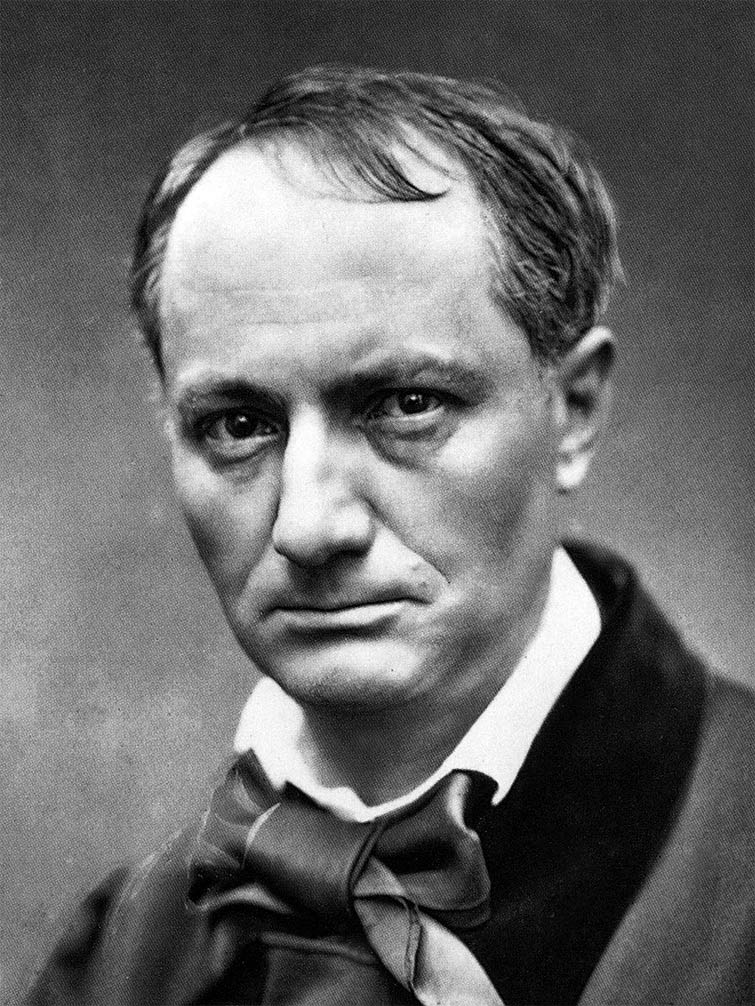
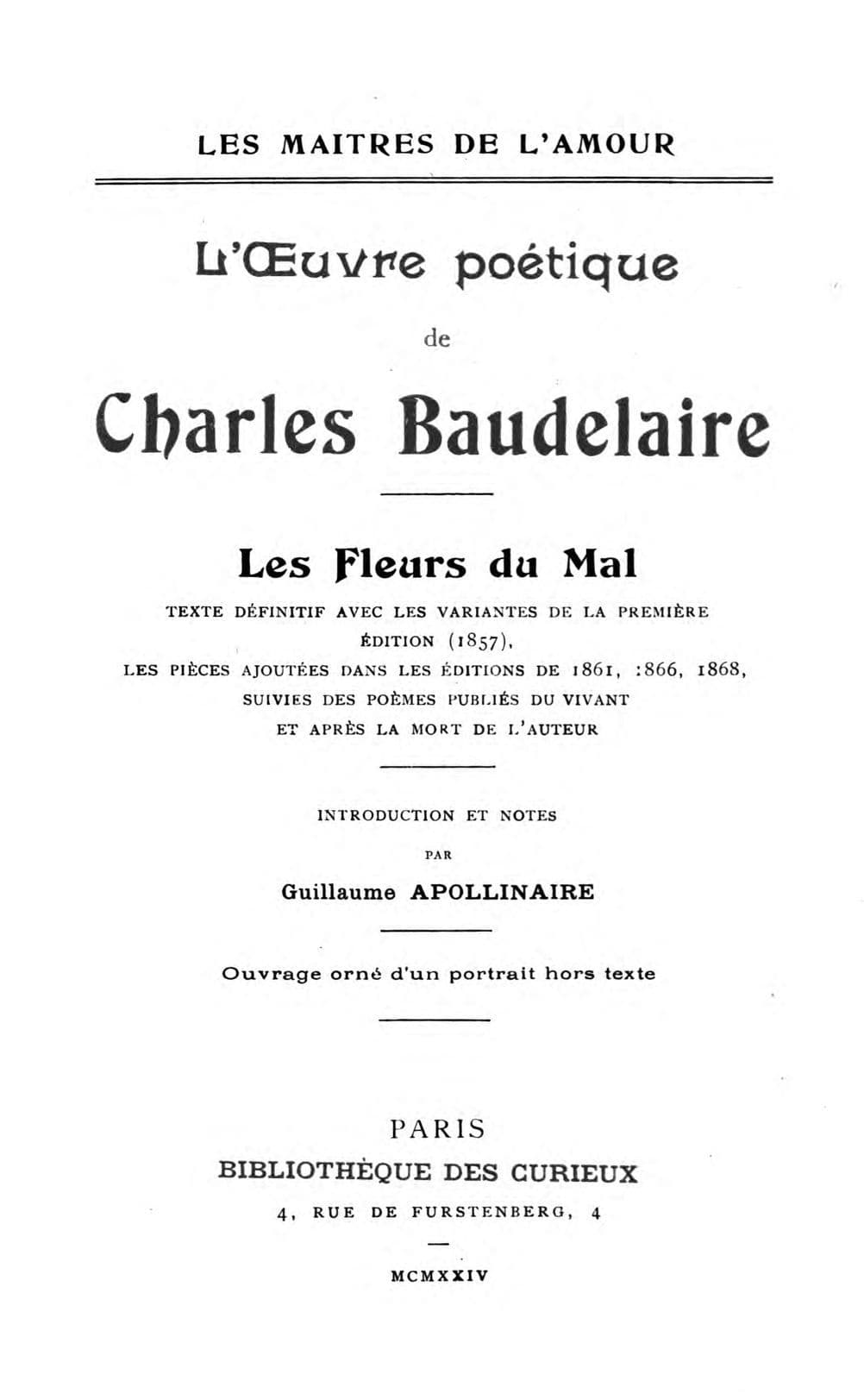
When Charles Baudelaire published Les Fleurs du Mal in 1857, a French court declared six of its poems obscene. The scandal that followed cemented the collection's status as a boundary-shattering masterpiece that redefined what poetry could say and feel. Spanning from 1840 to Baudelaire's death in 1867, these poems occupy a singular terrain: where beauty rots into decadence, where desire becomes a form of suffering, where the modern city suffocates the soul while its outcasts achieve a strange nobility. The collection moves through vivid sections: the tortured eroticism of Spleen et Idéal, where love oscillates between ecstasy and despair; the wine and drug poems that seek oblivion; the Parisian tableaux that capture urban alienation and the poetry hidden in squalor; and the rebel's defiant cry against a hypocritical world. Baudelaire invented a language for spleen, for the weight of modern existence, for pleasures that wound. This is not comfortable poetry. It is poetry that holds a blade to your throat and asks whether you have the courage to feel fully. Its influence on Verlaine, Rimbaud, Mallarmé, and generations beyond is几乎是无限的. For readers who want poetry that provokes rather than soothes, that maps the darker corridors of human experience with devastating precision, this remains essential.
Editions
X-Ray
“My heart is lost; the beasts have eaten it.””
— Charles Baudelaire
“I love to watch the fine mist of the night come on, The windows and the stars illumined, one by one, The rivers of dark smoke pour upward lazily, And the moon rise and turn them silver. I shall see The springs, the summers, and the autumns slowly pass; And when old Winter puts his blank face to the glass, I shall close all my shutters, pull the curtains tight, And build me stately palaces by candlelight.””
— Charles Baudelaire
“The Poet is a kinsman in the cloudsWho scoffs at archers, loves a stormy day;But on the ground, among the hooting crowds,He cannot walk, his wings are in the way.””
— Charles Baudelaire
“But the true voyagers are only those who leaveJust to be leaving; hearts light, like balloons,They never turn aside from their fatalityAnd without knowing why they always say: "Let's go!””
— Charles Baudelaire
“And yetto wine, to opium even, I preferthe elixir of your lips on which love flaunts itself;and in the wasteland of desireyour eyes afford the wells to slake my thirst.””
— Charles Baudelaire
“Through the Unknown, we'll find the New””
— Charles Baudelaire
“Passion I hate, and spirit does me wrong. Let us love gently.””
— Charles Baudelaire
“the Devil's hand directs our every move - / the things we loathed become the things we love””
— Charles Baudelaire
“But what does it matter what reality is outside myself, so long as it has helped me to live, to feel that I am, and what I am?””
— Charles Baudelaire
Link to this book
Add a free, dofollow link to Lex on your blog, forum, syllabus, or reading list.

<a href="https://lex-books.com/book/les-fleurs-du-mal-9f9850ee-37d3-4de1-899b-208723c1e155"><img src="https://lex-books.com/badges/read-on-lex.svg" alt="Read Les Fleurs Du Mal by Charles Baudelaire free on Lex" width="160" height="40"></a>[](https://lex-books.com/book/les-fleurs-du-mal-9f9850ee-37d3-4de1-899b-208723c1e155)[url=https://lex-books.com/book/les-fleurs-du-mal-9f9850ee-37d3-4de1-899b-208723c1e155][img]https://lex-books.com/badges/read-on-lex.svg[/img][/url]Read Les Fleurs Du Mal by Charles Baudelaire free on Lex: https://lex-books.com/book/les-fleurs-du-mal-9f9850ee-37d3-4de1-899b-208723c1e155Cite this book
Reading this edition for a paper or guide? Copy a citation.
Baudelaire, Charles. Les Fleurs Du Mal. Lex, lex-books.com/book/les-fleurs-du-mal-9f9850ee-37d3-4de1-899b-208723c1e155.Baudelaire, C. (1867). Les Fleurs Du Mal. Lex. https://lex-books.com/book/les-fleurs-du-mal-9f9850ee-37d3-4de1-899b-208723c1e155Baudelaire, Charles. Les Fleurs Du Mal. Lex. https://lex-books.com/book/les-fleurs-du-mal-9f9850ee-37d3-4de1-899b-208723c1e155.