Le Diable Amoureux; L'honneur Perdu Et Recouvré; Rachel Ou La Belle Juive
1772
Le Diable Amoureux; L'honneur Perdu Et Recouvré; Rachel Ou La Belle Juive
1772
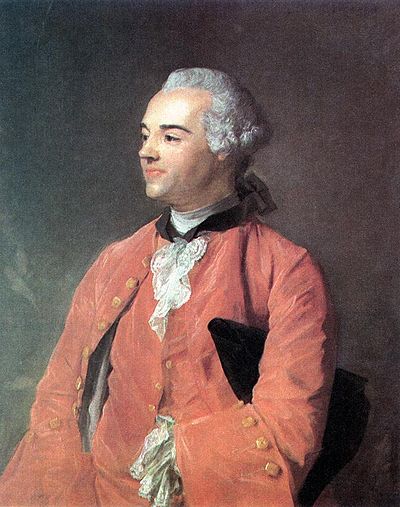
The book that invented the modern fantasy of temptation. Jacques Cazotte's 1772 novel follows Alvare, a young Spanish captain stationed in Naples, who decides to test his hand at magic. He invokes a spirit and encounters Biondetta, a shapeshifting creature of devastating beauty who claims to be a Moorish princess in love with him. But Biondetta is something else entirely: a demon, a test, a mirror. What unfolds is one of literature's most unsettling romances, where every tenderness might be deception and every desire a trapdoor into damnation. Cazotte weaves the occult speculation of his era into a psychological maze about what we want, what we're afraid of, and whether there's any difference. The collection also includes two additional tales exploring love, honor, and transgression across religious and social boundaries. Written before the Revolution by an author who would be guillotined for his mystical predictions, this reads like a forbidden dream.
Editions
X-Ray
“Man was made of a little mud and water. Could not a woman be made of dew, earthen mists and beams of light, condensed remnants of a rainbow?””
— Jacques Cazotte
“Lastly, say to me, if you can, with feelings as tender as mine for you: my dear Beelzebub, I adore you...””
— Jacques Cazotte
“Los prejuicios han nacido en ti a falta de luces y, sea razonando, sea sin razonar, hacen que tu conducta sea tan inconsecuente como extraña. Sometido a verdaderos deberes, te impones otros con los que es imposible o inútil cumplir; finalmente, buscas hacerte separar del camino en la persecución del objeto cuya posesión te parece más deseable. Nuestra unión, nuestros vínculos pasan a depender de una voluntad ajena.””
— Jacques Cazotte
“Mi joven amigo, mucho me complace vuestra ignorancia; es tan valiosa como la doctrina de los demás: al menos no vivís en el error y, si bien no estáis instruido, sois susceptible de estarlo. Vuestro natural, la franqueza de vuestro carácter, la rectitud de vuestro espíritu, me agradan.””
— Jacques Cazotte
“L'homme fut un assemblage d'un peu de boule et d'eau. Pourquoi une femme ne serait-elle pas faite de rosée, de vapeurs terrestres et de rayons de lumière, des débris d'un arc-en-ciel condensés?””
— Jacques Cazotte
“Hasn't a man his own character, his own interests, his own tastes and passions according to which he either exaggerates or understates? Tell the thing as it is, you say! ... That might not even happen twice in one day in a whole city. And is the person who listens any better qualified to listen than the person who speaks? No. Which is why in a big city it can hardly happen twice in one day that someone's words are understood in the same way as they are spoken.What the devil, Jacques, those principles are enough to outlaw speaking and listening altogether. Say nothing, hear nothing, believe nothing! Just tell the thing as you will, I will listen as I can and believe as I am able.””
— Jacques Cazotte
“¡Ah! Si pudiese llegar y echarme a las rodillas de doña Mencía”
— Jacques Cazotte
“Ya están arreglados nuestros asuntos”
— Jacques Cazotte
“Ingrato, coloca la mano sobre este corazón que te adora; que el tuyo se anime, si es posible, con la más ligera de las emociones que tan sensibles son en el mío. Deja que fluya por tus venas un poco de esa llama deliciosa que abrasa las mías; suaviza, si puedes, el sonido de esa voz tan propia para inspirar amor y de la que no te sirves, y en exceso, más que para asustar mi alma tímida; dime, en fin, si te es posible, pero con la misma ternura que yo siento por ti: mi querido Belcebú, te adoro…””
— Jacques Cazotte
Link to this book
Add a free, dofollow link to Lex on your blog, forum, syllabus, or reading list.

<a href="https://lex-books.com/book/le-diable-amoureux-l-honneur-perdu-et-recouvr-rachel-ou-la-belle-juive-564bce19-d6b6-4dde-97d3-e485353dbbbc"><img src="https://lex-books.com/badges/read-on-lex.svg" alt="Read Le Diable Amoureux; L'honneur Perdu Et Recouvré; Rachel Ou La Belle Juive by Jacques Cazotte free on Lex" width="160" height="40"></a>[](https://lex-books.com/book/le-diable-amoureux-l-honneur-perdu-et-recouvr-rachel-ou-la-belle-juive-564bce19-d6b6-4dde-97d3-e485353dbbbc)[url=https://lex-books.com/book/le-diable-amoureux-l-honneur-perdu-et-recouvr-rachel-ou-la-belle-juive-564bce19-d6b6-4dde-97d3-e485353dbbbc][img]https://lex-books.com/badges/read-on-lex.svg[/img][/url]Read Le Diable Amoureux; L'honneur Perdu Et Recouvré; Rachel Ou La Belle Juive by Jacques Cazotte free on Lex: https://lex-books.com/book/le-diable-amoureux-l-honneur-perdu-et-recouvr-rachel-ou-la-belle-juive-564bce19-d6b6-4dde-97d3-e485353dbbbcCite this book
Reading this edition for a paper or guide? Copy a citation.
Cazotte, Jacques. Le Diable Amoureux; L'honneur Perdu Et Recouvré; Rachel Ou La Belle Juive. Lex, lex-books.com/book/le-diable-amoureux-l-honneur-perdu-et-recouvr-rachel-ou-la-belle-juive-564bce19-d6b6-4dde-97d3-e485353dbbbc.Cazotte, J. (1772). Le Diable Amoureux; L'honneur Perdu Et Recouvré; Rachel Ou La Belle Juive. Lex. https://lex-books.com/book/le-diable-amoureux-l-honneur-perdu-et-recouvr-rachel-ou-la-belle-juive-564bce19-d6b6-4dde-97d3-e485353dbbbcCazotte, Jacques. Le Diable Amoureux; L'honneur Perdu Et Recouvré; Rachel Ou La Belle Juive. Lex. https://lex-books.com/book/le-diable-amoureux-l-honneur-perdu-et-recouvr-rachel-ou-la-belle-juive-564bce19-d6b6-4dde-97d3-e485353dbbbc.