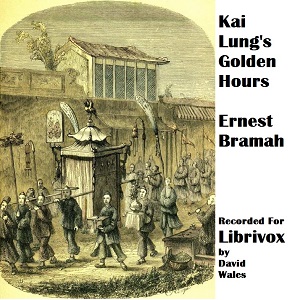
Kai Lung's Golden Hours
Ernest Bramah's 1920 masterpiece inverts death row into a storyteller's sanctuary. Kai Lung, convicted of some unspecified but presumably capital offense in ancient China, faces the Mandarin's judgment. But clever Kai Lung has a proposition: let him tell a story, and perhaps the court will find mercy. One story leads to another, and another, each tale branching into further tales, each more elaborate than the last. The frame doesn't just hold the stories, it becomes the point. Because every tale Kai Lung tells is itself a kind of defense, a circuitous argument for human cleverness, for the power of narrative to reshape reality, for the possibility that truth might be found in fictions. The prose itself dazzles, elaborate, playful, a perfect mockery of 'Eastern wisdom' that somehow becomes genuine wisdom anyway. This is the ancestor of every storytelling-conspiracy novel, every narrative that knows its own cleverness and doesn't apologize.
X-Ray



![Night Watches [complete]](/_next/image?url=https%3A%2F%2Fd3b2n8gj62qnwr.cloudfront.net%2FCOVERS%2Fgutenberg_covers75k%2Febook-12161.png&w=3840&q=75)