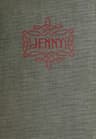
Jenny
1911

In 1911, Sigrid Undset detonated a scandal with this ruthlessly honest novel about a Norwegian painter in Rome who sacrifices everything, her art, her independence, her ideals, on the altar of forbidden desire. Jenny Winge arrives in Rome brimming with artistic ambition, determined to forge a life of meaningful work. Instead, she falls into an affair with a married man, the father of a man who wishes to marry her. She becomes pregnant. She chooses to keep the child. And in doing so, she surrenders the future she imagined for herself. What makes this novel endure is not its plot but its unflinching gaze: Undset refuses to let Jenny off the hook with sentimentality, yet she also refuses to judge her. The result is a portrait of a woman navigating desire, shame, and the possibility of redemption on her own terms, one that feels startlingly modern despite its century of age. This is Undset before the medieval epics that won her the Nobel Prize, and it reveals her as a compassionate realist of immense power.
Editions
X-Ray
“She had wanted to change herself so that she could slip in among other people, although she had always known she would remain a stranger because she was not one of them. But she couldn’t bear to be alone, trapped by her own nature. She had violated her own nature. And her relationship to those people, who were so profoundly different from her, had become detestable and perverse. And now, afterward … her own innermost soul had been destroyed by it, every anchor she had within herself had failed … and crumbled. She was disintegrating from the inside.””
— Sigrid Undset
“Jeg trodde jeg var skuffet - og jeg tenkte det var fordi jeg hadde lengtet så meget og drømt så meget, at alt jeg ville få se, skulle bli blekt og fattig imot mine drømer. Har De lagt merke til når man ligger en sommerdag i solen med lukkede øyne ? Når man åpner dem, er likesom alle farver grå og falmer en stund. Men det er bare fordi øynene er vekket av å være ubrukte en tid - de orker ikke straks å oppfatte den mangfoldighet av farver som er i virkeligheten - det første inntrykk blir ufullkomment of fattig. Forstår De hva jeg mener ?””
— Sigrid Undset
“What kind of goal did I have, anyway?” she exclaimed fiercely. “I wanted to live in such a way that I would never have to be ashamed, either as a human being or as an artist. Never do a single thing that I didn’t think was right. I wanted to be honest and steadfast and kind, and never have another person’s pain on my conscience. So what was the crime that started it all? That brought on everything else? The fact that I longed for love, without having any specific man I longed for? Was that so strange? That I wanted so much to believe, when Helge appeared, that he was the one I had been longing for? Until in the end I believed it was true? That was the beginning, from which everything else followed Gunnar … I did believe … that I could make them happy. Yet I caused nothing but harm.”Jenny part 3 ch 9””
— Sigrid Undset
“Bless you, for many a hundred years we have not fought for our honour; we have lived merely to nurse our insides. The Persian wars were really trifles, but for a vigorous people Salamis, Thermopylæ, and the Acropolis mean the bloom of all the noblest and soundest instincts, and as long as these instincts are valued, and a people believes that it has certain qualities to uphold, and a past, a present, and a future to be proud of, these names will be surrounded by a certain glamour. And a poet can write a poem on Thermopylæ and imprint it with the feelings of his own time, as Leopardi has done in his ‘Ode to Italy.’ Do you remember I read it to you in Rome?””
— Sigrid Undset
Link to this book
Add a free, dofollow link to Lex on your blog, forum, syllabus, or reading list.

<a href="https://lex-books.com/book/jenny-0fb9d5f1-956c-4a6a-aaa4-86bc17d71f45"><img src="https://lex-books.com/badges/read-on-lex.svg" alt="Read Jenny by Sigrid Undset free on Lex" width="160" height="40"></a>[](https://lex-books.com/book/jenny-0fb9d5f1-956c-4a6a-aaa4-86bc17d71f45)[url=https://lex-books.com/book/jenny-0fb9d5f1-956c-4a6a-aaa4-86bc17d71f45][img]https://lex-books.com/badges/read-on-lex.svg[/img][/url]Read Jenny by Sigrid Undset free on Lex: https://lex-books.com/book/jenny-0fb9d5f1-956c-4a6a-aaa4-86bc17d71f45Cite this book
Reading this edition for a paper or guide? Copy a citation.
Undset, Sigrid. Jenny. Lex, lex-books.com/book/jenny-0fb9d5f1-956c-4a6a-aaa4-86bc17d71f45.Undset, S. (1911). Jenny. Lex. https://lex-books.com/book/jenny-0fb9d5f1-956c-4a6a-aaa4-86bc17d71f45Undset, Sigrid. Jenny. Lex. https://lex-books.com/book/jenny-0fb9d5f1-956c-4a6a-aaa4-86bc17d71f45.