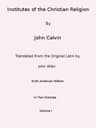
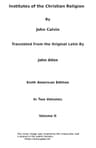
Institutes of the Christian Religion (vol. 1 of 2)
1536
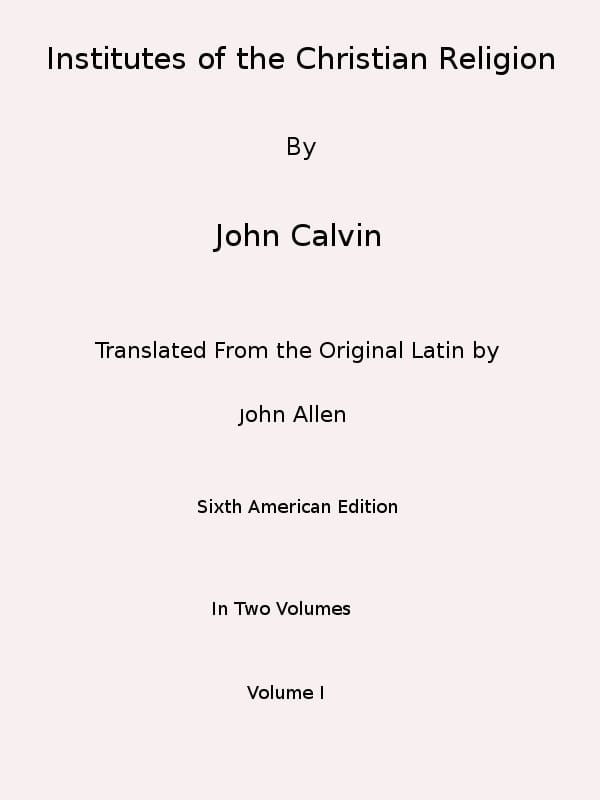
Institutes of the Christian Religion (vol. 1 of 2)
1536
Translated by John Allen
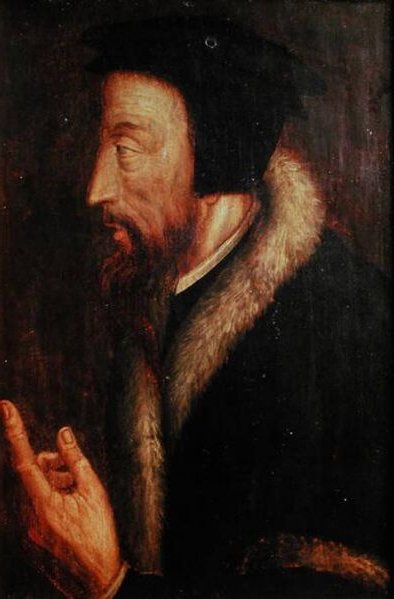
In 1536, a twenty-six-year-old French refugee wrote a book that would shape Christianity for five centuries. The Institutes of the Christian Religion began as a modest handbook for believers fleeing persecution in France, but it became the most influential systematic presentation of Protestant theology ever written. Calvin organized Christian doctrine into a rigorous logical framework: the nature of God and Scripture, the human condition and sin, Christ as redeemer, and the mystery of grace. What emerges is a vision of faith as intellectual conviction married to spiritual transformation. This is not casual reading. Calvin demands his readers wrestle with hard questions about divine sovereignty, human depravity, and the logic of salvation. The Institutes has been read by millions: as spiritual guide, as intellectual challenge, as historical document of the Reformation's radical reimagining of Christian thought. Whether you approach it as a believer seeking theological depth, a scholar tracing the intellectual foundations of Western religion, or a curious reader wanting to understand one of history's most consequential books, Calvin's work remains essential.
Editions
X-Ray
“No one can travel so far that he does not make some progess each day. So let us never give up. Then we shall move forward daily in the Lord's way. And let us never despair because of our limited success. Even though it is so much less than we would like, our labour is not wasted when today is better than yesterday!””
— Jean Calvin
“We are not to reflect on the wickedness of men but to look to the image of God in them, an image which, covering and obliterating their faults, an image which, by its beauty and dignity, should allure us to love and embrace them.””
— Jean Calvin
“Without the fear of God, men do not even observe justice and charity among themselves.””
— Jean Calvin
“Those who set up a fictitious worship, merely worship and adore their own delirious fancies; indeed, they would never dare so to trifle with God, had they not previously fashioned him after their own childish conceits.””
— Jean Calvin
“In forming an estimate of sins, we are often imposed upon by imagining that the more hidden the less heinous they are.””
— Jean Calvin
“Faith is ultimately a firm and certain knowledge of God's benevolence toward us, founded upon the truth of the freely given promise in Christ, both revealed to our minds and sealed upon our hearts by the Holy Spirit””
— Jean Calvin
“He who neglects to pray alone and in private, however assiduously he frequents public meetings, there gives his prayers to the wind.””
— Jean Calvin
“As far as sacred Scripture is concerned, however much froward men try to gnaw at it, nevertheless it clearly is crammed with thoughts that could not be humanly conceived. Let each of the prophets be looked into: none will be found who does not far exceed human measure. Consequently, those for whom prophetic doctrine is tasteless ought to be thought of as lacking taste buds.””
— Jean Calvin
“We are not to look to what men in themselves deserve but to attend to the image of God which exists in all and to which we owe all honor and love.””
— Jean Calvin
Link to this book
Add a free, dofollow link to Lex on your blog, forum, syllabus, or reading list.

<a href="https://lex-books.com/book/institutes-of-the-christian-religion-vol-1-of-2-ad6ac7e0-df40-49ce-959e-41cd1df35316"><img src="https://lex-books.com/badges/read-on-lex.svg" alt="Read Institutes of the Christian Religion (vol. 1 of 2) by Jean Calvin free on Lex" width="160" height="40"></a>[](https://lex-books.com/book/institutes-of-the-christian-religion-vol-1-of-2-ad6ac7e0-df40-49ce-959e-41cd1df35316)[url=https://lex-books.com/book/institutes-of-the-christian-religion-vol-1-of-2-ad6ac7e0-df40-49ce-959e-41cd1df35316][img]https://lex-books.com/badges/read-on-lex.svg[/img][/url]Read Institutes of the Christian Religion (vol. 1 of 2) by Jean Calvin free on Lex: https://lex-books.com/book/institutes-of-the-christian-religion-vol-1-of-2-ad6ac7e0-df40-49ce-959e-41cd1df35316Cite this book
Reading this edition for a paper or guide? Copy a citation.
Calvin, Jean. Institutes of the Christian Religion (vol. 1 of 2). Lex, lex-books.com/book/institutes-of-the-christian-religion-vol-1-of-2-ad6ac7e0-df40-49ce-959e-41cd1df35316.Calvin, J. (1536). Institutes of the Christian Religion (vol. 1 of 2). Lex. https://lex-books.com/book/institutes-of-the-christian-religion-vol-1-of-2-ad6ac7e0-df40-49ce-959e-41cd1df35316Calvin, Jean. Institutes of the Christian Religion (vol. 1 of 2). Lex. https://lex-books.com/book/institutes-of-the-christian-religion-vol-1-of-2-ad6ac7e0-df40-49ce-959e-41cd1df35316.