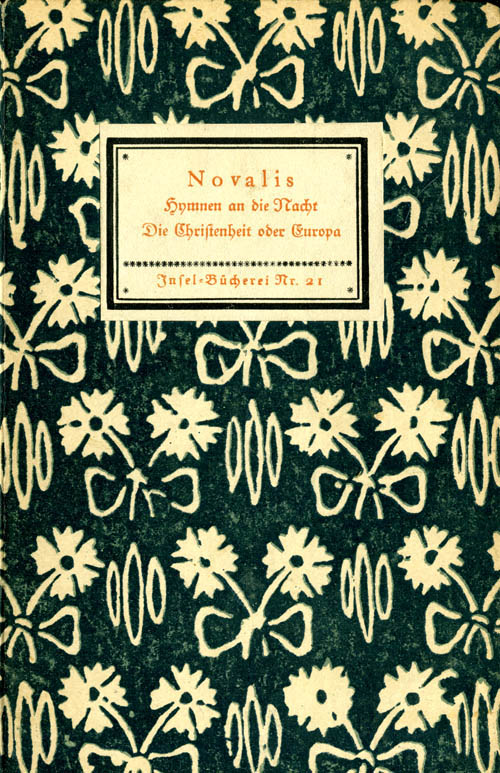
Hymnen an Die Nacht / Die Christenheit Oder Europa
1800
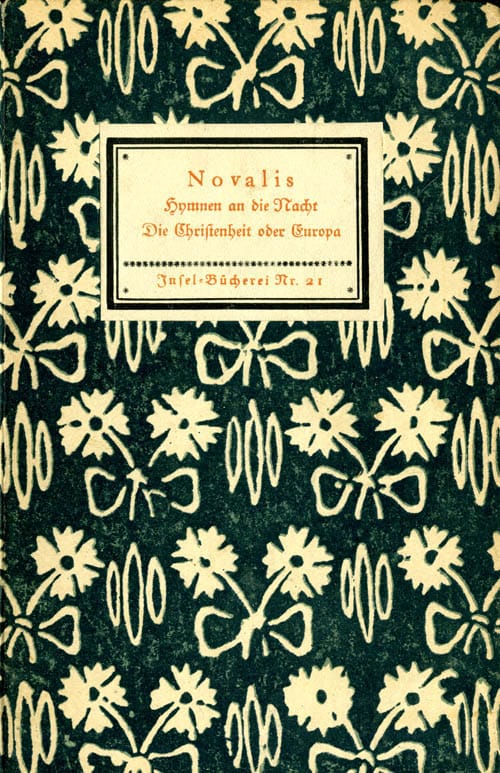
Hymnen an Die Nacht / Die Christenheit Oder Europa
1800
Novalis wrote these hymns in the shadow of his young bride's death, and that grief crackles through every line. The "Hymnen an die Nacht" transforms mourning into mysticism: night becomes not absence but presence, not darkness but depth. Here, the beloved is transfigured into something eternal, and the poet finds in darkness what daylight cannot offer, communion with the infinite. It's a radical reimagining of loss as transcendence. The companion piece, "Die Christenheit oder Europa," extends this spiritual longing into the public sphere. Novalis diagnoses a fractured Christendom and prescribes poetic unity as the cure. His Europe is a body broken by denominational war, waiting for reconciliation. This is Romanticism's beating heart: the belief that poetry can heal what theology has torn apart. For readers who hunger for philosophical depth wrapped in haunting imagery, these hymns remain a gateway to German Idealism's most tender visionary.
Editions

X-Ray
“Oh draw at my heart, love,Draw till I'm gone,That, fallen asleep, IStill may love on.I feel the flow ofDeath's youth-giving floodTo balsam and etherTransform my blood --I live all the daytimeIn faith and in mightAnd in holy fireI die every night.””
— Novalis
“And now I awaken, for I am both yours and mine.””
— Novalis
“But even more heavenly than the flashingstars are those infinite eyes which the night opens within us, and which see further even than the palest of thoseinnumerable hosts.””
— Novalis
“I turn away from the light to the holy, inexpressible, mysterious night. Far away lies the world − sunk into adeep vault, its place waste and lonely. Across my heart strings a low melancholy plays. I will fall in drops of dew and merge with the ashes. Distant memories, the wishes of youth, the dreams of childhood, the brief joys and vain hopes of a long life – all arise dressed in grey, like evening mist after sunset. In other lands light haspitched its merry tents. And if it never returned to its children, who would await its dawning with the innocence of faith?””
— Novalis
“Light had its allotted time; but timeless and infinite is the reign of the night − the duration of sleep eternal.””
— Novalis
“What delights, what pleasures does your life offer you that outweigh the raptures of death?””
— Novalis
“Longing for DeathDown into the womb of the earth,Out of the kingdom of light,Anger, pain, and a savage blowSignal the happy departure.””
— Novalis
“he who has tasted it, who has stood at the watershed of this world and looked across into the new land, into the dwelling of the night − truly, he will never return to the labours of the world, to the land where the light is housed in ceaseless unrest.””
— Novalis
“Aside I turn to the holy, unspeakable, mysterious Night. Afar lies the world -- sunk in a deep grave -- waste and lonely is its place. In the chords of the bosom blows a deep sadness. I am ready to sink away in drops of dew, and mingle with the ashes. -- The distances of memory, the wishes of youth, the dreams of childhood, the brief joys and vain hopes of a whole long life, arise in gray garments, like an evening vapor after the sunset. In other regions the light has pitched its joyous tents. What if it should never return to its children, who wait for it with the faith of innocence?””
— Novalis
Link to this book
Add a free, dofollow link to Lex on your blog, forum, syllabus, or reading list.

<a href="https://lex-books.com/book/hymnen-an-die-nacht-die-christenheit-oder-europa-6db96369-389b-4f56-bbc1-3ab96fe4be84"><img src="https://lex-books.com/badges/read-on-lex.svg" alt="Read Hymnen an Die Nacht / Die Christenheit Oder Europa by Novalis free on Lex" width="160" height="40"></a>[](https://lex-books.com/book/hymnen-an-die-nacht-die-christenheit-oder-europa-6db96369-389b-4f56-bbc1-3ab96fe4be84)[url=https://lex-books.com/book/hymnen-an-die-nacht-die-christenheit-oder-europa-6db96369-389b-4f56-bbc1-3ab96fe4be84][img]https://lex-books.com/badges/read-on-lex.svg[/img][/url]Read Hymnen an Die Nacht / Die Christenheit Oder Europa by Novalis free on Lex: https://lex-books.com/book/hymnen-an-die-nacht-die-christenheit-oder-europa-6db96369-389b-4f56-bbc1-3ab96fe4be84Cite this book
Reading this edition for a paper or guide? Copy a citation.
Novalis. Hymnen an Die Nacht / Die Christenheit Oder Europa. Lex, lex-books.com/book/hymnen-an-die-nacht-die-christenheit-oder-europa-6db96369-389b-4f56-bbc1-3ab96fe4be84.Novalis (1800). Hymnen an Die Nacht / Die Christenheit Oder Europa. Lex. https://lex-books.com/book/hymnen-an-die-nacht-die-christenheit-oder-europa-6db96369-389b-4f56-bbc1-3ab96fe4be84Novalis. Hymnen an Die Nacht / Die Christenheit Oder Europa. Lex. https://lex-books.com/book/hymnen-an-die-nacht-die-christenheit-oder-europa-6db96369-389b-4f56-bbc1-3ab96fe4be84.