Henry of Ofterdingen: A Romance.
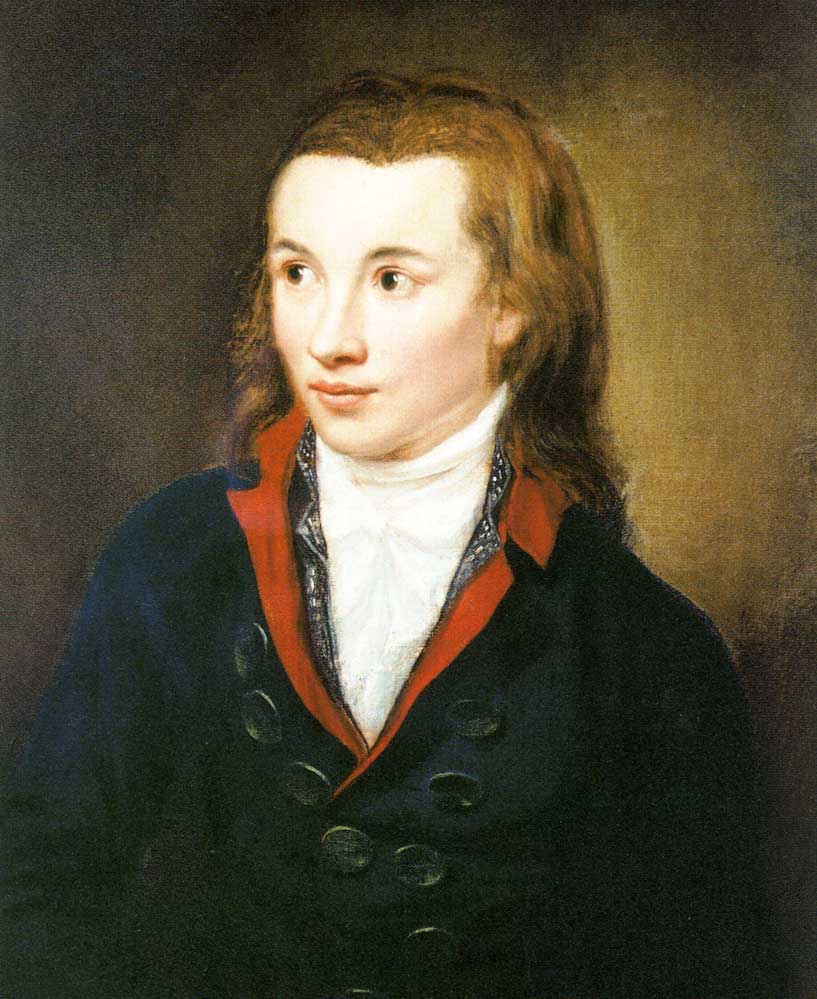
Henry of Ofterdingen opens with one of literature's most famous dreams: a vision of the blue flower that would become the defining symbol of German Romantic longing. Young Henry, an aspiring poet, finds his ordinary life in Swabia suffocating against the weight of his fantasies. A mysterious stranger has told him tales that won't release him, and when he sets out with his mother toward his ancestral home in Augsburg, he crosses into a world where dreams and waking bleed together. Along the way, he encounters poets, lovers, and ancient legends that test and shape his artistic destiny. The novel pulses with an urgent, almost desperate question: what does it mean to yearn, to create, to chase beauty across the threshold of the possible? Though unfinished - Novalis died at just 28 - the work throbs with a romantic hunger that never resolves, only transforms. This is romance as philosophy, as prayer, as the ache of consciousness reaching toward transcendence.
Editions
X-Ray
“Ohne die Träume würden wir gewiss früher alt.””
— Novalis
“Who does not love to wander at twilight, when the light of day and the deep shades of night mingle together in deep coloring?””
— Novalis
“We dream of a journey through the universe. But is the universe then not in us? We do not know the depths of our spirit. Inward goes the secret path. Eternity with its worlds, the past and future, is in us or nowhere.””
— Novalis
“There is more truth in their romances than in learned chronicles.””
— Novalis
“Though the heroes and their fates are inventions, yet the spirit in which they are composed is true and natural.””
— Novalis
“Ich weiß nicht, aber mich dünkt, ich sähe zwei Wege um zur Wissenschaft der menschlichen Geschichte zu gelangen. Der eine, mühsam und unabsehlich, mit unzähligen Krümmungen, der Weg der Erfahrung; der andere, fast ein Sprung nur, der Weg der innern Betrachtung. Der Wanderer des ersten muß eins aus dem andern in einer langwierigen Rechnung finden, wenn der andere die Natur jeder Begebenheit und jeder Sache gleich unmittelbar anschaut, und sie in ihrem lebendigen, mannigfaltigen Zusammenhange betrachten, und leicht mit allen übrigen, wie Figuren auf einer Tafel, vergleichen kann.””
— Novalis
“Inspiration without intellect is useless and dangerous; and the poet will be able to perform few wonders, when he is astonished by wonders.””
— Novalis
“mad, were not my perception and reasonings so clear; and this state of mind appears to have brought with it superior knowledge on all subjects.””
— Novalis
Link to this book
Add a free, dofollow link to Lex on your blog, forum, syllabus, or reading list.

<a href="https://lex-books.com/book/henry-of-ofterdingen-a-romance-4298fe18-d9c6-499f-b7b4-d791db440237"><img src="https://lex-books.com/badges/read-on-lex.svg" alt="Read Henry of Ofterdingen: A Romance. by Novalis free on Lex" width="160" height="40"></a>[](https://lex-books.com/book/henry-of-ofterdingen-a-romance-4298fe18-d9c6-499f-b7b4-d791db440237)[url=https://lex-books.com/book/henry-of-ofterdingen-a-romance-4298fe18-d9c6-499f-b7b4-d791db440237][img]https://lex-books.com/badges/read-on-lex.svg[/img][/url]Read Henry of Ofterdingen: A Romance. by Novalis free on Lex: https://lex-books.com/book/henry-of-ofterdingen-a-romance-4298fe18-d9c6-499f-b7b4-d791db440237Cite this book
Reading this edition for a paper or guide? Copy a citation.
Novalis. Henry of Ofterdingen: A Romance.. Lex, lex-books.com/book/henry-of-ofterdingen-a-romance-4298fe18-d9c6-499f-b7b4-d791db440237.Novalis (n.d.). Henry of Ofterdingen: A Romance.. Lex. https://lex-books.com/book/henry-of-ofterdingen-a-romance-4298fe18-d9c6-499f-b7b4-d791db440237Novalis. Henry of Ofterdingen: A Romance.. Lex. https://lex-books.com/book/henry-of-ofterdingen-a-romance-4298fe18-d9c6-499f-b7b4-d791db440237.