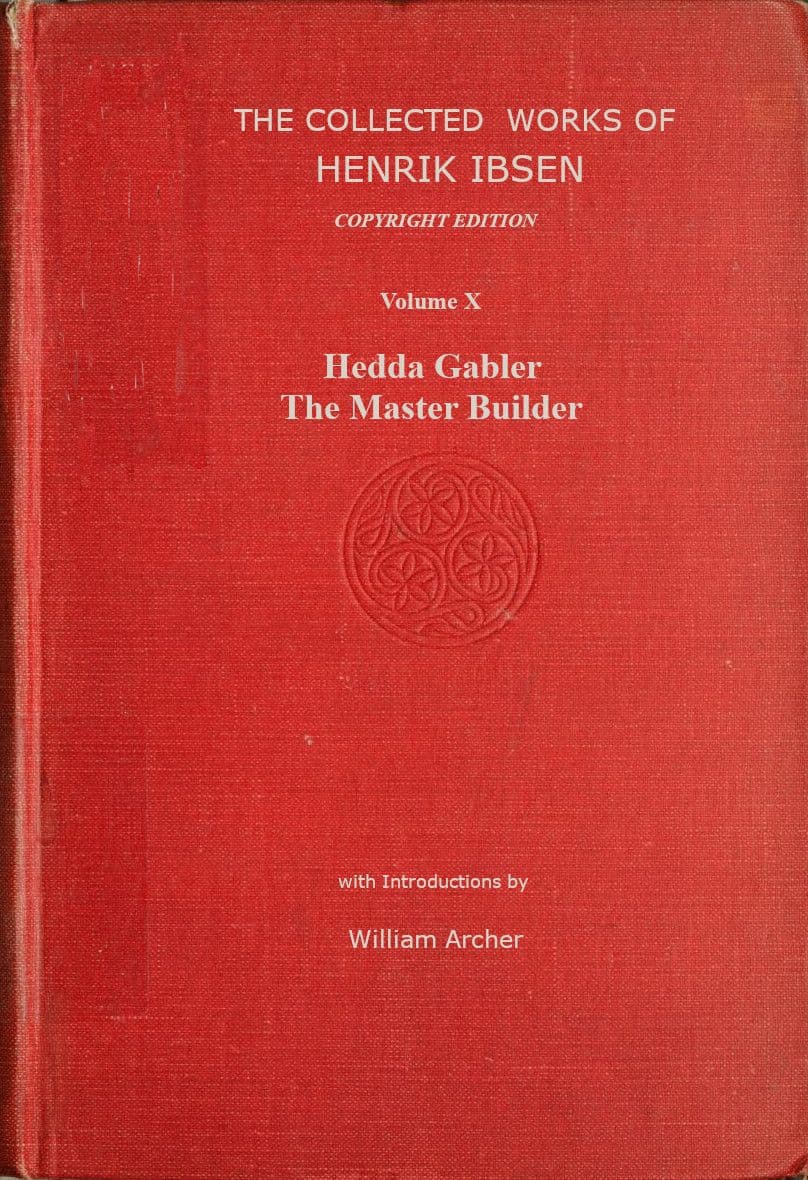
Hedda Gabler
Hedda Gabler returns from her honeymoon already suffocating. Married to the well-meaning but tedious George Tesman, a man whose greatest excitement is his academic research, she finds herself imprisoned in a house she despises, playing the role of dutiful wife to an audience who bores her. Once she was General Gabler's daughter, wild, intelligent, feared. Now she is merely Hedda Tesman, and the world insists she be small. When her former flame Eilert Lovborg reappears, regenerated and triumphant, the possibility of genuine feeling crashes against her terror of scandal. What follows is a devastating meditation on the cost of choosing safety over freedom, and the violence that erupts when a vital spirit is caged in bourgeois respectability. Ibsen wrote that Hedda should be seen as her father's daughter, not her husband's wife, in this bracing, uncomfortable play, that identity conflict becomes a tragedy of Shakespearean proportions.
Editions

X-Ray
“It's a liberation to know that an act of spontaneous courage is yet possible in this world. An act that has something of unconditional beauty.””
— Henrik Ibsen
“It’s a release to know that in spite of everything a premeditated act of courage is still possible.””
— Henrik Ibsen
“Good god, people don't do such things!””
— Henrik Ibsen
“Oh, what curse is it that makes everything I touch turn ludicrous and mean?””
— Henrik Ibsen
“Do think it quite incomprehensible that a young girl”
— Henrik Ibsen
“I can see him already”
— Henrik Ibsen
“I am burning”
— Henrik Ibsen
“Eljert Lovborg...listen to me...couldn't you let it happen beautifully?””
— Henrik Ibsen
Link to this book
Add a free, dofollow link to Lex on your blog, forum, syllabus, or reading list.

<a href="https://lex-books.com/book/hedda-gabler-cb48328f-1c72-4e29-af4c-ef81db87319d"><img src="https://lex-books.com/badges/read-on-lex.svg" alt="Read Hedda Gabler by Henrik Ibsen free on Lex" width="160" height="40"></a>[](https://lex-books.com/book/hedda-gabler-cb48328f-1c72-4e29-af4c-ef81db87319d)[url=https://lex-books.com/book/hedda-gabler-cb48328f-1c72-4e29-af4c-ef81db87319d][img]https://lex-books.com/badges/read-on-lex.svg[/img][/url]Read Hedda Gabler by Henrik Ibsen free on Lex: https://lex-books.com/book/hedda-gabler-cb48328f-1c72-4e29-af4c-ef81db87319dCite this book
Reading this edition for a paper or guide? Copy a citation.
Ibsen, Henrik. Hedda Gabler. Lex, lex-books.com/book/hedda-gabler-cb48328f-1c72-4e29-af4c-ef81db87319d.Ibsen, H. (n.d.). Hedda Gabler. Lex. https://lex-books.com/book/hedda-gabler-cb48328f-1c72-4e29-af4c-ef81db87319dIbsen, Henrik. Hedda Gabler. Lex. https://lex-books.com/book/hedda-gabler-cb48328f-1c72-4e29-af4c-ef81db87319d.