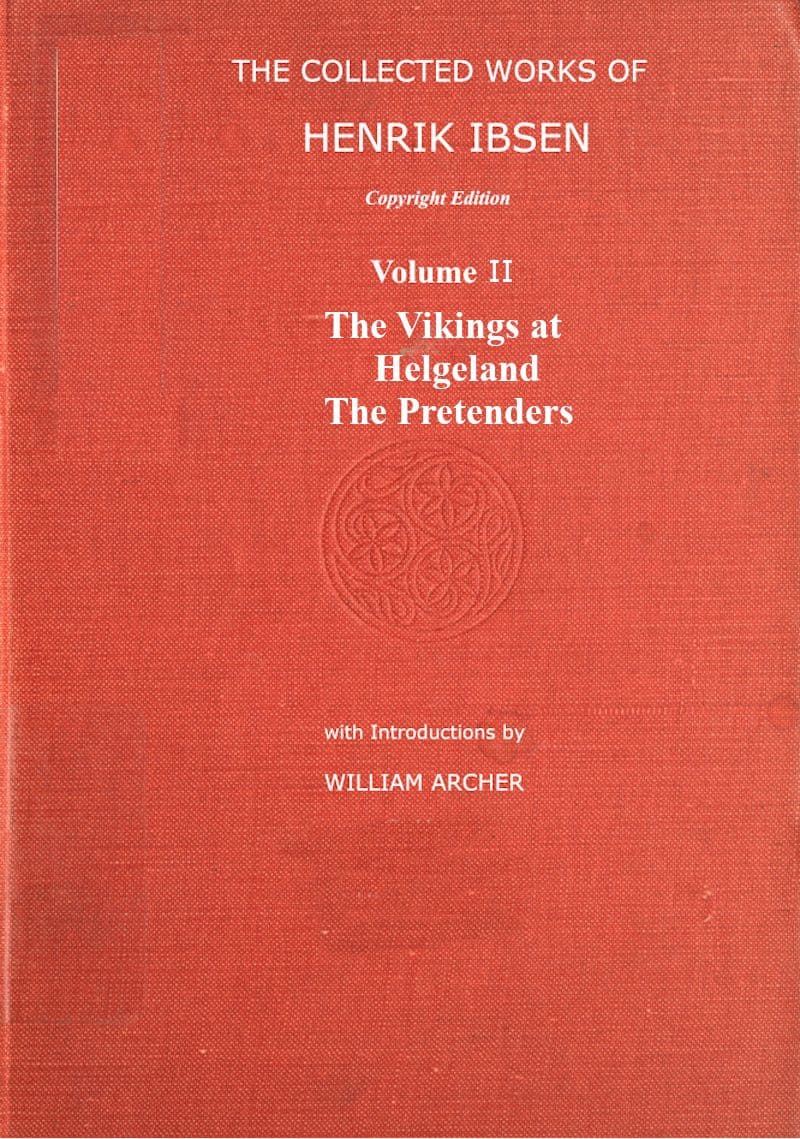
The Vikings of Helgeland
1962
In the frozen wilds of Helgeland, an Icelandic chieftain arrives with blood on his mind and a score to settle. Ornulf has crossed the sea seeking vengeance against Sigurd the Strong, the sea-king who abducted his foster-daughter Hiordis and his own daughter Dagny. But when Ornulf confronts his old friend, he discovers that ten years of living together in the far north have complicated everything: Dagny has fallen in love with her captor, and Sigurd has become the brother Ornulf never had. The question becomes unbearable: can blood be washed clean, or does ancient honor demand its due? Ibsen, still in his romantic period before inventing modern realistic drama, writes with the fury of a Norse saga and the psychological precision that would later define his genius. The play crackles with conflicting loyalties: a father's grief against a daughter's heart, friendship against duty, love against the unyielding law of revenge. The characters speak in a heightened, almost operatic register that makes every declaration feel like a vow sworn over an open grave. This is Viking tragedy at its most primal, where every choice carries the weight of generations. The play endures because it asks what modern dramas often evade: what happens when doing the honorable thing destroys everything you love? For readers who crave morally complex characters trapped in impossible situations, this is early Ibsen at his most electrifying.
Editions
X-Ray
“Cage an eagle and it will bite at the wires, be they ofiron or of gold.””
— Henrik Ibsen
“Here in the north each night is a whole winter long. Yet the place is fair enough, doubt it not! Thou shalt see sights here such as thou hast not seen in the halls of the English king. We shall be together as sisters whilst thou bidest with me; we shall go down to the sea when the storm begins once more; thou shalt see the billows rushing upon the land like wild, white-maned horses”
— Henrik Ibsen
“The White God is coming northward; him will I not meet; the old gods are strong no longer;”
— Henrik Ibsen
“(A thrill of dread runs through the whole group; ASGARDSREIEN”
— Henrik Ibsen
“SIGURD. Man's will can do this and that; but fate rules in the deeds that shape our lives”
— Henrik Ibsen
“HIORDIS. Better no child, than one born in shame. DAGNY. In shame? HIORDIS. Dost thou forgot thy father's saying? Egil is the son of a leman; that was his word. DAGNY. A word spoken in wrath”
— Henrik Ibsen
“HIORDIS. Better no child, than one born in shame. DAGNY. In shame?””
— Henrik Ibsen
“HIORDIS. Cage an eagle and it will bite at the wires, be they of iron or of gold.””
— Henrik Ibsen
“(The feast-room in GUNNAR'S house. The entrance-door is in the back; smaller doors in the side-walls. In front, on the left, the greater high-seat; opposite it on the right, the lesser. In the middle of the floor, a wood fire is burning on a built-up hearth. In the background, on both sides of the door, are daises for the women of the household. From each of the high-seats, a long table, with benches, stretches backwards, parallel with the wall. It is dark outside; the fire lights the room.)””
— Henrik Ibsen
Link to this book
Add a free, dofollow link to Lex on your blog, forum, syllabus, or reading list.

<a href="https://lex-books.com/book/the-vikings-of-helgeland-59e5d84b-7c94-4d38-9c27-a2cb3297d191"><img src="https://lex-books.com/badges/read-on-lex.svg" alt="Read The Vikings of Helgeland by Henrik Ibsen free on Lex" width="160" height="40"></a>[](https://lex-books.com/book/the-vikings-of-helgeland-59e5d84b-7c94-4d38-9c27-a2cb3297d191)[url=https://lex-books.com/book/the-vikings-of-helgeland-59e5d84b-7c94-4d38-9c27-a2cb3297d191][img]https://lex-books.com/badges/read-on-lex.svg[/img][/url]Read The Vikings of Helgeland by Henrik Ibsen free on Lex: https://lex-books.com/book/the-vikings-of-helgeland-59e5d84b-7c94-4d38-9c27-a2cb3297d191Cite this book
Reading this edition for a paper or guide? Copy a citation.
Ibsen, Henrik. The Vikings of Helgeland. Lex, lex-books.com/book/the-vikings-of-helgeland-59e5d84b-7c94-4d38-9c27-a2cb3297d191.Ibsen, H. (1962). The Vikings of Helgeland. Lex. https://lex-books.com/book/the-vikings-of-helgeland-59e5d84b-7c94-4d38-9c27-a2cb3297d191Ibsen, Henrik. The Vikings of Helgeland. Lex. https://lex-books.com/book/the-vikings-of-helgeland-59e5d84b-7c94-4d38-9c27-a2cb3297d191.