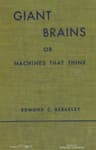
Giant Brains; Or, Machines That Think
1949
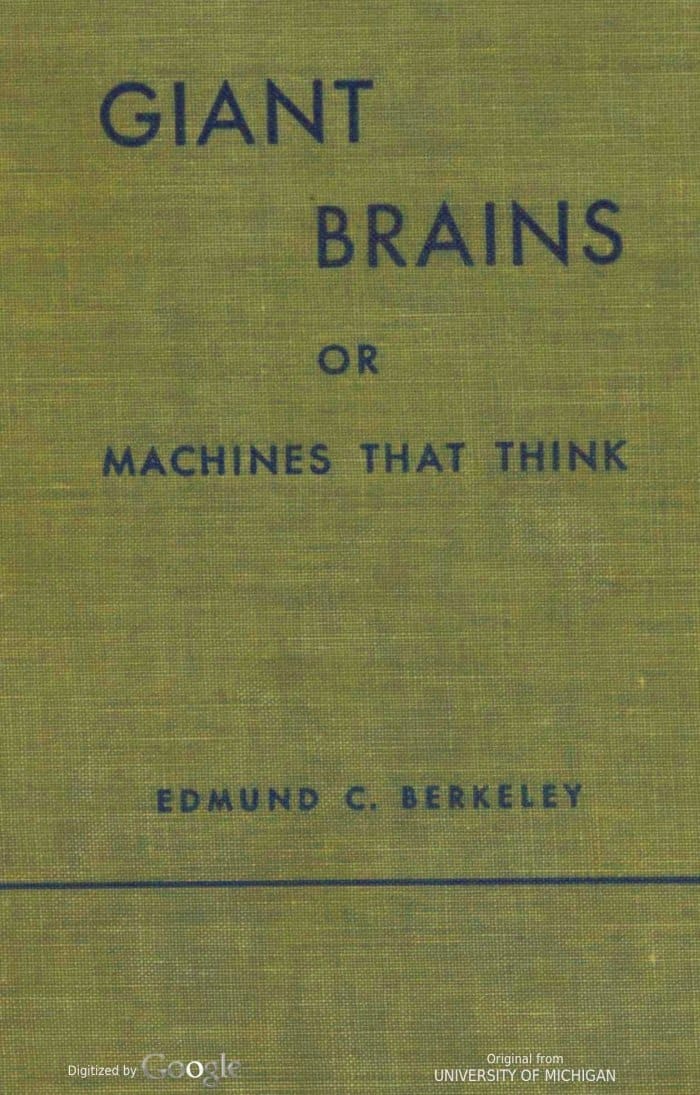
Giant Brains; Or, Machines That Think
1949
In 1949, the electronic computer was barely a decade old, and most Americans had never seen one. Yet mathematician Edmund Callis Berkeley wrote this book to explain something astonishing: that machines could think. Not merely calculate, but process information, make decisions, and perhaps one day surpass human intelligence. Berkeley was a founding father of computing who built robots and popularized the term "giant brains" for these new machines. In accessible, enthusiastic prose, he walks readers through the various mechanical brains of his era, from room-sized ENIAC to experimental relay computers, explaining how they processed data, solved complex problems, and simulated reasoning. He grapples with fundamental questions that still haunt us today: What is thinking, exactly? Could a machine truly possess intelligence? And what happens to human identity when machines surpass us? This book is a time capsule of technological prophecy, written when the digital age was just beginning.
Editions
Link to this book
Add a free, dofollow link to Lex on your blog, forum, syllabus, or reading list.

<a href="https://lex-books.com/book/giant-brains-or-machines-that-think-7963af6e-ca77-4ede-a896-41c74d0536e7"><img src="https://lex-books.com/badges/read-on-lex.svg" alt="Read Giant Brains; Or, Machines That Think by Edmund Callis Berkeley free on Lex" width="160" height="40"></a>[](https://lex-books.com/book/giant-brains-or-machines-that-think-7963af6e-ca77-4ede-a896-41c74d0536e7)[url=https://lex-books.com/book/giant-brains-or-machines-that-think-7963af6e-ca77-4ede-a896-41c74d0536e7][img]https://lex-books.com/badges/read-on-lex.svg[/img][/url]Read Giant Brains; Or, Machines That Think by Edmund Callis Berkeley free on Lex: https://lex-books.com/book/giant-brains-or-machines-that-think-7963af6e-ca77-4ede-a896-41c74d0536e7Cite this book
Reading this edition for a paper or guide? Copy a citation.
Berkeley, Edmund Callis. Giant Brains; Or, Machines That Think. Lex, lex-books.com/book/giant-brains-or-machines-that-think-7963af6e-ca77-4ede-a896-41c74d0536e7.Berkeley, E. C. (1949). Giant Brains; Or, Machines That Think. Lex. https://lex-books.com/book/giant-brains-or-machines-that-think-7963af6e-ca77-4ede-a896-41c74d0536e7Berkeley, Edmund Callis. Giant Brains; Or, Machines That Think. Lex. https://lex-books.com/book/giant-brains-or-machines-that-think-7963af6e-ca77-4ede-a896-41c74d0536e7.