Eugene Oneguine [onegin]: A Romance of Russian Life in Verse
Eugene Oneguine [onegin]: A Romance of Russian Life in Verse
Translated by Henry Spalding
A novel written in the early 19th century. This work is a significant piece of Russian literature, renowned for its exploration of Russian society and romantic themes. The narrative centers around Eugene Oneguine, a disillusioned young aristocrat whose life takes unexpected turns, thereby presenting a vivid examination of love, friendship, and the individual's place in society. At the start of the novel, we are introduced to Eugene Oneguine, who is characterized as a charming but melancholic young man, often bored with the superficialities of high society. The opening chapters depict his experiences and relationships, including a close friendship with the passionate poet Lenski. As Oneguine navigates social functions and encounters different characters, his ennui is a recurring theme, highlighting his struggles with inner conflict and the search for meaning in a world that seems unfulfilling. The initially light-hearted tone establishes a contrast to the deeper emotional and philosophical questions that arise as the story unfolds.
Editions
X-Ray
A wealthy, educated, and initially cynical young nobleman from St. Petersburg who suffers from profound ennui, leading him to reject Tattiana and later tragically kill his friend Lenski in a duel.
A shy, contemplative, and deeply romantic country girl who falls in love with Onegin, endures his rejection, and later transforms into a dignified princess, ultimately rejecting Onegin out of faithfulness to her husband.
A young, idealistic, and passionate poet who returns from Germany, becomes Onegin's friend, falls deeply in love with Olga Larina, and is tragically killed by Onegin in a duel.
Tattiana's younger sister, characterized by her beauty, vivacity, and superficiality, who is engaged to Lenski but quickly moves on after his death, marrying a lancer.
About Eugene Oneguine [onegin]: A Romance of Russian Life in Verse
Chapter Summaries
- Preface
- The translator, Lieut.-Col. Spalding, introduces his English translation of Pushkin's 'Eugene Onéguine,' highlighting its significance as Russia's greatest poetical work and its faithful portrayal of Russian life. He discusses Pushkin's influences, particularly Byron, and lists other foreign translations.
- Mon Portrait
- A French poem written by Pushkin at age 15, describing himself as a lively, blonde, curly-haired young 'polisson' who enjoys society, dislikes solitude and study, and is generally boisterous and carefree.
- Biographical Notice
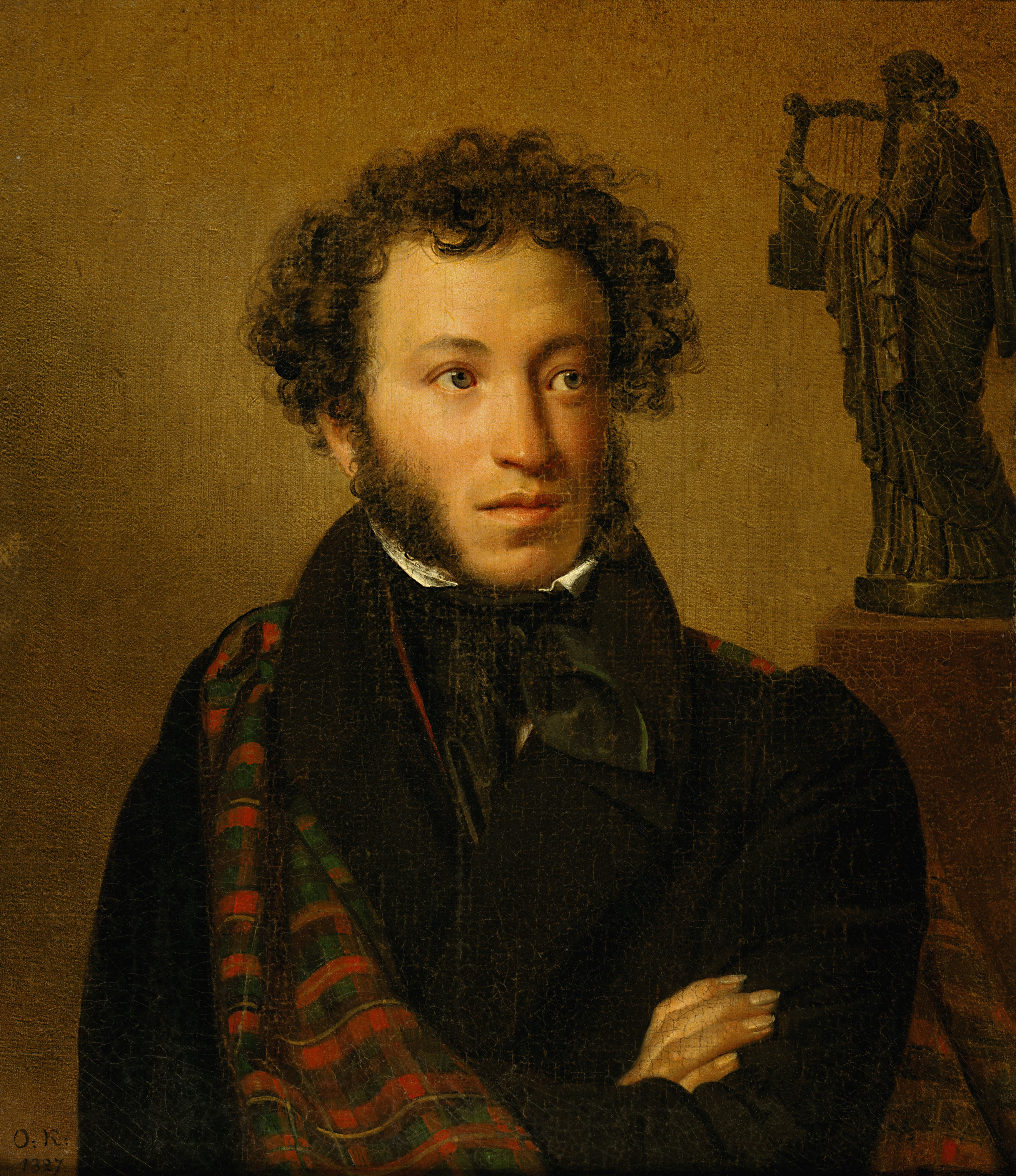
- A detailed biographical sketch of Aleksandr Pushkin, covering his birth in 1799, education at the Lyceum, early literary success, periods of exile due to political odes, his admiration for Byron, later works, marriage, and his tragic death in a duel in 1837.
Key Themes
- Romantic Idealism vs. Cynical Disillusionment
- This theme is central, embodied by Lenski's fervent romanticism and Onegin's profound ennui and cynicism. The novel explores how these opposing worldviews clash, leading to tragedy for Lenski and a painful transformation for Onegin.
- Love and its Forms
- The book presents various facets of love: Tattiana's pure, unrequited, and steadfast love; Lenski's idealized and passionate love; Onegin's initial indifference and later regretful, unfulfilled love; and the practical, arranged marriages common in society.
- Social Conventions and Honor
- The narrative highlights the rigid social codes of 19th-century Russian aristocracy, particularly the concept of honor that compels Onegin and Lenski into a fatal duel despite their personal reservations, and Tattiana to uphold her marital vows.
Characters
- Eugene Onegin(protagonist)
- A wealthy, educated, and initially cynical young nobleman from St. Petersburg who suffers from profound ennui, leading him to reject Tattiana and later tragically kill his friend Lenski in a duel.
- Tattiana Larina(protagonist)
- A shy, contemplative, and deeply romantic country girl who falls in love with Onegin, endures his rejection, and later transforms into a dignified princess, ultimately rejecting Onegin out of faithfulness to her husband.
- Vladimir Lenski(supporting)
- A young, idealistic, and passionate poet who returns from Germany, becomes Onegin's friend, falls deeply in love with Olga Larina, and is tragically killed by Onegin in a duel.
- Olga Larina(supporting)
- Tattiana's younger sister, characterized by her beauty, vivacity, and superficiality, who is engaged to Lenski but quickly moves on after his death, marrying a lancer.
- Larina (Mother)(supporting)
- The matriarch of the Larina family, a practical country lady who was once a romantic but settled into a conventional life, concerned with her daughters' marriages.
- Nurse (Phillippevna)(supporting)
- Tattiana's aged and devoted nurse, a maternal figure who provides comfort and traditional wisdom.
Link to this book
Add a free, dofollow link to Lex on your blog, forum, syllabus, or reading list.
![Read Eugene Oneguine [onegin]: A Romance of Russian Life in Verse by Aleksandr Sergeevich Pushkin free on Lex](/badges/read-on-lex.svg)
<a href="https://lex-books.com/book/eugene-oneguine-onegin-a-romance-of-russian-life-in-verse-5bba5d3a-d7bf-43fa-b96a-fb8c3503c201"><img src="https://lex-books.com/badges/read-on-lex.svg" alt="Read Eugene Oneguine [onegin]: A Romance of Russian Life in Verse by Aleksandr Sergeevich Pushkin free on Lex" width="160" height="40"></a>[![Read Eugene Oneguine [onegin]: A Romance of Russian Life in Verse by Aleksandr Sergeevich Pushkin free on Lex](https://lex-books.com/badges/read-on-lex.svg)](https://lex-books.com/book/eugene-oneguine-onegin-a-romance-of-russian-life-in-verse-5bba5d3a-d7bf-43fa-b96a-fb8c3503c201)[url=https://lex-books.com/book/eugene-oneguine-onegin-a-romance-of-russian-life-in-verse-5bba5d3a-d7bf-43fa-b96a-fb8c3503c201][img]https://lex-books.com/badges/read-on-lex.svg[/img][/url]Read Eugene Oneguine [onegin]: A Romance of Russian Life in Verse by Aleksandr Sergeevich Pushkin free on Lex: https://lex-books.com/book/eugene-oneguine-onegin-a-romance-of-russian-life-in-verse-5bba5d3a-d7bf-43fa-b96a-fb8c3503c201Cite this book
Reading this edition for a paper or guide? Copy a citation.
Pushkin, Aleksandr Sergeevich. Eugene Oneguine [onegin]: A Romance of Russian Life in Verse. Lex, lex-books.com/book/eugene-oneguine-onegin-a-romance-of-russian-life-in-verse-5bba5d3a-d7bf-43fa-b96a-fb8c3503c201.Pushkin, A. S. (n.d.). Eugene Oneguine [onegin]: A Romance of Russian Life in Verse. Lex. https://lex-books.com/book/eugene-oneguine-onegin-a-romance-of-russian-life-in-verse-5bba5d3a-d7bf-43fa-b96a-fb8c3503c201Pushkin, Aleksandr Sergeevich. Eugene Oneguine [onegin]: A Romance of Russian Life in Verse. Lex. https://lex-books.com/book/eugene-oneguine-onegin-a-romance-of-russian-life-in-verse-5bba5d3a-d7bf-43fa-b96a-fb8c3503c201.