Elizabeth and Her German Garden

In 1898, a young Australian-born countess published a book anonymously, terrified her Prussian husband would discover she had written commercial fiction. The result was a sensation: eleven reprints in a single year. But Elizabeth and Her German Garden is no mere scandal. It is a love letter to solitude, to the rescuing powers of soil and seasons, and to the radical act of finding joy on one's own terms. Our narrator, also named Elizabeth, retreats from stuffy social obligations and the bewildering demands of her marriage to a man she calls the Man of Wrath, and throws herself into the wild garden surrounding her German estate. What follows is a year of observation, humor, and hard-won contentment: the satisfaction of defeating slugs, the comedy of neighbors who think her eccentric, the quiet revelation that a life lived among growing things can be a life fully lived. Von Arnim writes with waspish wit and genuine tenderness, making Elizabeth's eccentricities both funny and deeply relatable. The book endures because it captures something eternal: the need for a sanctuary, the pleasure of paying attention to the natural world, and the quiet revolution of a woman who decides, simply, to be happy.
Editions


X-Ray
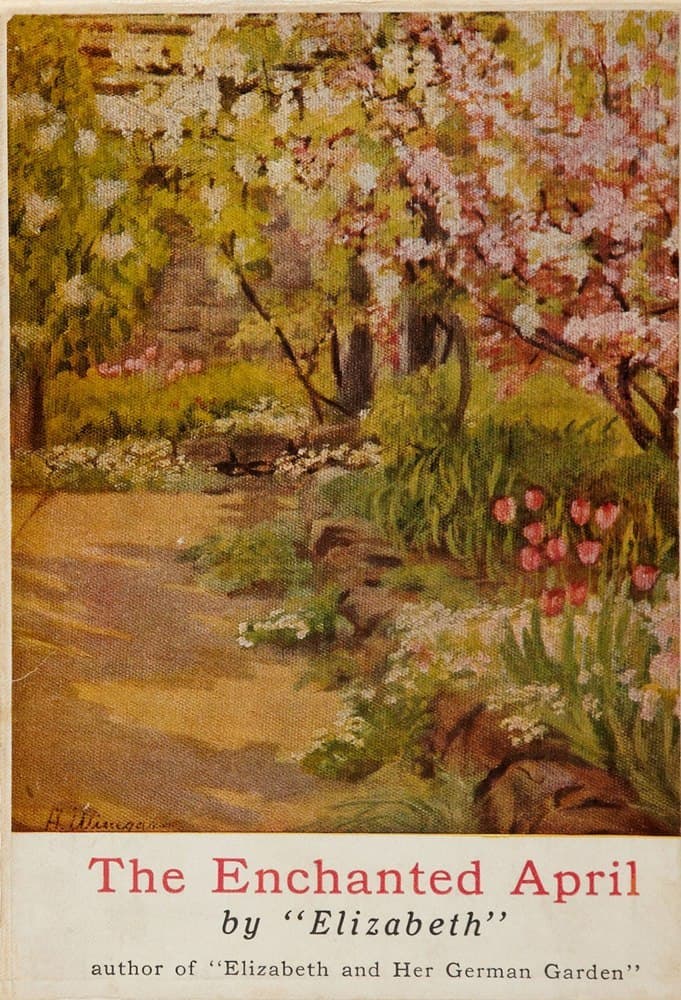
“I love tulips better than any other spring flower; they are the embodiment of alert cheerfulness and tidy grace, and next to a hyacinth look like a wholesome, freshly tubbed young girl beside a stout lady whose every movement weighs down the air with patchouli. Their faint, delicate scent is refinement itself; and is there anything in the world more charming than the sprightly way they hold up their little faces to the sun. I have heard them called bold and flaunting, but to me they seem modest grace itself, only always on the alert to enjoy life as much as they can and not be afraid of looking the sun or anything else above them in the face.””
— Elizabeth Von Arnim
“The passion for being for ever with one's fellows, and the fear of being left for a few hours alone, is to me wholly incomprehensible. I can entertain myself quite well for weeks together, hardly aware, except for the pervading peace, that I have been alone at all.””
— Elizabeth Von Arnim
“When I got to the library I came to a standstill, - ah, the dear room, what happy times I have spent in it rummaging amongst the books, making plans for my garden, building castles in the air, writing, dreaming, doing nothing.””
— Elizabeth Von Arnim
“Who can begin conventional amiability the first thing in the morning?””
— Elizabeth Von Arnim
“September 15th. - This is the month of quiet days, crimson creepers, and blackberries; of mellow afternoons in the ripening garden; of tea under acacias instead of too shady beeches; of wood fires in the library in chilly evenings.””
— Elizabeth Von Arnim
“What a happy woman I am living in a garden, with books, babies, birds, and flowers, and plenty of leisure to enjoy them! Yet my town acquaintances look upon it as imprisonment, and I don't know what besides, and would rend the air with their shrieks if condemned to such a life. Sometimes I feel as if I were blest above all my fellows in being able to find my happiness so easily. I believe I should always be good if the sun always shone, and could enjoy myself very well in Siberia on a fine day. And what can life in town offer in the way of pleasure to equal the delight of any one of the calm evenings I have had this month sitting alone at the foot of the verandah steps, with the perfume of young larches all about, and the May moon hanging low over the beeches, and the beautiful silence made only more profound in its peace by the croaking of distant frogs and hooting of owls?””
— Elizabeth Von Arnim
“Sometimes callers from a distance invade my solitude, and it is on these occasions that I realize how absolutely alone each individual is, and how far away from his neighbour; and while they talk (generally about babies, past, present, and to come), I fall to wondering at the vast and impassable distance that separates one's own soul from the soul of the person sitting in the next chair.””
— Elizabeth Von Arnim
“If your lot makes you cry and be wretched, get rid of it and take another; strike out for yourself; don't listen to the shriek of your relations...don't be afraid of public opinion in the shape of the neighbours in the next house, when all the world is before you new and shining, and everything is possible, if you will only be energetic and independent and seize opportunity by the scruff of the neck.””
— Elizabeth Von Arnim
“Oh, my dear, relations are like drugs, - useful sometimes, and even pleasant, if taken in small quantities and seldom, but dreadfully pernicious on the whole, and the truly wise avoid them.””
— Elizabeth Von Arnim
Link to this book
Add a free, dofollow link to Lex on your blog, forum, syllabus, or reading list.

<a href="https://lex-books.com/book/elizabeth-and-her-german-garden-23a8ff22-75af-4b29-b543-4842db5633b0"><img src="https://lex-books.com/badges/read-on-lex.svg" alt="Read Elizabeth and Her German Garden by Elizabeth Von Arnim free on Lex" width="160" height="40"></a>[](https://lex-books.com/book/elizabeth-and-her-german-garden-23a8ff22-75af-4b29-b543-4842db5633b0)[url=https://lex-books.com/book/elizabeth-and-her-german-garden-23a8ff22-75af-4b29-b543-4842db5633b0][img]https://lex-books.com/badges/read-on-lex.svg[/img][/url]Read Elizabeth and Her German Garden by Elizabeth Von Arnim free on Lex: https://lex-books.com/book/elizabeth-and-her-german-garden-23a8ff22-75af-4b29-b543-4842db5633b0Cite this book
Reading this edition for a paper or guide? Copy a citation.
Arnim, Elizabeth Von. Elizabeth and Her German Garden. Lex, lex-books.com/book/elizabeth-and-her-german-garden-23a8ff22-75af-4b29-b543-4842db5633b0.Arnim, E. V. (n.d.). Elizabeth and Her German Garden. Lex. https://lex-books.com/book/elizabeth-and-her-german-garden-23a8ff22-75af-4b29-b543-4842db5633b0Arnim, Elizabeth Von. Elizabeth and Her German Garden. Lex. https://lex-books.com/book/elizabeth-and-her-german-garden-23a8ff22-75af-4b29-b543-4842db5633b0.