Die Baumwollpflücker: Als Fortsetzungsroman Im »vorwärts« (1925)
1925
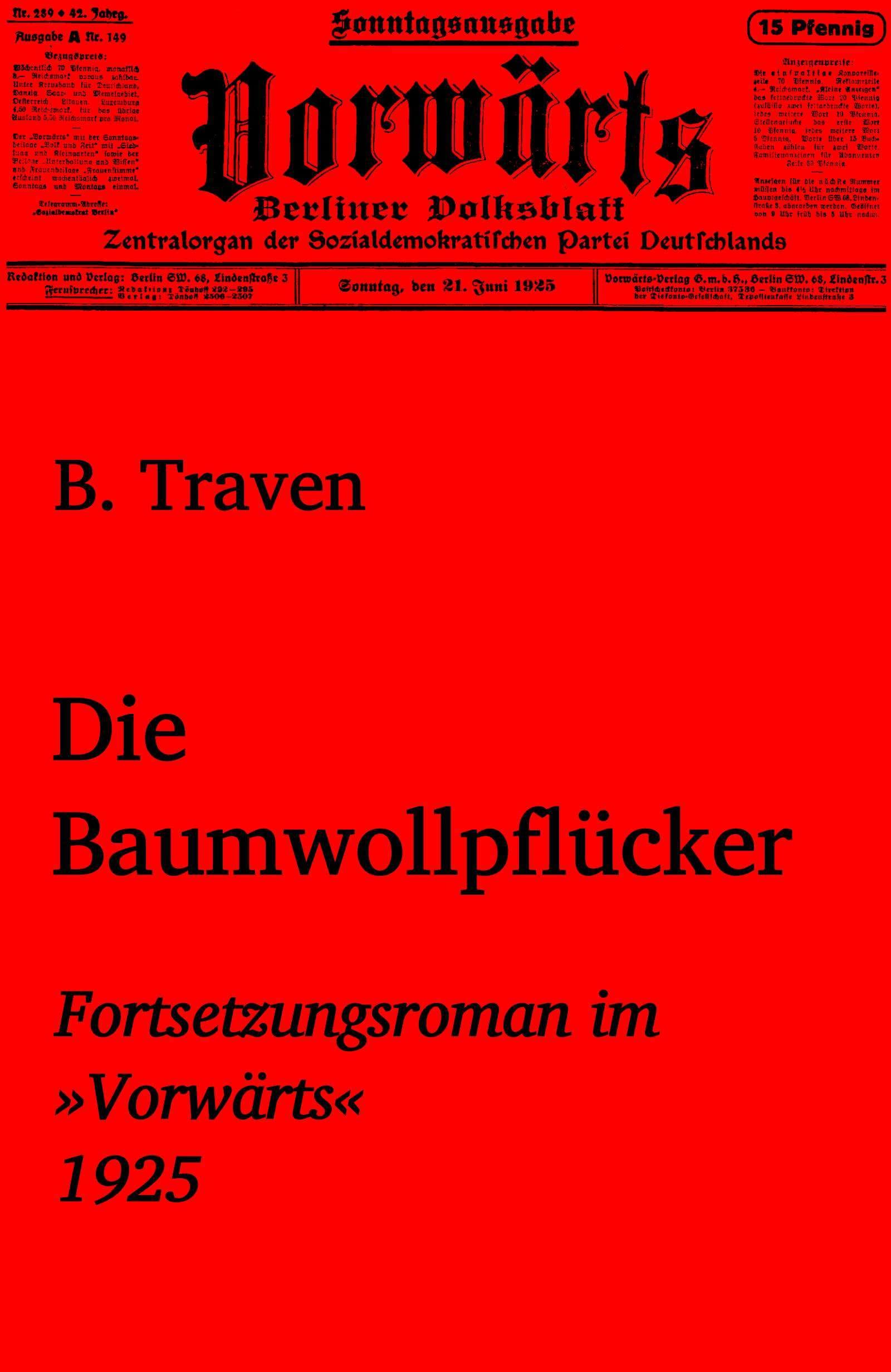
Die Baumwollpflücker: Als Fortsetzungsroman Im »vorwärts« (1925)
1925
Die Baumwollpflücker, published in 1925 by B. Traven, is a novel that provides a stark portrayal of the lives of Mexican farm laborers, primarily Indigenous and working-class individuals, who harvest cotton for the global textile industry. The narrative follows Gerard Gale and a diverse group of laborers as they navigate the harsh realities of their work, including low wages, long hours, and the challenges of survival. This work is notable for its unromanticized depiction of poverty and exploitation, reflecting Traven's own experiences and offering critical social commentary on the conditions faced by migrant workers in early 20th-century Mexico.
Editions

X-Ray
“Anyone who is willing to work and is serious about it will certainly find a job. Only you must not go to the man who tells you this, for he has no job to offer and doesn't know anyone who knows of a vacancy. This is exactly the reason why he gives you such generous advice, out of brotherly love, and to demonstrate how little he knows the world.””
— B. Traven
“It isn't the gold that changes man, it is the power which gold gives to man that changes the soul of man. This power, though, is only imaginary. If not recognized by other men, it does not exist.””
— B. Traven
“Badges? We ain't got no badges. We don't need no badges. I don't have to show you any stinking badges!””
— B. Traven
“Badges, to god-damned hell with badges! We have no badges. In fact, we don’t need badges. I don’t have to show you any stinking badges, you god-damned cabrón and ching’ tu madre! Come out there from that shit-hole of yours. I have to speak to you.””
— B. Traven
“The air bit into your lungs because it was filled with poisonous gas escaping from the refineries. That sting in the air which made breathing so hard and unpleasant and choked your throat constantly meant that people were making money- much money.””
— B. Traven
“It is always more convenient to dream of what might be.””
— B. Traven
Link to this book
Add a free, dofollow link to Lex on your blog, forum, syllabus, or reading list.

<a href="https://lex-books.com/book/die-baumwollpfl-cker-als-fortsetzungsroman-im-vorw-rts-1925-d3bf4dc4-ef64-4a18-b672-8c5d8af8ccc8"><img src="https://lex-books.com/badges/read-on-lex.svg" alt="Read Die Baumwollpflücker: Als Fortsetzungsroman Im »vorwärts« (1925) by B. Traven free on Lex" width="160" height="40"></a>[](https://lex-books.com/book/die-baumwollpfl-cker-als-fortsetzungsroman-im-vorw-rts-1925-d3bf4dc4-ef64-4a18-b672-8c5d8af8ccc8)[url=https://lex-books.com/book/die-baumwollpfl-cker-als-fortsetzungsroman-im-vorw-rts-1925-d3bf4dc4-ef64-4a18-b672-8c5d8af8ccc8][img]https://lex-books.com/badges/read-on-lex.svg[/img][/url]Read Die Baumwollpflücker: Als Fortsetzungsroman Im »vorwärts« (1925) by B. Traven free on Lex: https://lex-books.com/book/die-baumwollpfl-cker-als-fortsetzungsroman-im-vorw-rts-1925-d3bf4dc4-ef64-4a18-b672-8c5d8af8ccc8Cite this book
Reading this edition for a paper or guide? Copy a citation.
Traven, B.. Die Baumwollpflücker: Als Fortsetzungsroman Im »vorwärts« (1925). Lex, lex-books.com/book/die-baumwollpfl-cker-als-fortsetzungsroman-im-vorw-rts-1925-d3bf4dc4-ef64-4a18-b672-8c5d8af8ccc8.Traven, B. (1925). Die Baumwollpflücker: Als Fortsetzungsroman Im »vorwärts« (1925). Lex. https://lex-books.com/book/die-baumwollpfl-cker-als-fortsetzungsroman-im-vorw-rts-1925-d3bf4dc4-ef64-4a18-b672-8c5d8af8ccc8Traven, B.. Die Baumwollpflücker: Als Fortsetzungsroman Im »vorwärts« (1925). Lex. https://lex-books.com/book/die-baumwollpfl-cker-als-fortsetzungsroman-im-vorw-rts-1925-d3bf4dc4-ef64-4a18-b672-8c5d8af8ccc8.