Dead Souls
1842
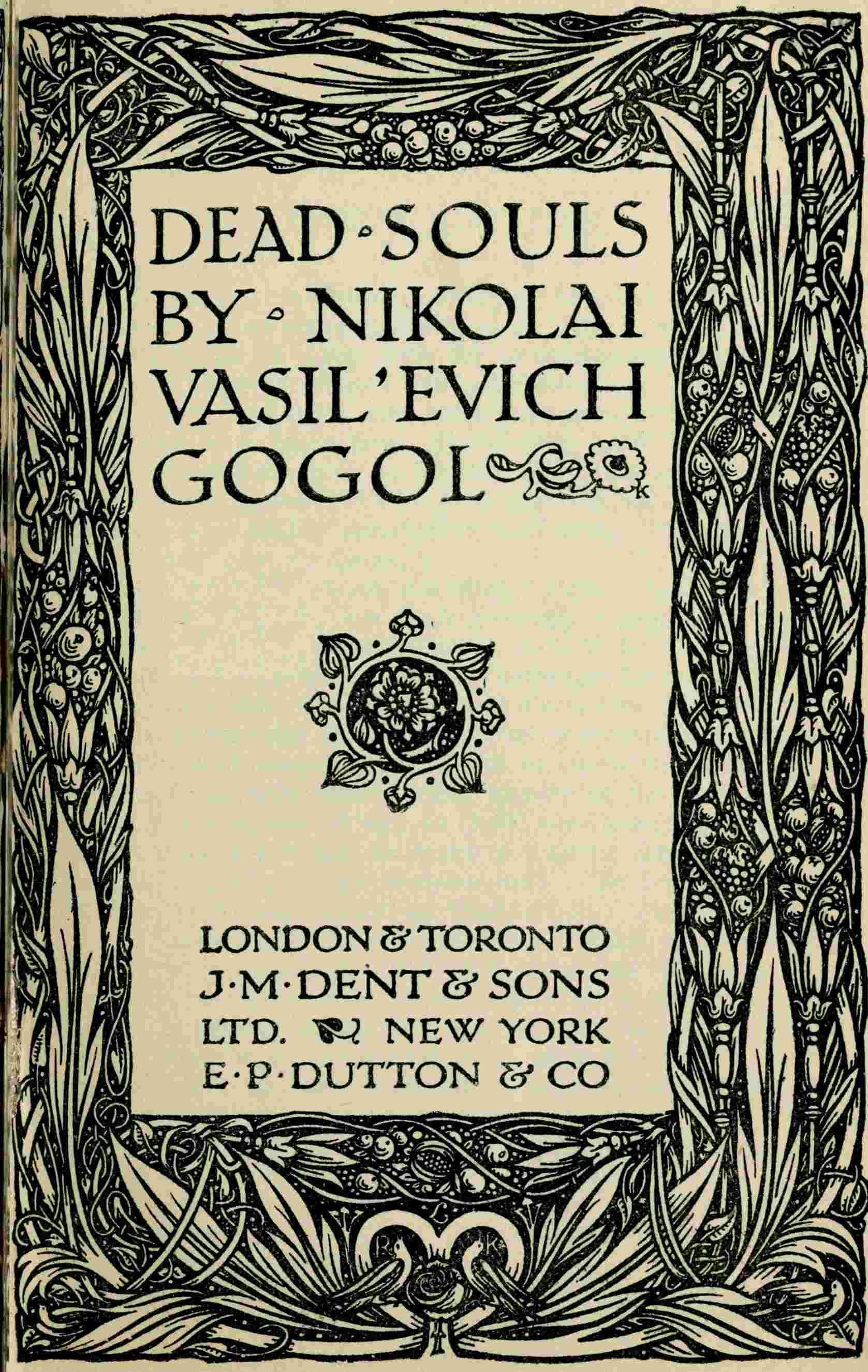
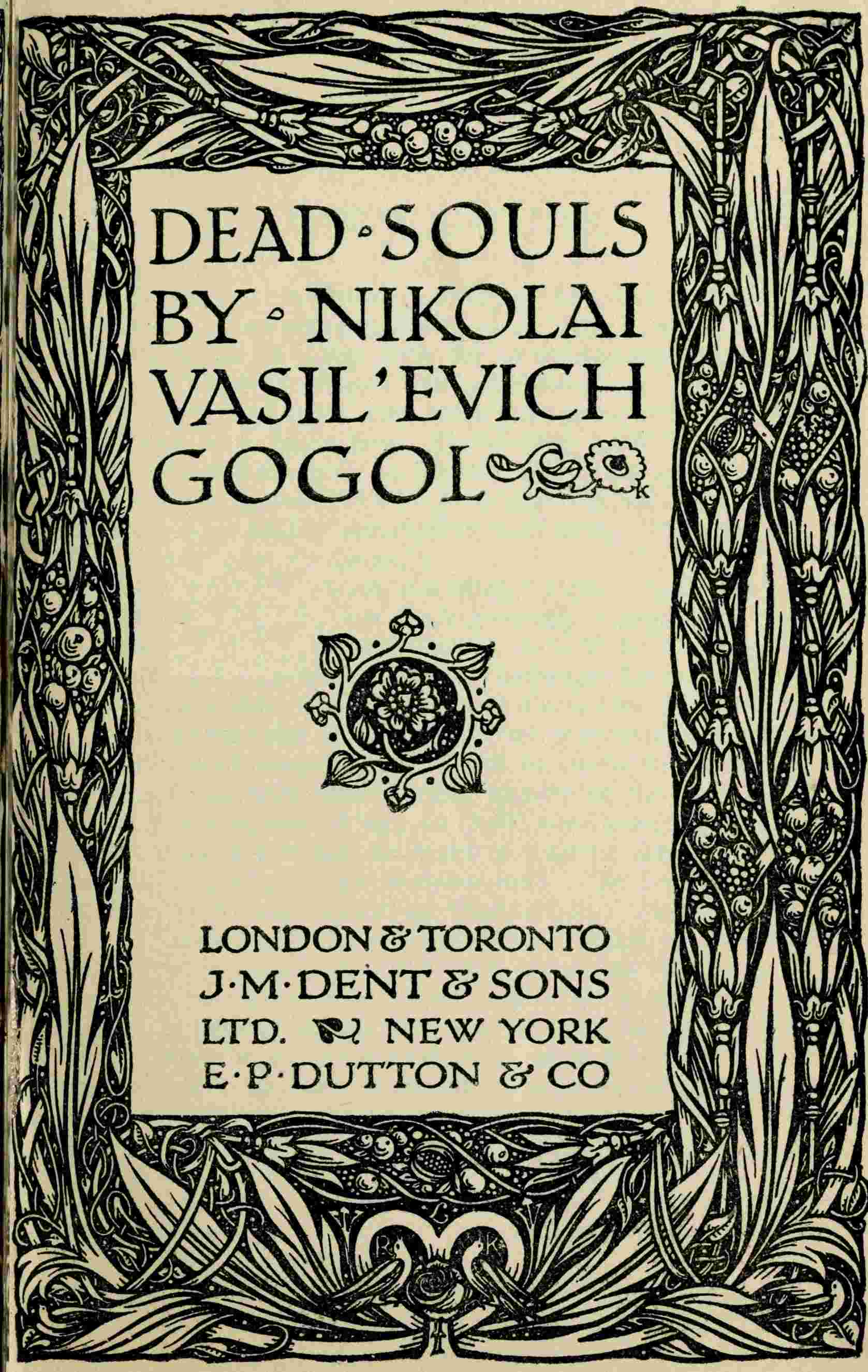
The greatest con man in Russian literature arrives in a nowhere provincial town with a carriage and a scheme so strange it could only be born from the fertile absurdity of the Russian imagination. Pavel Ivanovich Chichikov wants to buy dead people. Not murder them, of course. Simply purchase their names as they appear on the census, serfs who have died since the last count but whom landowners still pay taxes on. For a pittance, Chichikov collects these "dead souls," dreaming of using them as collateral to reinvent himself as a gentleman and marry into money. What follows is a grotesque carnival of Russian provincial types: Manilov, the vacuous sentimentalist whose estate is falling apart; Sobakevich, the bear-like brute who treats his dogs like humans and humans like dogs; the thieves and swindlers who populate the local bureaucracy. Gogol dissects a society where everyone is buying, selling, and pretending, where the dead are more valuable than the living, and where Chichikov, himself a creature of emptiness, might be the most honest character of all. Russia's first major novel is also its strangest: an unfinished, mid-sentence masterpiece that somehow contains all of Russian life in its pages. If you want to understand how a nation learned to laugh at itself while drowning in its own contradictions, start here.
Editions

X-Ray
“However stupid a fool's words may be, they are sometimes enough to confound an intelligent man.””
— Nikolai Vasilevich Gogol
“There are occasions when a woman, no matter how weak and impotent in character she may be in comparison with a man, will yet suddenly become not only harder than any man, but even harder than anything and everything in the world.””
— Nikolai Vasilevich Gogol
“But wise is the man who disdains no character, but with searching glance explores him to the root and cause of all.””
— Nikolai Vasilevich Gogol
“A word aptly uttered or written cannot be cut away by an axe.””
— Nikolai Vasilevich Gogol
“You can't imagine how stupid the whole world has grown nowadays.””
— Nikolai Vasilevich Gogol
“The current generation now sees everything clearly, it marvels at the errors, it laughs at the folly of its ancestors, not seeing that this chronicle is all overscored by divine fire, that every letter of it cries out, that from everywhere the piercing finger is pointed at it, at this current generation; but the current generation laughs and presumptuously, proudly begins a series of new errors, at which their descendants will also laugh afterwards.””
— Nikolai Vasilevich Gogol
“But youth has a future. The closer he came to graduation, the more his heart beat. He said to himself: “This is still not life, this is only the preparation for life.””
— Nikolai Vasilevich Gogol
“You can't imagine how stupid the whole world has grown nowadays. The things these scribblers write!””
— Nikolai Vasilevich Gogol
“Countless as the sands of sea are human passions, and not all of them are alike, and all of them, base and noble alike, are at first obedient to man and only later on become his terrible masters.””
— Nikolai Vasilevich Gogol
About Dead Souls
Chapter Summaries
- I
- Not provided in text.
- II
- Not provided in text.
- III
- Not provided in text.
Key Themes
- Corruption and Bureaucracy
- The novel meticulously details the pervasive corruption among Russian tchinovniks, who are involved in fraud and bribery, highlighting the systemic nature of this issue within the government. The Prince's struggle to address this 'second administration' with 'infinitely greater powers' underscores its deep-seated influence.
- Social Critique and Satire
- Gogol uses Chichikov's journey and interactions with various characters to satirize Russian society, exposing its vices, failings, and the 'commonplaces of life' through tragicomic relief. The introduction notes that the work 'holds up the mirror to Russian officialdom and the effects it has produced on the national character'.
- The Russian Soul/National Character
- The introduction emphasizes that the 'predominating and distinguishing quality of the work is undeniably something foreign to both and quite peculiar to itself; something which, for want of a better term, might be called the quality of the Russian soul,' characterized by 'a tendency to pity' and tolerance for characters, even knaves.
Characters
- Chichikov (Paul Ivanovitch)(protagonist)
- A schemer who travels across Russia buying 'dead souls' (deceased serfs still registered) to mortgage them for profit, representing a universal type of promoter or con artist.
- Murazov (Athanasi Vassilievitch)(supporting)
- An honest and wise old man who advises the Prince, defends Chichikov on humanitarian grounds, and helps him secure his release, embodying practical wisdom and a sense of equity.
- The Prince (Governor-General)(supporting)
- A high-ranking official deeply angered by the pervasive corruption within his administration, who seeks to reform the tchinovniks and ultimately pardons Chichikov at Murazov's urging.
- Selifan(minor)
- Chichikov's coachman, often compared to Sancho Panza, who expresses simple observations and weariness.
- Petrushka(minor)
- Chichikov's servant.
- Nikolai Vasilievich Gogol(author)
- The Russian author of 'Dead Souls,' known for his tragicomic style, social critique, and personal struggles that led to the burning of his manuscripts.
Link to this book
Add a free, dofollow link to Lex on your blog, forum, syllabus, or reading list.

<a href="https://lex-books.com/book/dead-souls-d0e4014a-f8eb-4a69-ac2d-adffa7e658bc"><img src="https://lex-books.com/badges/read-on-lex.svg" alt="Read Dead Souls by Nikolai Vasilevich Gogol free on Lex" width="160" height="40"></a>[](https://lex-books.com/book/dead-souls-d0e4014a-f8eb-4a69-ac2d-adffa7e658bc)[url=https://lex-books.com/book/dead-souls-d0e4014a-f8eb-4a69-ac2d-adffa7e658bc][img]https://lex-books.com/badges/read-on-lex.svg[/img][/url]Read Dead Souls by Nikolai Vasilevich Gogol free on Lex: https://lex-books.com/book/dead-souls-d0e4014a-f8eb-4a69-ac2d-adffa7e658bcCite this book
Reading this edition for a paper or guide? Copy a citation.
Gogol, Nikolai Vasilevich. Dead Souls. Lex, lex-books.com/book/dead-souls-d0e4014a-f8eb-4a69-ac2d-adffa7e658bc.Gogol, N. V. (1842). Dead Souls. Lex. https://lex-books.com/book/dead-souls-d0e4014a-f8eb-4a69-ac2d-adffa7e658bcGogol, Nikolai Vasilevich. Dead Souls. Lex. https://lex-books.com/book/dead-souls-d0e4014a-f8eb-4a69-ac2d-adffa7e658bc.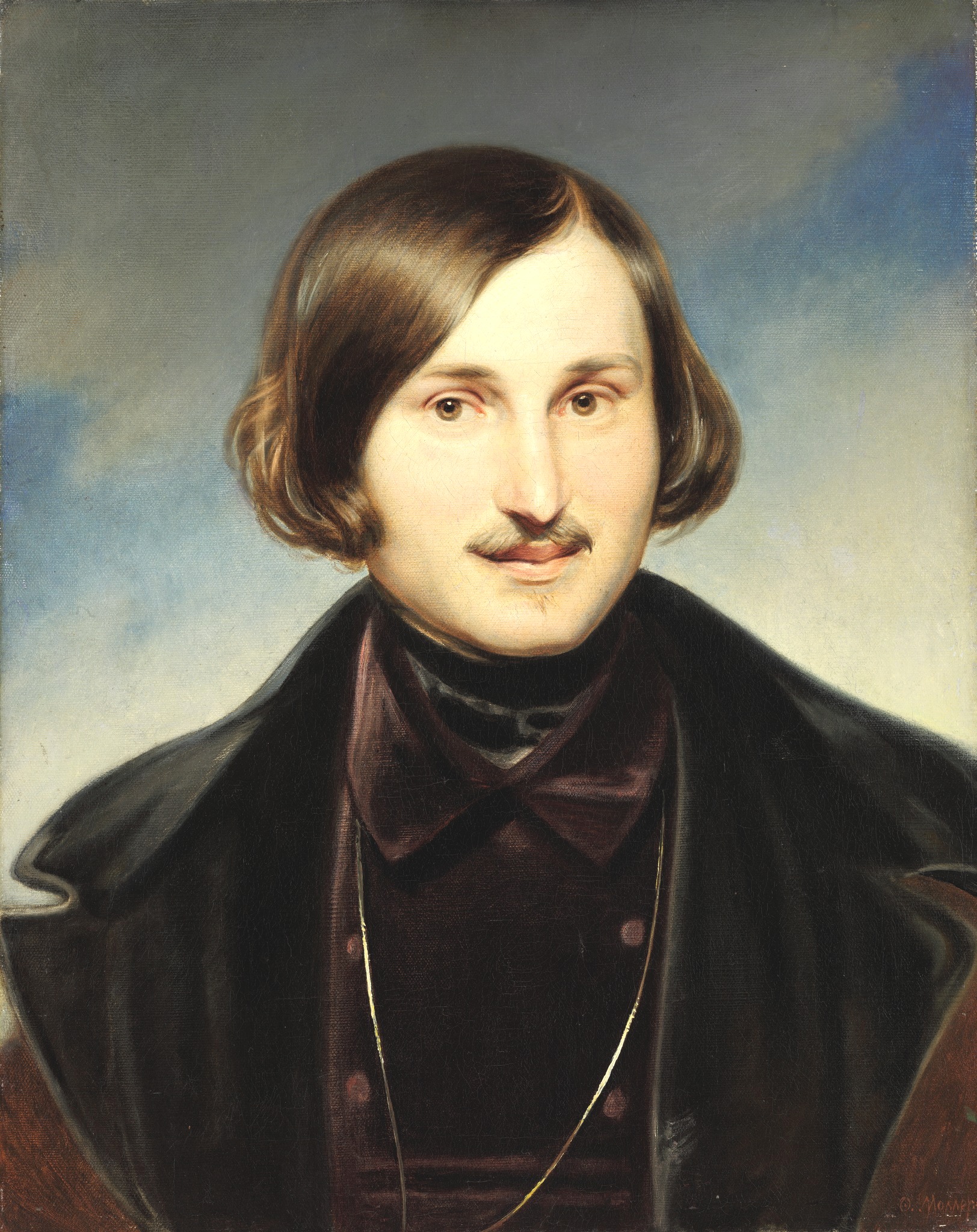
![Home Life in Russia, Volumes 1 and 2[Dead Souls]](/_next/image?url=https%3A%2F%2Fd3b2n8gj62qnwr.cloudfront.net%2FCOVERS%2Fgutenberg_covers75k%2Febook-58070.png&w=3840&q=75)