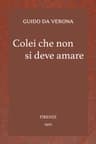
Colei Che Non Si Deve Amare: Romanzo
1911
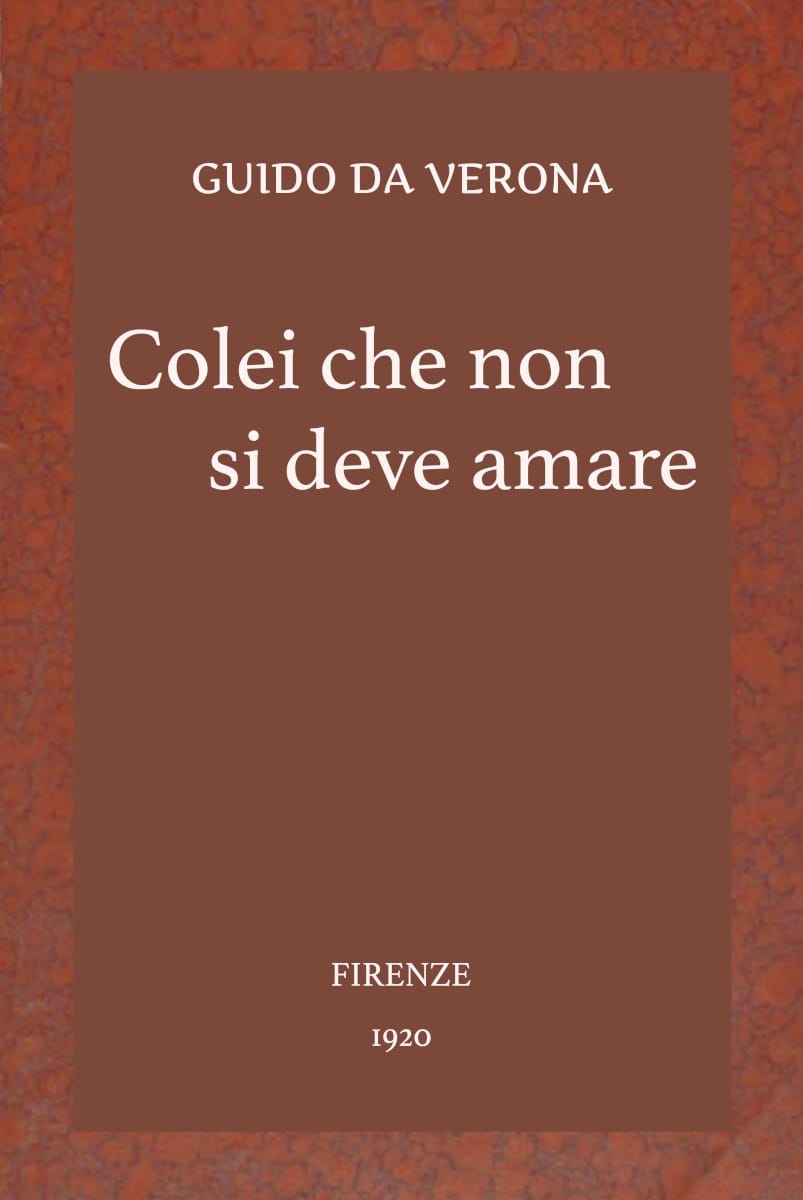
Stefano del Ferrante has already lost everything by the time he marries Grazia: his parents, his savings, his illusions. All that remains is his modest optician's shop and a fierce, almost stubborn devotion to respectability. Then comes Grazia, a beautiful Sicilian widow whose very presence seems to unsettle the air around her. She is capricious, scandalous, and utterly magnetic. Against every warning, Stefano loves her. The family that follows four children, cramped rooms, the grinding poverty of lower-middle-class Verona should be his redemption. Instead, it becomes a theater of slowly unfolding disaster. Guido da Verona, writing in 1911, constructs a ruthless portrait of masculine vulnerability and feminine danger, where love functions less as warmth than as a force of destruction. The children, particularly son Arrigo, inherit not just their parents' circumstances but their wounds. This is Italian verismo turned inward: no grand tragedies, just the daily erosions of dignity, the whispered judgments of neighbors, the terrible mathematics of love when there's no money left. It endures because it refuses to look away from what people do to each other in the name of desire and duty.
Editions
Link to this book
Add a free, dofollow link to Lex on your blog, forum, syllabus, or reading list.

<a href="https://lex-books.com/book/colei-che-non-si-deve-amare-romanzo-201f2f51-3988-4ed1-b253-22a1dd37aaef"><img src="https://lex-books.com/badges/read-on-lex.svg" alt="Read Colei Che Non Si Deve Amare: Romanzo by Guido da Verona free on Lex" width="160" height="40"></a>[](https://lex-books.com/book/colei-che-non-si-deve-amare-romanzo-201f2f51-3988-4ed1-b253-22a1dd37aaef)[url=https://lex-books.com/book/colei-che-non-si-deve-amare-romanzo-201f2f51-3988-4ed1-b253-22a1dd37aaef][img]https://lex-books.com/badges/read-on-lex.svg[/img][/url]Read Colei Che Non Si Deve Amare: Romanzo by Guido da Verona free on Lex: https://lex-books.com/book/colei-che-non-si-deve-amare-romanzo-201f2f51-3988-4ed1-b253-22a1dd37aaefCite this book
Reading this edition for a paper or guide? Copy a citation.
Verona, Guido da. Colei Che Non Si Deve Amare: Romanzo. Lex, lex-books.com/book/colei-che-non-si-deve-amare-romanzo-201f2f51-3988-4ed1-b253-22a1dd37aaef.Verona, G. D. (1911). Colei Che Non Si Deve Amare: Romanzo. Lex. https://lex-books.com/book/colei-che-non-si-deve-amare-romanzo-201f2f51-3988-4ed1-b253-22a1dd37aaefVerona, Guido da. Colei Che Non Si Deve Amare: Romanzo. Lex. https://lex-books.com/book/colei-che-non-si-deve-amare-romanzo-201f2f51-3988-4ed1-b253-22a1dd37aaef.