Célszerű Szegény Emberek
1922
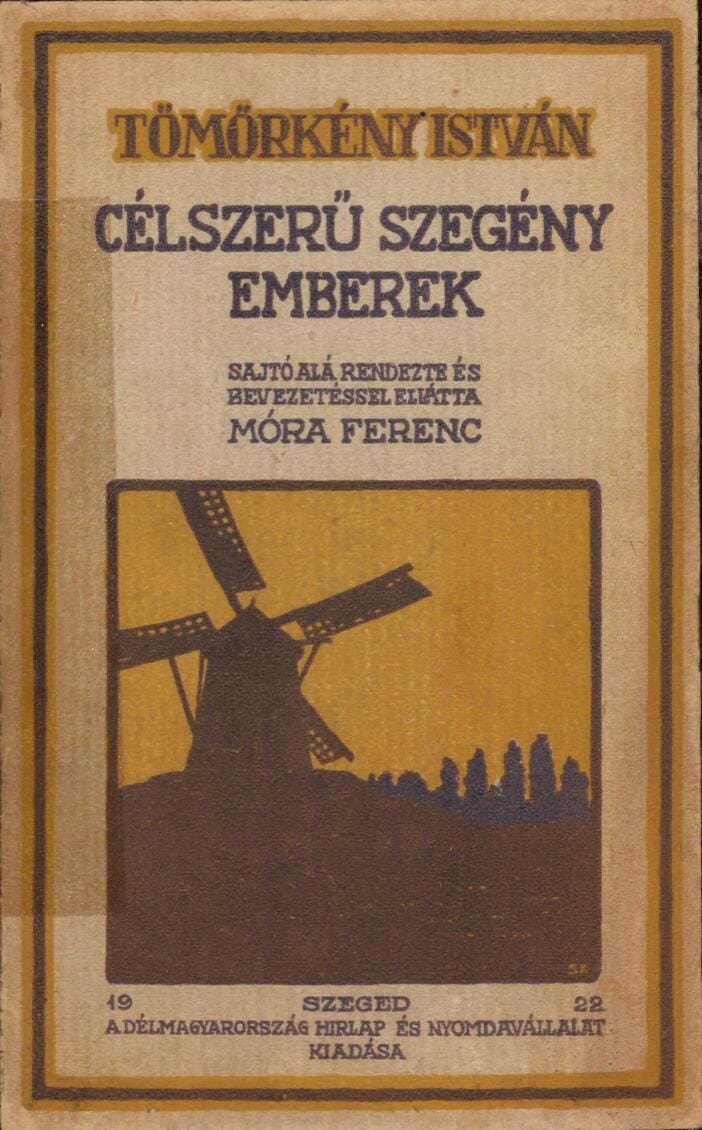
''Célszerű szegény emberek'' by István Tömörkény is a collection of narratives written in the early 20th century. The work explores the lives of humble individuals, particularly focusing on the human condition, social issues, and the experiences of the rural poor. Tömörkény’s writing is notable for its empathy towards the marginalised and its reflection of the Hungarian landscape and society. At the start of the collection, we are introduced to a scene in a public garden where an old beggar cleverly navigates the rules prohibiting direct begging by pretending to greet passersby instead. Described as a former soldier adorned with a medal of questionable authenticity, the beggar presents a façade of dignity while engaging in the hardships of poverty. The narrative delves into a conversation he has with another old man, who shares the struggles faced by his family, particularly the health of his wife and the absence of his son who works far away. This poignant interaction highlights themes of loss, resilience, and the harsh realities of life for the poor, setting the tone for the stories to come.
Editions
Link to this book
Add a free, dofollow link to Lex on your blog, forum, syllabus, or reading list.

<a href="https://lex-books.com/book/c-lszer-szeg-ny-emberek-299f90b5-ee85-4162-9403-28ec2e0054b3"><img src="https://lex-books.com/badges/read-on-lex.svg" alt="Read Célszerű Szegény Emberek by István Tömörkény free on Lex" width="160" height="40"></a>[](https://lex-books.com/book/c-lszer-szeg-ny-emberek-299f90b5-ee85-4162-9403-28ec2e0054b3)[url=https://lex-books.com/book/c-lszer-szeg-ny-emberek-299f90b5-ee85-4162-9403-28ec2e0054b3][img]https://lex-books.com/badges/read-on-lex.svg[/img][/url]Read Célszerű Szegény Emberek by István Tömörkény free on Lex: https://lex-books.com/book/c-lszer-szeg-ny-emberek-299f90b5-ee85-4162-9403-28ec2e0054b3Cite this book
Reading this edition for a paper or guide? Copy a citation.
Tömörkény, István. Célszerű Szegény Emberek. Lex, lex-books.com/book/c-lszer-szeg-ny-emberek-299f90b5-ee85-4162-9403-28ec2e0054b3.Tömörkény, I. (1922). Célszerű Szegény Emberek. Lex. https://lex-books.com/book/c-lszer-szeg-ny-emberek-299f90b5-ee85-4162-9403-28ec2e0054b3Tömörkény, István. Célszerű Szegény Emberek. Lex. https://lex-books.com/book/c-lszer-szeg-ny-emberek-299f90b5-ee85-4162-9403-28ec2e0054b3.
![Night Watches [complete]](/_next/image?url=https%3A%2F%2Fd3b2n8gj62qnwr.cloudfront.net%2FCOVERS%2Fgutenberg_covers75k%2Febook-12161.png&w=3840&q=75)