Beyond Lies the Wub
Philip K. Dick's first published story is a brutal little gem that asks a simple question: if you can communicate with something, really communicate, does that make it harder or easier to kill? Captain Franco and his crew intercept a massive, pig-like creature floating in space. They call it a wub. It's telepathic, eloquent, and deeply concerned with questions of morality, consciousness, and what it means to exist. When the ship's provisions run low, the crew sees an obvious solution. But the wub has other ideas. It engages them in philosophical debates, pleading its case with intelligence and dignity, forcing Franco to confront the weight of what he's about to do. He does it anyway. The crew eats the wub, and the meal is described in ways that are almost sacred - the meat is transcendent, the experience unforgettable. But the aftermath is horror. Not because the wub was monstrous, but because it was so clearly, unmistakably human in its reasoning, and they consumed it anyway. This is early Dick at his most concise and most cruel: a story about the stories we tell ourselves to justify what we've already decided to do.
Editions
X-Ray
“I think Dr. Willis McNelly at the California State University at Fullerton put it best when he said that the true protagonist of an sf story or novel is an idea and not a person. If it is *good* sf the idea is new, it is stimulating, and, probably most important of all, it sets off a chain-reaction of ramification-ideas in the mind of the reader; it so-to-speak unlocks the reader’s mind so that the mind, like the author’s, begins to create. Thus sf is creative and itinspires creativity, which mainstream fiction by-and-large does not do. We who read sf (I am speaking as a reader now, not a writer) read it because we love to experience this chain-reaction of ideas being set off in our minds by something we read, something with a new idea in it; hence the very best since fiction ultimately winds up being a collaboration between author and reader, in which both create and enjoy doing it: joy is the essential and final ingredient of science fiction, the joy of discovery of newness.””
— Philip K. Dick
“I want to write about people I love, and put them into a fictional world spun out of my own mind, not the world we actually have, because the world we actually have does not meet my standards," Dick wrote of these stories. "In my writing I even question the universe; I wonder out loud if it is real, and I wonder out loud if all of us are real.””
— Philip K. Dick
“The subjective response... when a Philip Dick book has been finished and put aside is that, upon reflection, it does not seem so much that one holds a memory of the story; rather, it is the after effects of a poem rich in metaphor that seem to remain.This I value, partly because it does defy a full mapping, but mainly because that which is left of a Phil Dick story when the details have been forgotten is a thing which comes to me at odd times and offers me a feeling or a thought; therefore, a thing which leaves me richer for having known it.- Roger Zelazny in his introduction to Beyond Lies the Wub””
— Philip K. Dick
“Los que leemos ciencia ficción (ahora hablo como lector, no como escritor) lo hacemos porque nos gusta experimentar esta reacción en cadena de ideas que provoca en nuestras mentes algo que leemos, algo que comporta una nueva idea; por tanto, la mejor ciencia ficción tiende en último extremo a convertirse en una colaboración entre autor y lector en la que ambos crean... y disfrutan haciéndolo: el placer es el esencial y definitivo ingrediente de la ciencia ficción, al placer de descubrir la novedad.””
— Philip K. Dick
“We who read sci-fi read it because we love to experience this chain-reaction of ideas being set off in our minds by something we read, something with a new idea in it; hence the very best science fiction ultimately winds up being a collaboration between author and reader, in which both create - and enjoy doing it: joy is the essential and final ingredient of science fiction, the joy of discovery of newness.””
— Philip K. Dick
“Hasten had not walked””
— Philip K. Dick
“cuando se crea algo, adquiere vida propia y deja de pertenecer al creador que la ha moldeado y dirigido según sus deseos.””
— Philip K. Dick
“En otras palabras, estos objetos quedan superados al año de ser lanzados al mercado: inútiles, pequeños, insuficientes. Si no son reemplazados, si no compras uno nuevo, un modelo más perfeccionado...””
— Philip K. Dick
Link to this book
Add a free, dofollow link to Lex on your blog, forum, syllabus, or reading list.

<a href="https://lex-books.com/book/beyond-lies-the-wub-35479c16-3a56-418f-bff7-09bf7d1aa256"><img src="https://lex-books.com/badges/read-on-lex.svg" alt="Read Beyond Lies the Wub by Philip K. Dick free on Lex" width="160" height="40"></a>[](https://lex-books.com/book/beyond-lies-the-wub-35479c16-3a56-418f-bff7-09bf7d1aa256)[url=https://lex-books.com/book/beyond-lies-the-wub-35479c16-3a56-418f-bff7-09bf7d1aa256][img]https://lex-books.com/badges/read-on-lex.svg[/img][/url]Read Beyond Lies the Wub by Philip K. Dick free on Lex: https://lex-books.com/book/beyond-lies-the-wub-35479c16-3a56-418f-bff7-09bf7d1aa256Cite this book
Reading this edition for a paper or guide? Copy a citation.
Dick, Philip K.. Beyond Lies the Wub. Lex, lex-books.com/book/beyond-lies-the-wub-35479c16-3a56-418f-bff7-09bf7d1aa256.Dick, P. K. (n.d.). Beyond Lies the Wub. Lex. https://lex-books.com/book/beyond-lies-the-wub-35479c16-3a56-418f-bff7-09bf7d1aa256Dick, Philip K.. Beyond Lies the Wub. Lex. https://lex-books.com/book/beyond-lies-the-wub-35479c16-3a56-418f-bff7-09bf7d1aa256.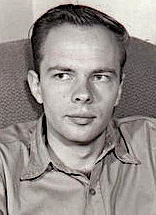

![Night Watches [complete]](/_next/image?url=https%3A%2F%2Fd3b2n8gj62qnwr.cloudfront.net%2FCOVERS%2Fgutenberg_covers75k%2Febook-12161.png&w=3840&q=75)