Az Akarat Szabadságáról
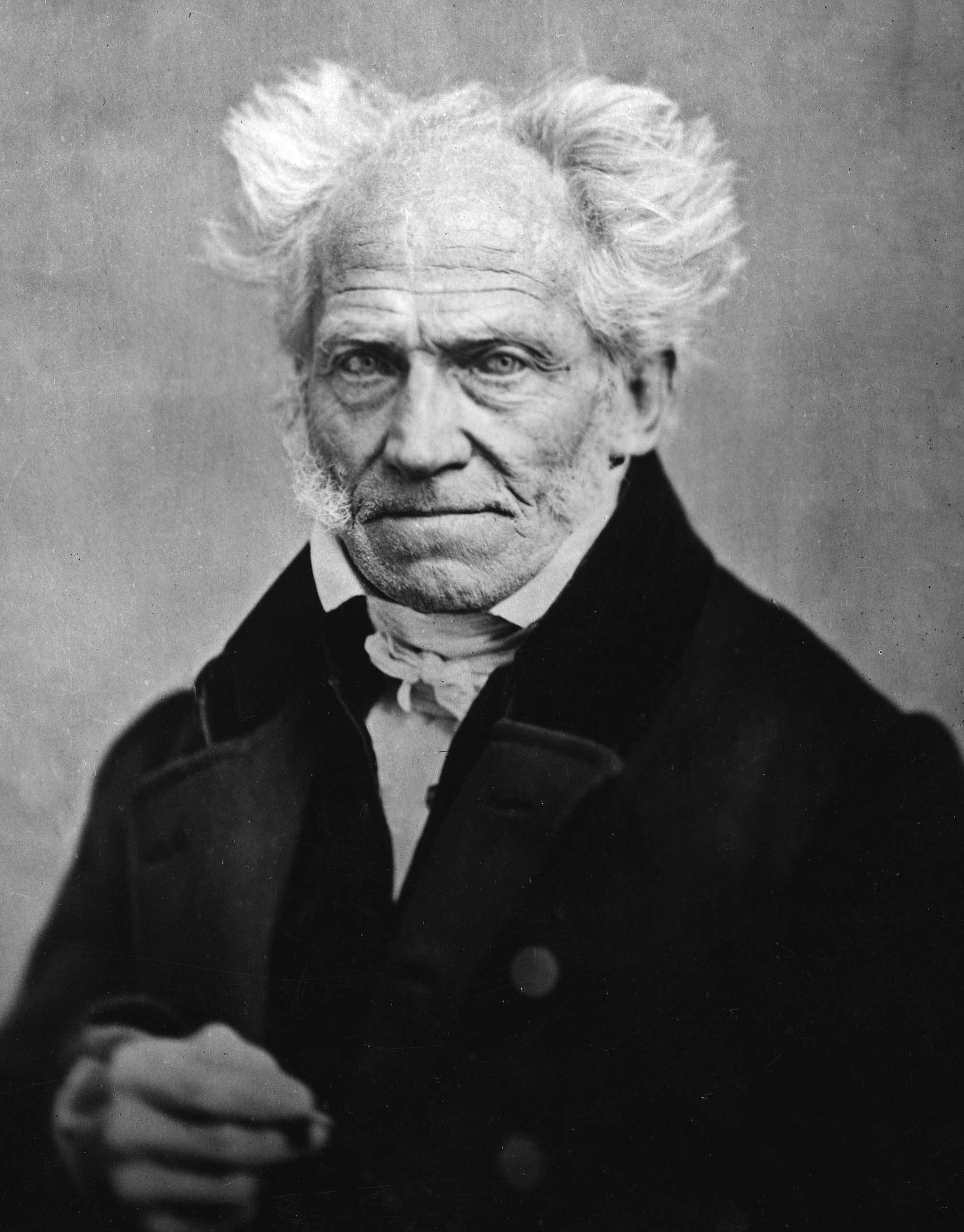
In 1839, a little-known German philosopher submitted an essay to a competition held by the Royal Norwegian Society of Sciences. He won. The recognition that followed catapulted Arthur Schopenhauer from obscurity into the ranks of Europe's most celebrated thinkers. That essay is "On the Freedom of the Will," a blade-sharp examination of the question that haunts every conscious being: are we truly free, or merely convinced we are? Schopenhauer dissects freedom into three distinct forms: physical freedom (the absence of material obstacles), intellectual freedom (the ability to act according to reason), and the most troubling form of all, moral freedom. With relentless logic, he argues that what we call "free will" may be nothing more than a clever illusion, that our choices are shaped by forces beneath the surface of awareness, and that self-consciousness alone cannot manufacture genuine autonomy. The essay pulses with a dark urgency, as if Schopenhauer is not merely solving a philosophical puzzle but exposing a fundamental truth about the human condition. More than 180 years later, his arguments still detonate beneath every conversation about responsibility, choice, and determinism. For readers who crave philosophy that does not merely think about thought, but cuts to bone.
Editions
X-Ray
“In order to elucidate especially and most clearly the origination of this error (...) let us imagine a man who, while standing on the street, would say to himself: "It is six o'clock in the evening, the working day is over. Now I can go for a walk, or I can go to the club; I can also climb up the tower to see the sunset; I can go to the theater; I can visit this friend or that one; indeed, I also can run out of the gate, into the wide world, and never return. All of this is strictly up to me, in this I have complete freedom. But still I shall do none of these things now , but with just as free a will I shall go home to my wife". This is exactly as if water spoke to itself: "I can make high waves (yes! in the sea during a storm), I can rush down hill (yes! in the river bed), I can plunge down foaming and gushing (yes! in the waterfall), I can rise freely as a stream of water into the air (yes! in the fountain), I can, finally boil away and disappear (yes! at a certain temperature); but I am doing none of these things now, and am voluntaringly remaining quiet and clear water in the reflecting pond.””
— Arthur Schopenhauer
“We should rather consider the events, as they happen, with the same eye as we consider the printed word which we read, knowing full well that it was there before we read it.””
— Arthur Schopenhauer
“You can do what you will, but in any given moment of your life you can only one definite thing and absolutely nothing other than that one thing.””
— Arthur Schopenhauer
“I have shown [the categorial imperative] to be a futile assumption so clearly and irrefutably, that no one with a spark of judgment can possibly believe any longer in this fiction. - "well, and so [the Kantian professors have probably engaged with your critique of the categorial imperative]." - Oh no! They take good care not to venture on such slippery ground! Their ability consists in holding their tongues; silence is all they have to oppose to intelligence, earnestness, and truth. In not one of the products of their useless scribblings that have appeared since 1841, has the slightest notice been taken of my Ethics - undoubtedly the most important work on Moral Philosophy that has been published for the last sixty years - nay, their terror of me and of my truth is so great, that none of the literary journals issued by Academies or Universities has so much as mentioned [my] book. Zitto, zitto, lest the public should perceive anything: in this consists the whole of their policy. The instinct of self-preservation may, no doubt, be at the bottom of these artful tactics.””
— Arthur Schopenhauer
Link to this book
Add a free, dofollow link to Lex on your blog, forum, syllabus, or reading list.

<a href="https://lex-books.com/book/az-akarat-szabads-g-r-l-6b337849-42ab-4f0e-aaab-2ebc046b9e6a"><img src="https://lex-books.com/badges/read-on-lex.svg" alt="Read Az Akarat Szabadságáról by Arthur Schopenhauer free on Lex" width="160" height="40"></a>[](https://lex-books.com/book/az-akarat-szabads-g-r-l-6b337849-42ab-4f0e-aaab-2ebc046b9e6a)[url=https://lex-books.com/book/az-akarat-szabads-g-r-l-6b337849-42ab-4f0e-aaab-2ebc046b9e6a][img]https://lex-books.com/badges/read-on-lex.svg[/img][/url]Read Az Akarat Szabadságáról by Arthur Schopenhauer free on Lex: https://lex-books.com/book/az-akarat-szabads-g-r-l-6b337849-42ab-4f0e-aaab-2ebc046b9e6aCite this book
Reading this edition for a paper or guide? Copy a citation.
Schopenhauer, Arthur. Az Akarat Szabadságáról. Lex, lex-books.com/book/az-akarat-szabads-g-r-l-6b337849-42ab-4f0e-aaab-2ebc046b9e6a.Schopenhauer, A. (n.d.). Az Akarat Szabadságáról. Lex. https://lex-books.com/book/az-akarat-szabads-g-r-l-6b337849-42ab-4f0e-aaab-2ebc046b9e6aSchopenhauer, Arthur. Az Akarat Szabadságáról. Lex. https://lex-books.com/book/az-akarat-szabads-g-r-l-6b337849-42ab-4f0e-aaab-2ebc046b9e6a.