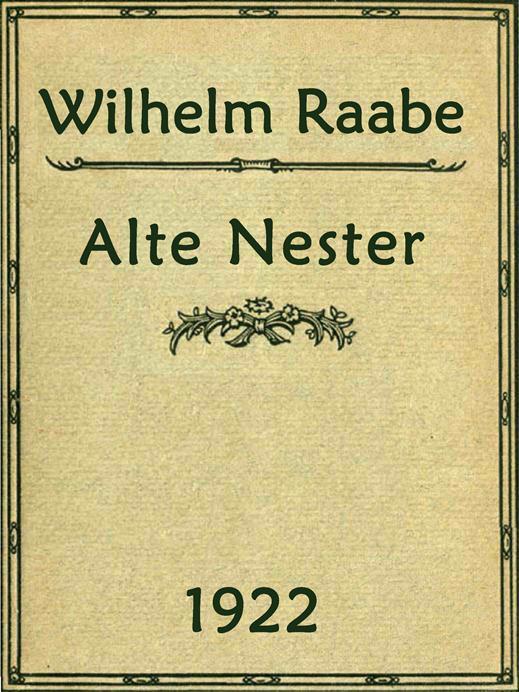
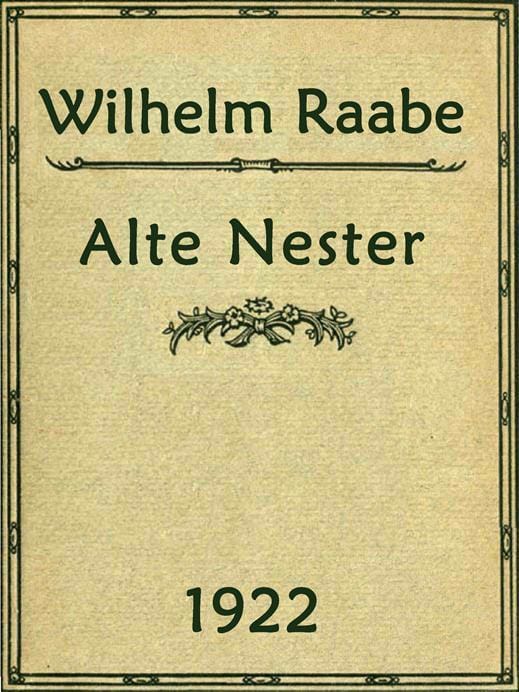
Alte Nester: Zwei Bücher Lebensgeschichten
1879
A philologist in Berlin looks back, and what he finds is a world that no longer exists. Fritz Langreuter, once a boy building secret treehouses in the kitchen garden of a Weser Valley castle, now recalls the summer his father died and his mother brought him to Schloss Werden to heal. That was 1840. By 1858, three of the five childhood friends have not returned, cannot return, to the places that shaped them. Raabe constructs his novel not as linear memoir but as a deepening excavation of memory itself: the castle and the Steinhof across the river, the old nests of the title, are both real places and metaphors for something irretrievable. What emerges is a quiet devastation. These are ordinary people navigating ordinary grief, yet the prose renders their lives with the weight of tragedy. Raabe was a master of German realism, and this novel demonstrates his gift for finding the extraordinary buried in the everyday. The ending does not resolve so much as echo, leaving readers with the particular sadness of knowing that some doors, once closed, cannot be reopened.
Editions
Link to this book
Add a free, dofollow link to Lex on your blog, forum, syllabus, or reading list.

<a href="https://lex-books.com/book/alte-nester-zwei-b-cher-lebensgeschichten-5a908911-178d-4c2b-b453-d1ddeee434cf"><img src="https://lex-books.com/badges/read-on-lex.svg" alt="Read Alte Nester: Zwei Bücher Lebensgeschichten by Wilhelm Raabe free on Lex" width="160" height="40"></a>[](https://lex-books.com/book/alte-nester-zwei-b-cher-lebensgeschichten-5a908911-178d-4c2b-b453-d1ddeee434cf)[url=https://lex-books.com/book/alte-nester-zwei-b-cher-lebensgeschichten-5a908911-178d-4c2b-b453-d1ddeee434cf][img]https://lex-books.com/badges/read-on-lex.svg[/img][/url]Read Alte Nester: Zwei Bücher Lebensgeschichten by Wilhelm Raabe free on Lex: https://lex-books.com/book/alte-nester-zwei-b-cher-lebensgeschichten-5a908911-178d-4c2b-b453-d1ddeee434cfCite this book
Reading this edition for a paper or guide? Copy a citation.
Raabe, Wilhelm. Alte Nester: Zwei Bücher Lebensgeschichten. Lex, lex-books.com/book/alte-nester-zwei-b-cher-lebensgeschichten-5a908911-178d-4c2b-b453-d1ddeee434cf.Raabe, W. (1879). Alte Nester: Zwei Bücher Lebensgeschichten. Lex. https://lex-books.com/book/alte-nester-zwei-b-cher-lebensgeschichten-5a908911-178d-4c2b-b453-d1ddeee434cfRaabe, Wilhelm. Alte Nester: Zwei Bücher Lebensgeschichten. Lex. https://lex-books.com/book/alte-nester-zwei-b-cher-lebensgeschichten-5a908911-178d-4c2b-b453-d1ddeee434cf.