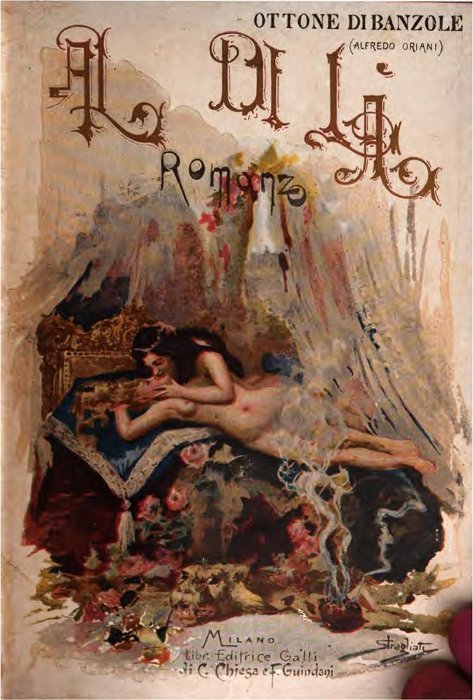
Al Di Là: Romanzo
1877
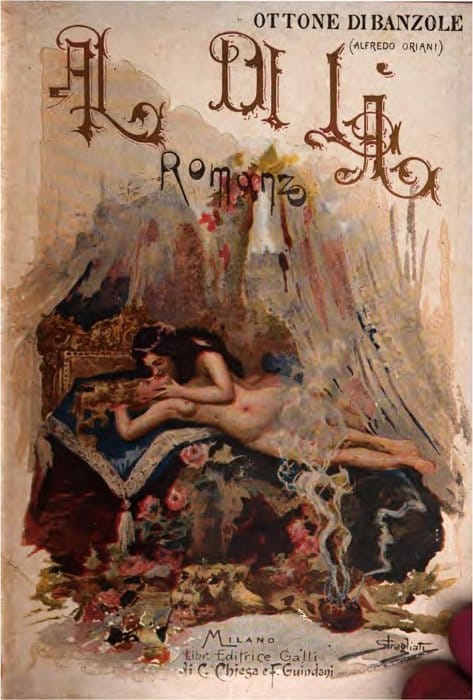
A disillusioned young artist wanders the hills outside Bologna on a spring morning, searching for meaning in a world that feels hollow. Nature spreads its beauty before him, but he sees only the futility of existence, the gap between artistic aspiration and lived experience. Then a mysterious woman appears, and something cracks open in his melancholy, a connection that promises escape from his spiral, or perhaps another form of imprisonment. Oriani's 1877 novel captures something raw and urgent: the birth of modern alienation, the artist as outsider in his own life, the ache of wanting to transcend when transcendence seems impossible. The prose carries the weight of late nineteenth-century existential dread before existentialism had a name. This is not a flawless book, the pacing sags, the philosophy sometimes overwhelms the narrative, but it pulses with genuine emotional intensity. For readers drawn to melancholic European literature, to stories of artists struggling against their own insufficiency, Al Di Là offers a window into a mind grappling with the eternal question: is there something beyond this emptiness, or only the illusion of it?
Editions
Link to this book
Add a free, dofollow link to Lex on your blog, forum, syllabus, or reading list.

<a href="https://lex-books.com/book/al-di-l-romanzo-35baac67-20a3-4b75-9be4-1de647462080"><img src="https://lex-books.com/badges/read-on-lex.svg" alt="Read Al Di Là: Romanzo by Alfredo Oriani free on Lex" width="160" height="40"></a>[](https://lex-books.com/book/al-di-l-romanzo-35baac67-20a3-4b75-9be4-1de647462080)[url=https://lex-books.com/book/al-di-l-romanzo-35baac67-20a3-4b75-9be4-1de647462080][img]https://lex-books.com/badges/read-on-lex.svg[/img][/url]Read Al Di Là: Romanzo by Alfredo Oriani free on Lex: https://lex-books.com/book/al-di-l-romanzo-35baac67-20a3-4b75-9be4-1de647462080Cite this book
Reading this edition for a paper or guide? Copy a citation.
Oriani, Alfredo. Al Di Là: Romanzo. Lex, lex-books.com/book/al-di-l-romanzo-35baac67-20a3-4b75-9be4-1de647462080.Oriani, A. (1877). Al Di Là: Romanzo. Lex. https://lex-books.com/book/al-di-l-romanzo-35baac67-20a3-4b75-9be4-1de647462080Oriani, Alfredo. Al Di Là: Romanzo. Lex. https://lex-books.com/book/al-di-l-romanzo-35baac67-20a3-4b75-9be4-1de647462080.