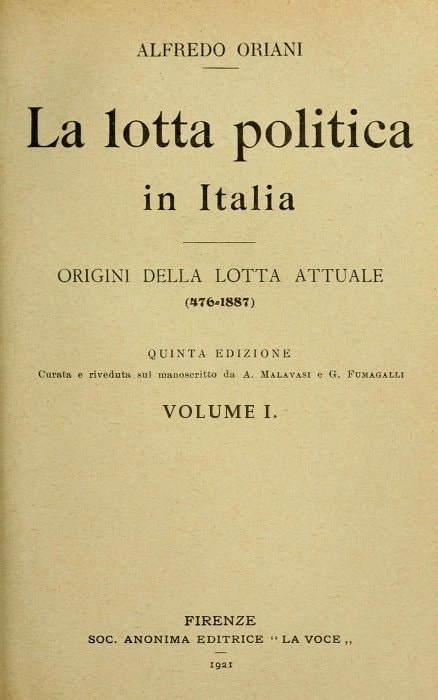
La Lotta Politica in Italia, Volume 1 (of 3)origini Della Lotta Attuale (476-1887); Quinta Edizione
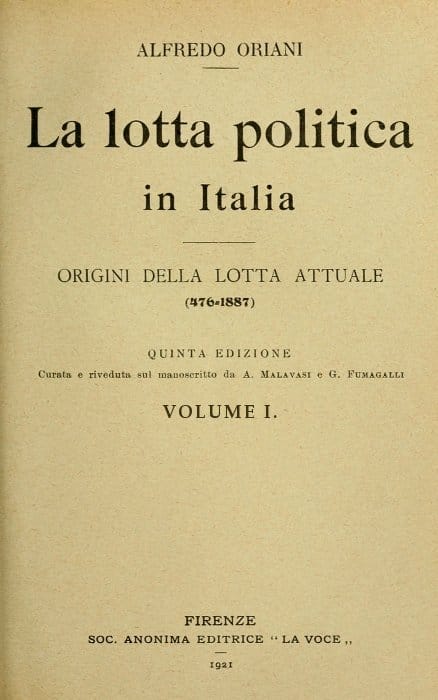
La Lotta Politica in Italia, Volume 1 (of 3)origini Della Lotta Attuale (476-1887); Quinta Edizione
A historical account written in the early 20th century. The work investigates the political struggles in Italy from the fall of the Roman Empire to the late 19th century, focusing on the interplay between various forms of governance, including feudalism, Christianity, and regional autonomy. It aims to explain the origins and evolution of the political challenges that shaped modern Italy. The opening of the book sets the stage for a detailed exploration of the political landscape of Italy, beginning with the fusion of Roman and barbarian cultures after the fall of the Roman Empire. Oriani discusses the complex interplay between the Roman state, the individual, and the emerging Christian faith, illustrating how these elements contributed to the formation of a new political identity. He introduces key themes such as the significance of federalism and local governance, illustrating the motivations behind political actions during early medieval Italy, while emphasizing the ongoing struggles between regional powers and central authority.
Editions
X-Ray
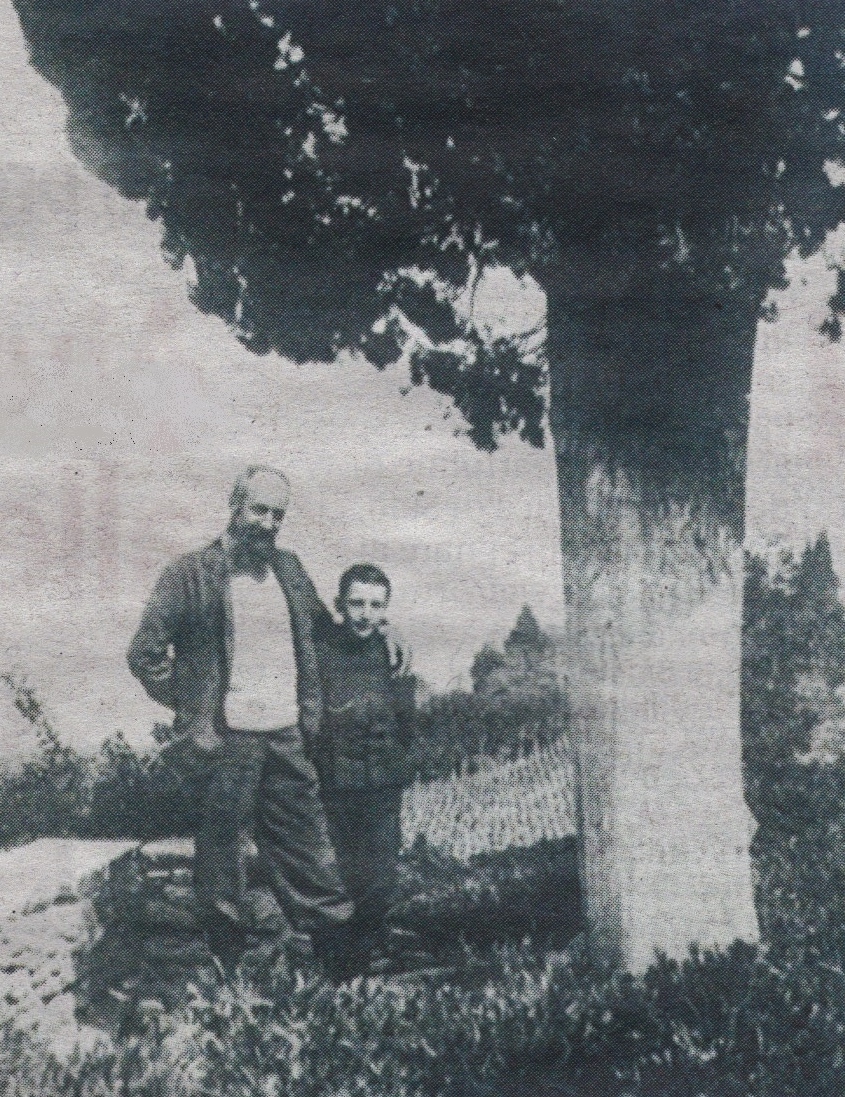
The author and historian who analyzes Italian political struggle from 476-1887. A scholar examining the origins of contemporary political conflicts through historical analysis.
Frankish emperor who established a crucial pact with the Pope, fundamentally altering Italian political structure. His reign marked the transition from barbarian kingdoms to a new imperial-papal system.
Transformative pope who declared the supremacy of church over empire, breaking Charlemagne's pact. A figure of sublime audacity who elevated papal authority above all earthly powers.
German emperor who fought the investiture controversy against Gregory VII. Experienced dramatic humiliation at Canossa but later resumed conflict, representing imperial resistance to papal supremacy.
About La Lotta Politica in Italia, Volume 1 (of 3)origini Della Lotta Attuale (476-1887); Quinta Edizione
Chapter Summaries
- 1
- Analyzes the fall of the Roman Empire and rise of barbarian kingdoms in Italy. Examines how Christianity and federalism replaced imperial unity, setting the stage for medieval political development.
- 2
- Chronicles the rise of Italian communes from episcopal leadership through consular government to the podestà system. Details the municipal wars and the emergence of Guelph and Ghibelline factions.
- 3
- Describes the transition from communal government to signorial rule, examining how local strongmen consolidated power while maintaining the forms of republican government.
Key Themes
- Federalism vs. Unity
- Oriani argues that Italy's political fragmentation was historically necessary, allowing diverse regional characters to develop before eventual unification. The federal principle protected local autonomy against imperial domination.
- Church and Empire Duality
- The fundamental tension between papal and imperial authority shaped Italian politics for centuries. This duality created space for communal independence while preventing tyrannical unification.
- Municipal Revolution
- The rise of Italian communes represented a new form of political organization, combining democratic participation with practical governance. These city-states became laboratories for modern political forms.
Characters
- Alfredo Oriani(protagonist)
- The author and historian who analyzes Italian political struggle from 476-1887. A scholar examining the origins of contemporary political conflicts through historical analysis.
- Carlomagno (Charlemagne)(major)
- Frankish emperor who established a crucial pact with the Pope, fundamentally altering Italian political structure. His reign marked the transition from barbarian kingdoms to a new imperial-papal system.
- Pope Gregory VII(major)
- Transformative pope who declared the supremacy of church over empire, breaking Charlemagne's pact. A figure of sublime audacity who elevated papal authority above all earthly powers.
- Emperor Henry IV(major)
- German emperor who fought the investiture controversy against Gregory VII. Experienced dramatic humiliation at Canossa but later resumed conflict, representing imperial resistance to papal supremacy.
- Frederick Barbarossa(major)
- German emperor who attempted to restore imperial authority over Italian communes. Led multiple campaigns against the Lombard League, ultimately defeated at Legnano.
- Dante Alighieri(major)
- Greatest poet of the era, Ghibelline exile from Florence. Created the Divine Comedy and established Italian literary language while embodying the political passions of his time.
Link to this book
Add a free, dofollow link to Lex on your blog, forum, syllabus, or reading list.

<a href="https://lex-books.com/book/la-lotta-politica-in-italia-volume-1-of-3-origini-della-lotta-attuale-476-1887-q-3e495da0-993f-4d05-bfd3-b4d92d05b896"><img src="https://lex-books.com/badges/read-on-lex.svg" alt="Read La Lotta Politica in Italia, Volume 1 (of 3)origini Della Lotta Attuale (476-1887); Quinta Edizione by Alfredo Oriani free on Lex" width="160" height="40"></a>[](https://lex-books.com/book/la-lotta-politica-in-italia-volume-1-of-3-origini-della-lotta-attuale-476-1887-q-3e495da0-993f-4d05-bfd3-b4d92d05b896)[url=https://lex-books.com/book/la-lotta-politica-in-italia-volume-1-of-3-origini-della-lotta-attuale-476-1887-q-3e495da0-993f-4d05-bfd3-b4d92d05b896][img]https://lex-books.com/badges/read-on-lex.svg[/img][/url]Read La Lotta Politica in Italia, Volume 1 (of 3)origini Della Lotta Attuale (476-1887); Quinta Edizione by Alfredo Oriani free on Lex: https://lex-books.com/book/la-lotta-politica-in-italia-volume-1-of-3-origini-della-lotta-attuale-476-1887-q-3e495da0-993f-4d05-bfd3-b4d92d05b896Cite this book
Reading this edition for a paper or guide? Copy a citation.
Oriani, Alfredo. La Lotta Politica in Italia, Volume 1 (of 3)origini Della Lotta Attuale (476-1887); Quinta Edizione. Lex, lex-books.com/book/la-lotta-politica-in-italia-volume-1-of-3-origini-della-lotta-attuale-476-1887-q-3e495da0-993f-4d05-bfd3-b4d92d05b896.Oriani, A. (n.d.). La Lotta Politica in Italia, Volume 1 (of 3)origini Della Lotta Attuale (476-1887); Quinta Edizione. Lex. https://lex-books.com/book/la-lotta-politica-in-italia-volume-1-of-3-origini-della-lotta-attuale-476-1887-q-3e495da0-993f-4d05-bfd3-b4d92d05b896Oriani, Alfredo. La Lotta Politica in Italia, Volume 1 (of 3)origini Della Lotta Attuale (476-1887); Quinta Edizione. Lex. https://lex-books.com/book/la-lotta-politica-in-italia-volume-1-of-3-origini-della-lotta-attuale-476-1887-q-3e495da0-993f-4d05-bfd3-b4d92d05b896.