A Year at the Shore
1865
A Year at the Shore
1865
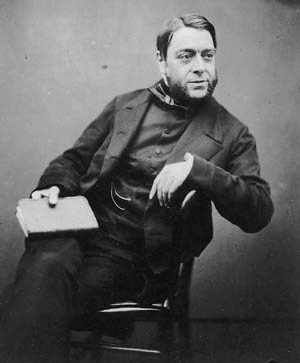
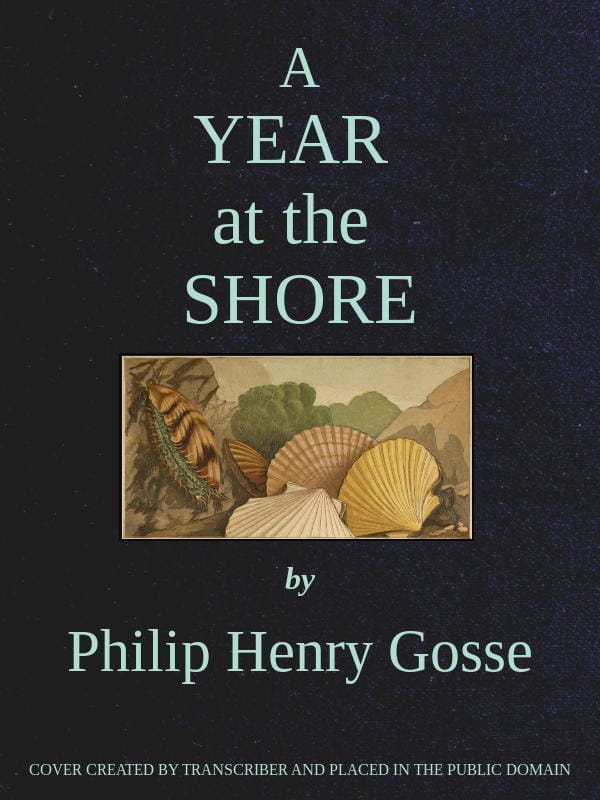
Gosse's masterpiece invites us to slow down. Over the course of a year, he walks the same stretch of British coastline again and again, returning to tide pools and cliffs with the patience of someone who knows that revelation takes time. His eye catches what most of us miss: the spiral of a whelk shell, the sudden flash of a purple-spotted top shell, the patient choreography of anemones in a rock pool. This is natural history before it became science, when observation was still an art and the shoreline was a cathedral. Written in 1865 by one of Victorian Britain's most enthusiastic marine biologists, the book pulses with Gosse's particular magic: he sees every creature as both marvel and message. The thirty-six hand-colored plates he created remain stunning, intimate portraits of sea snails and crustaceans rendered with the precision of a scientist and the tenderness of an artist. His Christian faith lends the whole project a quiet reverence, as if each tide pool were a window revealing divine craftsmanship. For readers who crave nature writing that breathes, who want to linger in a world where a single square foot of coastline becomes inexhaustible.
Editions
Link to this book
Add a free, dofollow link to Lex on your blog, forum, syllabus, or reading list.

<a href="https://lex-books.com/book/a-year-at-the-shore-5e3f594c-c83e-4c40-9b8d-2b8bda1cc3dc"><img src="https://lex-books.com/badges/read-on-lex.svg" alt="Read A Year at the Shore by Philip Henry Gosse free on Lex" width="160" height="40"></a>[](https://lex-books.com/book/a-year-at-the-shore-5e3f594c-c83e-4c40-9b8d-2b8bda1cc3dc)[url=https://lex-books.com/book/a-year-at-the-shore-5e3f594c-c83e-4c40-9b8d-2b8bda1cc3dc][img]https://lex-books.com/badges/read-on-lex.svg[/img][/url]Read A Year at the Shore by Philip Henry Gosse free on Lex: https://lex-books.com/book/a-year-at-the-shore-5e3f594c-c83e-4c40-9b8d-2b8bda1cc3dcCite this book
Reading this edition for a paper or guide? Copy a citation.
Gosse, Philip Henry. A Year at the Shore. Lex, lex-books.com/book/a-year-at-the-shore-5e3f594c-c83e-4c40-9b8d-2b8bda1cc3dc.Gosse, P. H. (1865). A Year at the Shore. Lex. https://lex-books.com/book/a-year-at-the-shore-5e3f594c-c83e-4c40-9b8d-2b8bda1cc3dcGosse, Philip Henry. A Year at the Shore. Lex. https://lex-books.com/book/a-year-at-the-shore-5e3f594c-c83e-4c40-9b8d-2b8bda1cc3dc.