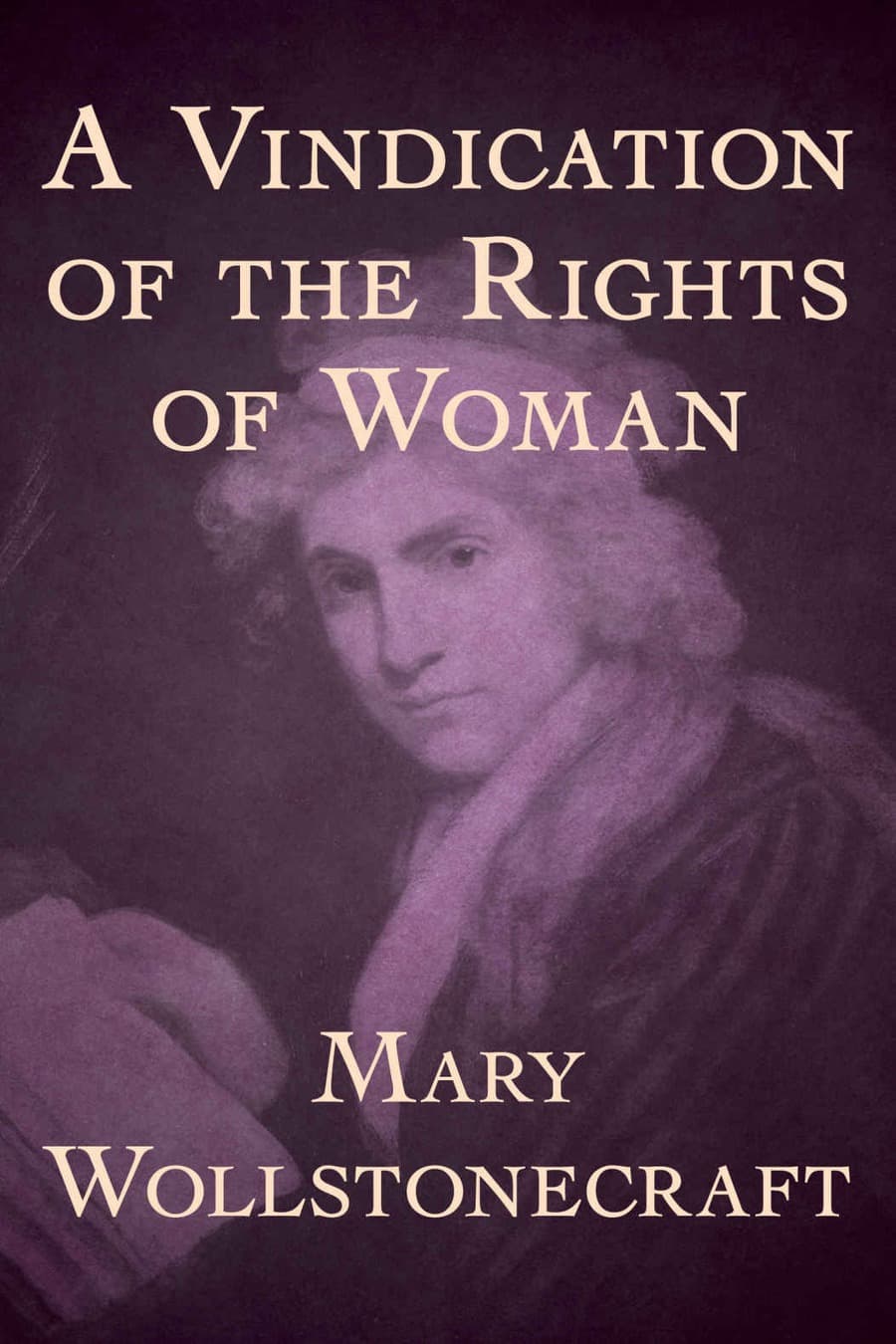
A Vindication of the Rights of Woman

One of the first works of feminist philosophy, Mary Wollstonecraft's 1792 treatise exploded onto the intellectual scene with a radical proposition: women are rational beings entitled to the same education and fundamental rights as men. Writing in response to a French report declaring women should receive only domestic education, Wollstonecraft refused to accept that half of humanity should be ornament rather than reasoning creature. She argues that women who are kept ignorant cannot properly educate children or serve as genuine companions to their husbands. She indicts a society that encourages women to cultivate excessive emotion and superficial accomplishments while denying them the rational faculties that would make them truly free. This is not mere polemic; Wollstonecraft builds her case with philosophical rigor, grounding her arguments in the nature of reason itself. The book shocked contemporaries and has provoked argument ever since. Though she did not explicitly claim absolute equality between the sexes, her insistence that women deserve rational education and civic consideration laid intellectual groundwork that would bloom into modern feminism.
Editions


X-Ray
“I do not wish them [women] to have power over men; but over themselves.””
— Mary Wollstonecraft
“My own sex, I hope, will excuse me, if I treat them like rational creatures, instead of flattering their graces, and viewing them as if they were in a state of perpetual childhood, unable to stand alone.””
— Mary Wollstonecraft
“[I]f we revert to history, we shall find that the women who have distinguished themselves have neither been the most beautiful nor the most gentle of their sex.””
— Mary Wollstonecraft
“Taught from their infancy that beauty is woman's sceptre, the mind shapes itself to the body, and roaming round its gilt cage, only seeks to adorn its prison.””
— Mary Wollstonecraft
“It is vain to expect virtue from women till they are in some degree independent of men.””
— Mary Wollstonecraft
“Strengthen the female mind by enlarging it, and there will be an end to blind obedience.””
— Mary Wollstonecraft
“I love man as my fellow; but his scepter, real, or usurped, extends not to me, unless the reason of an individual demands my homage; and even then the submission is to reason, and not to man.””
— Mary Wollstonecraft
“It is time to effect a revolution in female manners - time to restore to them their lost dignity - and make them, as a part of the human species, labour by reforming themselves to reform the world. It is time to separate unchangeable morals from local manners.””
— Mary Wollstonecraft
“I earnestly wish to point out in what true dignity and human happiness consists. I wish to persuade women to endeavor to acquire strength, both of mind and body, and to convince them that the soft phrases, susceptibility of heart, delicacy of sentiment, and refinement of taste, are almost synonymous with epithets of weakness, and that those beings are only the objects of pity, and that kind of love which has been termed its sister, will soon become objects of contempt.””
— Mary Wollstonecraft
Link to this book
Add a free, dofollow link to Lex on your blog, forum, syllabus, or reading list.

<a href="https://lex-books.com/book/a-vindication-of-the-rights-of-woman-c8ac6e36-e7ed-4052-a65c-eaca062ca8d1"><img src="https://lex-books.com/badges/read-on-lex.svg" alt="Read A Vindication of the Rights of Woman by Mary Wollstonecraft free on Lex" width="160" height="40"></a>[](https://lex-books.com/book/a-vindication-of-the-rights-of-woman-c8ac6e36-e7ed-4052-a65c-eaca062ca8d1)[url=https://lex-books.com/book/a-vindication-of-the-rights-of-woman-c8ac6e36-e7ed-4052-a65c-eaca062ca8d1][img]https://lex-books.com/badges/read-on-lex.svg[/img][/url]Read A Vindication of the Rights of Woman by Mary Wollstonecraft free on Lex: https://lex-books.com/book/a-vindication-of-the-rights-of-woman-c8ac6e36-e7ed-4052-a65c-eaca062ca8d1Cite this book
Reading this edition for a paper or guide? Copy a citation.
Wollstonecraft, Mary. A Vindication of the Rights of Woman. Lex, lex-books.com/book/a-vindication-of-the-rights-of-woman-c8ac6e36-e7ed-4052-a65c-eaca062ca8d1.Wollstonecraft, M. (n.d.). A Vindication of the Rights of Woman. Lex. https://lex-books.com/book/a-vindication-of-the-rights-of-woman-c8ac6e36-e7ed-4052-a65c-eaca062ca8d1Wollstonecraft, Mary. A Vindication of the Rights of Woman. Lex. https://lex-books.com/book/a-vindication-of-the-rights-of-woman-c8ac6e36-e7ed-4052-a65c-eaca062ca8d1.