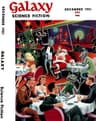
A Pail of Air
1951

Earth has been torn from the sun, dragged into eternal night by a passing dark star. A boy narrates the survival of his family in this frozen apocalypse, where they live in a cramped shelter called the Nest and venture into the suffocating darkness to harvest frozen air in pails, melting it down to breathe. The routines of survival define their existence: gathering ice for oxygen, conserving heat, maintaining the fragile machinery of staying alive. Then the boy sees a light on the horizon. Is it hope or a new threat? What follows is one of science fiction's most poignant encounters: the discovery that other survivors from Los Alamos have harnessed atomic energy to build a new civilization in the void. Leiber writes with quiet literary precision, letting the child's voice carry both terror and wonder. This is survival horror rendered intimate, a family story wrapped in cosmic catastrophe, and it ends with the kind of hope that feels earned rather than given. It endures because it captures something essential about human stubbornness in the face of oblivion.
Editions
X-Ray
“What matters is that life is good. It has a lovely texture, like some rich cloth or fur, or the petals of flowers, and everything else worthwhile. And that's as true for the last man as the first.””
— Fritz Leiber
“when the Earth got cold, all the water in the air froze first and made a blanket ten feet thick or so everywhere, and then down on top of that dropped the crystals of frozen air, making another white blanket sixty or seventy feet thick maybe.””
— Fritz Leiber
Link to this book
Add a free, dofollow link to Lex on your blog, forum, syllabus, or reading list.

<a href="https://lex-books.com/book/a-pail-of-air-c6bb49c5-e856-41da-b947-97aad160ef20"><img src="https://lex-books.com/badges/read-on-lex.svg" alt="Read A Pail of Air by Fritz Leiber free on Lex" width="160" height="40"></a>[](https://lex-books.com/book/a-pail-of-air-c6bb49c5-e856-41da-b947-97aad160ef20)[url=https://lex-books.com/book/a-pail-of-air-c6bb49c5-e856-41da-b947-97aad160ef20][img]https://lex-books.com/badges/read-on-lex.svg[/img][/url]Read A Pail of Air by Fritz Leiber free on Lex: https://lex-books.com/book/a-pail-of-air-c6bb49c5-e856-41da-b947-97aad160ef20Cite this book
Reading this edition for a paper or guide? Copy a citation.
Leiber, Fritz. A Pail of Air. Lex, lex-books.com/book/a-pail-of-air-c6bb49c5-e856-41da-b947-97aad160ef20.Leiber, F. (1951). A Pail of Air. Lex. https://lex-books.com/book/a-pail-of-air-c6bb49c5-e856-41da-b947-97aad160ef20Leiber, Fritz. A Pail of Air. Lex. https://lex-books.com/book/a-pail-of-air-c6bb49c5-e856-41da-b947-97aad160ef20.


















![Night Watches [complete]](/_next/image?url=https%3A%2F%2Fd3b2n8gj62qnwr.cloudfront.net%2FCOVERS%2Fgutenberg_covers75k%2Febook-12161.png&w=3840&q=75)