Η Φόνισσα
1903
On a wind-blasted Greek island, an elderly woman called Francojannou sits vigil over her sick granddaughter. Through the long night, memories surface of a lifetime spent in service: bearing children, raising grandchildren, laboring for a community that never saw her. When dawn breaks, she makes a choice that will shatter her family and sear themselves into Greek literary consciousness. This is no ordinary crime of passion. Papadiamantis constructs a devastating portrait of a woman ground down by generations of poverty and femaleness until she becomes capable of the unthinkable. The prose moves between moments of aching tenderness and stark horror, mirroring the fractured consciousness of its protagonist. Why does she do it? The question unspools through every page, forcing readers to confront not just one woman's desperation, but the quiet violence of a society that renders certain lives expendable. A foundational work of modern Greek literature that asks an unbearable question: when does compassion become complicity, and who really bears the guilt?
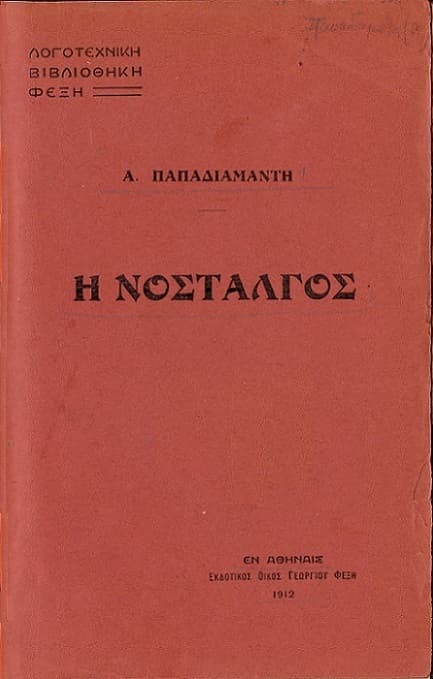
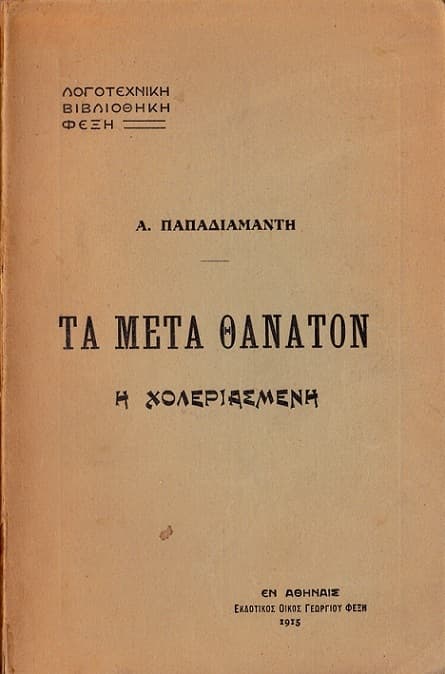
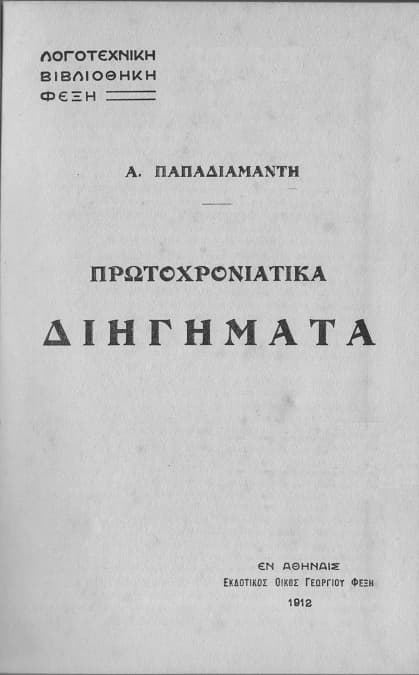
Editions
X-Ray
“Άκρα σιγή και ησυχία επεκράτησεν εντός του σκοτεινού θαλάμου, μετά τον τελευταίον βήχα και τον κλαυθμυρισμόν του θυγατρίου, τα οποία τόσον αποτόμως διεκόπησαν. Η Φραγκογιαννού είχε κύψει το πρόσωπόν της, και είχε στηρίξει με τας δύο χείρας το μέτωπον, και είχε παύσει να σκέπτεται. Της εφαίνετο ότι δεν έζη πλέον. Ούτε η πνοή της ηκούετο. Πας θόρυβος είχε παύσει. Ούτε φλοξ έβρεμεν εις την εστίαν, ούτε βόμβος ηκούετο, και το ημίκαυστον φιτίλιον του λύχνου έφεγγε θλιβερώς. Η μικρά κανδήλα προ πολλού είχε σβήσει εις το εικονοστάσιον, και αι μορφαί των αγίων δεν εφαίνοντο πλέον.””
— Alexandros Papadiamantes
Link to this book
Add a free, dofollow link to Lex on your blog, forum, syllabus, or reading list.

<a href="https://lex-books.com/book/-7fba8cef-d8c8-45a9-995a-c7a2612495bb"><img src="https://lex-books.com/badges/read-on-lex.svg" alt="Read Η Φόνισσα by Alexandros Papadiamantes free on Lex" width="160" height="40"></a>[](https://lex-books.com/book/-7fba8cef-d8c8-45a9-995a-c7a2612495bb)[url=https://lex-books.com/book/-7fba8cef-d8c8-45a9-995a-c7a2612495bb][img]https://lex-books.com/badges/read-on-lex.svg[/img][/url]Read Η Φόνισσα by Alexandros Papadiamantes free on Lex: https://lex-books.com/book/-7fba8cef-d8c8-45a9-995a-c7a2612495bbCite this book
Reading this edition for a paper or guide? Copy a citation.
Papadiamantes, Alexandros. Η Φόνισσα. Lex, lex-books.com/book/-7fba8cef-d8c8-45a9-995a-c7a2612495bb.Papadiamantes, A. (1903). Η Φόνισσα. Lex. https://lex-books.com/book/-7fba8cef-d8c8-45a9-995a-c7a2612495bbPapadiamantes, Alexandros. Η Φόνισσα. Lex. https://lex-books.com/book/-7fba8cef-d8c8-45a9-995a-c7a2612495bb.